Community cats and the benefits of trap, neuter and return
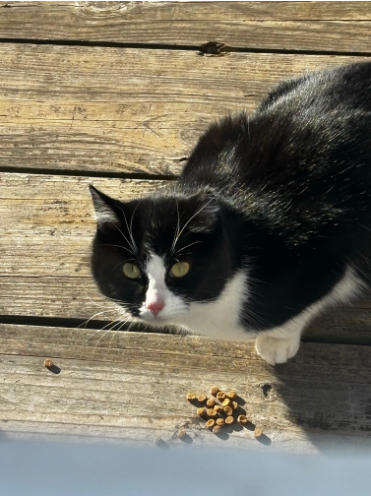 Blakeley (aka Queen). Courtesy photo
Blakeley (aka Queen). Courtesy photo
Blakeley (aka Queen). Courtesy photoHello! My name is Blakeley (aka Queen). I’m a Boothbay Harbor Community Cat. Community Cats are un-owned cats that live outdoors in the community. They may be feral or friendly, may have been born into the wild, or may be lost or abandoned pets. Fortunately for me, I was a Trap/Neuter/Return (TNR). That means I have been fixed, vaccinated, chipped and treated for parasites, so I’m a healthy girl! My left ear has been “tipped” as an indication that I am a neutered community cat.
My territory is the vicinity of Commercial and Sea streets. I have never lived inside and don’t get too close to humans. I have a Community Mom and Dad that look after me. They provide warm, safe shelter and allow me to hang out on their deck anytime.
Please don’t try and trap me. I won’t bother you. I am useful because I help control the rodent population which is good because the white footed mouse is a notorious carrier of Lyme disease!
I have Community Cat friends that have not been TNRed. They usually roam at night so you may not be aware they are out there. If you do see and/or feed them, please consider doing a TNR.
The goal of TNR is to reduce unnecessary cat suffering, death, and euthanasia and to reduce undesirable behaviors associated with un-sterilized, un-owned cats. Stray or free-roaming cats that are friendly and would do well in a home are made available for adoption or placed in an adoption preparation program. Feral cats that would not be appropriate or happy as pets are sterilized, ear-tipped, vaccinated, and released in the same outdoor location where they were found. TNR is more humane and beneficial than trapping and euthanizing cats, relocating them, or doing nothing, but it will not significantly decrease the overall population numbers. The benefits include:
• Better Behaviors: Neutered cats display fewer mating-related behaviors, including incessant yowling, territorial spraying, and fighting.
• Improved Feline Health: Cats are vaccinated and treated for injuries, leading to longer, healthier lives.
• Reduced Shelter Intake: Fewer kittens born means fewer cats enter shelters, saving space for adoptable animals. TNR reduces long-term costs for animal control compared to removal or euthanasia.
• Reduced Nuisance Issues: Communities often see fewer complaints regarding noise, odor, and property marking.
• Natural Rodent Control: Sterilized cats remain in the area to control rodent populations without creating new litters.
• Prevents the "Vacuum Effect": Unlike trap-and-kill methods, which create a vacancy for new, unneutered cats to move in, TNR stabilizes the existing population, preventing new cats from arriving.
For more information about TNR visit https://www.animalhumanesociety.org/resource/real-impacts-trap-neuter-return