From Sweden to Boothbay Harbor
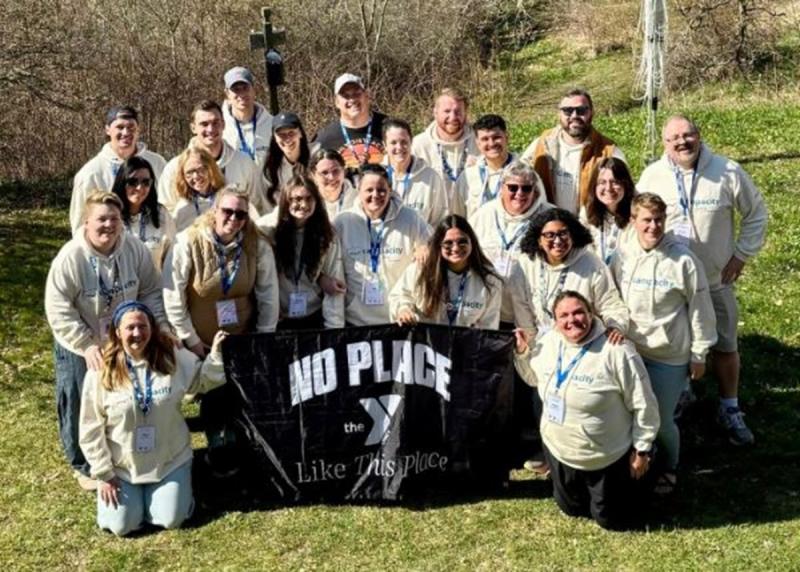 Erin Gray, third from left, with the Y-USA delegates at Campacity, an international conference for summer camp leaders in Sweden. Photo courtesy of Eddie Norgard.
 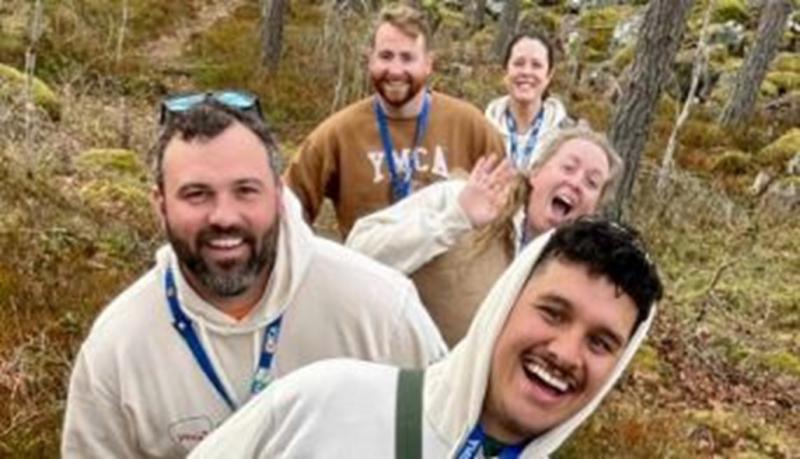 Erin Gray, waving, on a hike with several peer Campacity delegates in Sweden. Photo courtesy of Eddie Norgard.
Erin Gray, third from left, with the Y-USA delegates at Campacity, an international conference for summer camp leaders in Sweden. Photo courtesy of Eddie Norgard.
Erin Gray, waving, on a hike with several peer Campacity delegates in Sweden. Photo courtesy of Eddie Norgard.
Erin Gray, waving, on a hike with several peer Campacity delegates in Sweden. Photo courtesy of Eddie Norgard.
Erin Gray, third from left, with the Y-USA delegates at Campacity, an international conference for summer camp leaders in Sweden. Photo courtesy of Eddie Norgard.
Erin Gray, waving, on a hike with several peer Campacity delegates in Sweden. Photo courtesy of Eddie Norgard. At first glance, a weeklong international conference in Sweden and a summer day camp in coastal Maine might seem worlds apart. But for Erin Gray, Senior Program Director at the Boothbay Region YMCA, the connection is both direct and powerful. Her recent experience at Campacity, an international YMCA gatheringthat was hosted by Camp Brevikin Sweden, reinforced the intentional approach that defines Camp Knickerbocker, known locally as Camp K, and reminded her why that work matters so deeply for our region’s youth.
In mid-April, Gray joined 87 YMCA leaders from across the United States and Europe for the Campacityconference designed to build collaboration, capacity, and shared learning across YMCA camp programs. She was one of just 20 U.S. delegates selected to attend. The event began in 2022 as a response to the Russian invasion of Ukraine, when YMCA Europe, YMCA Europe Roots of Peace and YMCA of the USApartnered to support Ukrainian communities and share best practices for working with youth experiencing extreme trauma. “We were thrilled when Erin’s application was selected,” said Andy Hamblett, the Y’s CEO, “it was exciting to see that Erin’s creativity, energy, and commitment to diversity were recognized on an international level.”
Each day, Gray interacted with people from around the United States and throughout Europe. Home groups were created intentionally to alleviate any anxiety that can come with meeting new people; something that summer camps mirror to help campers make new connections.“A new friend from Ukraine spoke from her heart about organizing camps near bomb shelters for children living through war,” Gray shared. “Her story made me realize how essential summer camps can be. The goal for them is to be able to provide a safe space for kids to just be kids, even in the most extreme circumstances. It also reframed for me, in very stark terms, how lucky we are to have the resources and stability at our own summer camps.”
The conference included keynotes, sessions, and workshops on topics such as camper and counselor mental health, peace-building camp models from countries such as Georgia, and strategies for creating safe, inclusive spaces. One topic that felt especially relevant to Gray focused on young boys and emotional development within YMCA programs.
“Drawing on research across Europe, the keynoteexplored howboysoften grow up with very limited spaces where they feel safe expressing their feelings, and what that absence of space can lead to,” she said. “It gave me a deeper understanding of the opportunity and responsibility we have to create environments where emotional growth is supported alongside physical and social development. We already focus on this, and the workshop helped me think about new tools to use this year to help our young boys be more successful at camp.”
A recurring theme throughout the week was intentionality. Throughout conversations with educators from across Europe, Gray learned that programs are created for the kids and volunteer leaders with intention; safety, socio-emotional learning, and relationship building, often through peace work are central focuses. This philosophy will serve to inspire Gray and the team at Camp Knickerbocker continue their learning and building a stronger foundation for the Y’s campers.
Traditional day camps in the United Statesoperate differently from many of our European counterparts. Gray was surprised to learn that many European Ys and their summer camps are entirely volunteer-run, sustained by a deeply embedded culture of “for the youth, by the youth.” Young people who benefit from programs often grow up to become volunteers themselves, creating a continuous cycle of investment.
At Camp K, that same spirit shows up through careful planning and a strong emphasis on diversity and inclusion. Each year, Gray intentionally builds a counseling staff that reflects a wide range of backgrounds, experiences, and perspectives. In collaboration with staff from the United States, a cornerstone of this effort is the International Ambassador Staff program. After pandemic-related delays in 2020 and 2021, Camp K began welcoming international staff in 2022, bringing in team members from countries including South Africa, Brazil, Jamaica, the United Kingdom, and beyond. By 2025, the program had grown to 24 staff members representing 14 countries and seven languages of origin.
For the upcoming season, Camp K expects up to 19 international staff members, continuing its commitment to global representation. These team members play a vital role in shaping the camp experience. Through games, music, storytelling, shared activities, and everyday interactions, local campers are exposed to cultures and perspectives they might not otherwise encounter. Many international staff members are also teachers in their home countries, bringing valuable experience to Camp K’s campers and staff while learning from a different student community.
That intentionality extends far beyond hiring. Planning for each summer begins almost immediately after the previous season ends. Gray and her colleagues review successes and challenges, gather feedback from campers and staff, and design a schedule that balances consistency with innovation. Programs are often built around staffexpertise, including art, robotics, outdoor skills, sports, and more, ensuring instructors feel invested in what they teach.
By early summer, after months of preparation, international arrivals, and a week of intensive staff training, Camp K is ready to welcome its first campers. From that point forward, the pace is fast and demanding, filled with daily programming, ongoing support, and constant coordination. Yet the goal remains clear.
“Our focus is to create intentional spaces where young people feel safe, supported, and free to grow,” Gray said.
Gray’s experience at Campacityclarified that mission. Hearing stories from communities facing conflict, trauma, and limited resources deepened her appreciation for what Camp K offers this community. It also reinforced a powerful truth: no matter where a camp is located, its purpose is rooted in connection, resilience, and belonging.
“Summer camp is far more than a collection of activities,” Gray reflected. “It is a place where young people form meaningful relationships, develop communication and teamwork skills, and gain confidence in themselves. Those outcomes don’t happen by accident. They are the result of thoughtful, intentional work. It’s something our team isreally proud of, and we hope our kiddos and their families feel the love, commitment, and fun we bring to our campers every day.”
From Sweden to Boothbay Harbor, the lesson is clear. Camp is not just where children spend their summer days. It is where they practice courage, build friendships, discover new perspectives, and learn that they belong. At Camp Knickerbocker, that work is carried out with purpose, heart, and a commitment that lasts long after summer ends.