Region's volunteer workforce boosted local economy by more than $5M in 2025
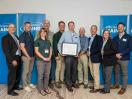
 Rebuilding Together. Courtesy of Jack Herger
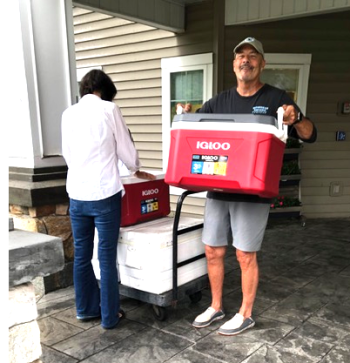 Meals on Wheels. Courtesy of John Schindler and Jane Wissman
 Woodchucks. File photo
 Food For Thought volunteer Nancy Van Dyke. Courtesy photo
 Community Center. Courtesy photo
 Food Pantry volunteers Frosty O'Keefe, left, and Nancy Adams. File photo
 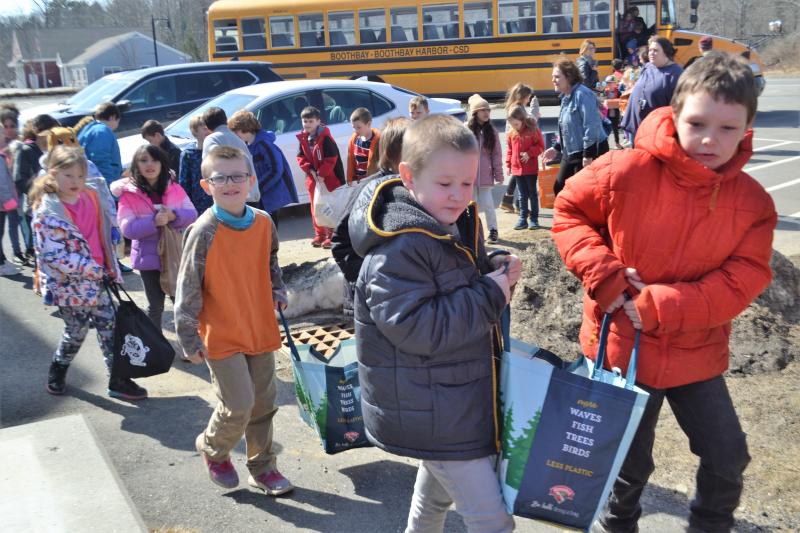 BRES students bring food for the Community Fridge. File photo
 V.E.T.S. President Ed Harmon, left, and Vice President Art Richardson. File photo
Rebuilding Together. Courtesy of Jack Herger
Meals on Wheels. Courtesy of John Schindler and Jane Wissman
Woodchucks. File photo
Food For Thought volunteer Nancy Van Dyke. Courtesy photo
Community Center. Courtesy photo
Food Pantry volunteers Frosty O'Keefe, left, and Nancy Adams. File photo
BRES students bring food for the Community Fridge. File photo
V.E.T.S. President Ed Harmon, left, and Vice President Art Richardson. File photo
V.E.T.S. President Ed Harmon, left, and Vice President Art Richardson. File photo
Rebuilding Together. Courtesy of Jack Herger
Meals on Wheels. Courtesy of John Schindler and Jane Wissman
Woodchucks. File photo
Food For Thought volunteer Nancy Van Dyke. Courtesy photo
Community Center. Courtesy photo
Food Pantry volunteers Frosty O'Keefe, left, and Nancy Adams. File photo
BRES students bring food for the Community Fridge. File photo
V.E.T.S. President Ed Harmon, left, and Vice President Art Richardson. File photo
Last year, volunteers with 10 local organizations had an economic impact of more than $5 million, based on information they recently provided to the Register.
Throughout 2025, this unpaid workforce enabled friends and neighbors to receive firewood and food, travel to medical appointments, display emergency signs for homes, repair homes, provide medical scholarships and, among other efforts, create housing for veterans experiencing homelessness.
Each year, the value of a volunteer hour is calculated by the University of Maryland's Do Good Institute and announced by Independent Sector (IS), a coalition of nonprofits. The value is referred to as the "IS" number.
Based on what it would cost to pay workers to do the same work, the IS number is the standard by which volunteer time is valued. It is used by states and the U.S. government and it is $34.79 per hour nationally. Each of the organizations included in this story provided their 2025 volunteer hours which The Register multiplied by the IS rate for Maine of $32.13 per hour.
Dr. Nathan Dietz, UMaryland research director who is responsible for calculating the annual value, explained in the 2025 announcement, the number "... reflects the value that volunteer labor adds to the capacity of nonprofit organizations ..." Dietz further explained, "Many forms of volunteering involve providing direct service to people and families, and the dollar value of the work only measures part of the benefits that the recipients experience."
How does the value of volunteer time affect our economy?
Volunteers for non-profit organizations, referred to as the third sector after government and private industry, have an impact on local and other economies.
Volunteer hours replace payroll, ensuring that donations go directly to an organization's programs and services. In fact, most of the organizations sampled for this story are run entirely by volunteers and the others have only a few paid staffers.
A December 2025 blog at raymondjames.com called attention to a recent study from the U.S. Census Bureau showing, "In a one-year period in the United States alone, volunteers donated close to 5 billion hours of time, and their generosity contributed more than $167.2 billion in economic value." Maine is ranked fourth in the U.S. for volunteering, about 35% higher than the U.S. average, according to Volunteer Maine's 2024 annual report.
Closer to home, Alex Zipparo, economic and community development planner at Lincoln County Regional Planning Commission, shared his thoughts with The Register. "The volunteer ecosystem is the other side of our economy," he explained. "The economic impact of this in-kind contribution is critical to the peninsula. It is a very real social safety net, filling a gap in our economy and supplementing essential resources."
The 10 local nonprofits looked at by the Register recorded 160,000 volunteer hours on a peninsula with a year-round population of about 7,000 people. And there are additional organizations and town governments that rely on volunteers. Locally, the "volunteer economy" seems to be booming.
Community Resource Council Director and State Rep. Holly Stover knows well the impact of volunteer hours here.
"While discussions about the local economy typically focus on businesses, wages and taxes, volunteerism forms a parallel system that sustains essential services. In 2025, CRC volunteers contributed tens of thousands of dollars’ worth of labor." Calling volunteers "a significant economic asset," she added, "This is a clear reminder that generosity and compassion can also function as an economic engine.
Food preparation and distribution
Volunteers working for organizations that provide food assistance contribute significantly to the area's volunteer economy.
As an example, Stover pointed to the Community Fridge. "In 2025, the program relied on roughly 75 regular volunteers who contributed around 9,000 hours of service ... preparing and delivering food, growing produce, collecting donations, shopping and gifting food, cleaning, completing dump runs, and even shoveling snow." This represents an impact of $289,170.
Veggies to Table reported volunteers logged 5,090 hours. This created an economic impact of $163,541 last year. Meals on Wheels reported it had 1,500 volunteer hours, boosting the economy by $48,195.
Fleet Davies, co-president of the Food Pantry, reported, "Our volunteer hours for 2025 were around 3,200 hours ... helping all our peninsula families." This totals $102,816 in economic impact. Volunteers provided 312 hours to add $10,024 in economic value to Food For Thought's efforts in 2025.
In 2025, the economic impact of volunteer hours from all five nonprofits above to address food availability and insecurity here was $613,746.
Transportation, housing, veterans, heat
Transportation also benefits from area volunteerism. The nine volunteers of CRC's Boothbay Rides service logged 557 hours in 2025, adding $17,896 to the local economy. The Community Center's People Helping People program's nine drivers worked 522 hours, adding another $16,771. These two programs are currently the only public transportation available on the peninsula for residents not able to drive to medical appointments or to get groceries.
Boothbay Harbor Chapter of Rebuilding Together was started more than 20 years ago. President Tom Churchill said the all-volunteer organization provides "free home repair services to qualified home owners ... .The primary criteria is to improve the safety, warmth and dry conditions of a home."
During 2025, its 17 volunteers logged 250 hours in general repairs, 150 hours installing handicapped ramps and another 150 hours managing projects, schedules and budgets. These hours had an economic impact of $17,671. "We are proud of the fact that (we are) one of only two chapters in the country that (are) entirely run by volunteers with no paid staff," Churchill added.
Programs associated with veterans also make up a substantial part of our volunteer workforce. Ed Harmon, president of Boothbay V.E.T.S. (Veterans Emergency Temporary Shelters) said a group of nine member volunteers and 32 non-member volunteers worked 37,000 hours in 2025, adding $1,188,810 in the impact of their time on the economy.
V.E.T.S. volunteers worked behind the scenes in groups that included Boy Scouts, those who made quilts for each unit and women from Southern Maine Women's Reentry Center, ensuring that veterans experiencing homelessness would have temporary shelters.
Volunteers from the region's American Legion Charles Sherman Post contributed 6,173 hours last year with an impact of $198,338. In addition, volunteers worked 640 hours valued at $20,563 on the 16 breakfasts held during the year which support veterans, their families and young members of our community.
The CRC's Woodchucks program has 20 volunteers who provided more than 3,000 hours of labor in 2025 helping to keep area homes warm with the result of their efforts and adding more than $100,000 in economic impact.
5,000 visits
The Community Center's volunteers provided 4,086 hours of services in 2025 for an economic impact of $131,281. The services include ensuring the Center opens its doors for more than 5,000 visits from area residents throughout the year. Other volunteer hours were spent storing, distributing, cleaning and transporting free durable medical goods and creating reflective 911 signs for homes so emergency responders can quickly identify a location where help is needed.
The Center's president, Gerald Homer said, "These statistics bear testimony to both the need we meet with our programs and services and the support we receive, both public and private. We rely on and appreciate the public support we receive through town grants and the private contributions from individuals and foundations. None of it would be possible without our volunteer drivers and Community Center volunteers."
Medical scholarships
Patty Colhoun, St. Andrews Auxiliary president, reported for the 2025 fiscal year the Thrift Shop received 89,217 volunteer hours, 599 hours from board members and another 923 to Lincoln Hospital to support programs, creating the local economic impact of $2,915,442.
Colhoun explained, volunteers enabled the Auxiliary to raise money for medical scholarships and provide almost $80,000 for equipment and donations, among these, "... (a) specialty scale, call systems and donations to local organizations such as the Boothbay Region Ambulance Service, Meals on Wheels and the Nursing School ..."
Meridith Verney, volunteer coordinator for Lincoln Hospital, provided volunteer information for St. Andrews Village and Urgent Care, reporting 2,048 hours in 2025, with an economic impact of $65,802.
What happens here without volunteers?
Volunteers hold our social safety net together, ensuring donations are spent directly on non-profit programs and services and not on paid staff. What would happen if we didn't have volunteers adding their $5 million in value to our local economy?How would non-profit services and programs be affected?
The first of three possible options is the person receiving the service would pay the provider for it. This only works if there is someone to do the work and if the recipient can afford to pay. Looking at food and transportation here, getting food to those who can't shop for themselves or prepare a meal would be harder.
For those who cannot drive, rides to medical appointments, pharmacies, or grocery stores are even more limited. Volunteers currently provide the only low or no-cost public transportation based on this peninsula.
The second option is for nonprofits to hire workers to replace the volunteers. But, as Stover explained, “Their generosity doesn’t just save money; it makes our agency work possible. Every hour given by a volunteer directly supports our neighbors in need. Without volunteers, our community and the CRC would look very different.” Stover gave the Community Fridge as an example. "If CRC had to pay staff or contractors for this work, the costs would exceed the organization’s operating budget and reduce the community’s access to food."
If nonprofits could not afford to hire workers, the third option is for their services and programs to cease.
Since some of the services are needed for health and safety, would the cost of providing them become the responsibility of a town, Lincoln County, or the state? Without volunteers, would that cost include paying employees to do the work previously done by volunteers, adding $5 million-plus to local taxes?
Does the impact of the volunteer economy, in effect, keep our taxes lower than they would otherwise be?
Property tax credit for volunteer hours?
Across the U.S., states are recognizing the value volunteers bring to the economy. Several states allow residents over 60 years old to reduce property taxes by volunteering. Among these are Maine, Colorado, Washington, South Carolina, Pennsylvania, Rhode Island and Massachusetts. These laws encourage volunteering and help seniors remain in their homes as property taxes rise.
Under Maine's law, municipalities can create ordinances that permit resident homeowners to earn a credit on their property taxes by volunteering services if they are at least 60 years old. Saco, for example, created the "Senior Citizen Tax Work- off Program." Dedham has a similar program. Are these towns acknowledging that this investment in volunteers benefits the local economy?
Whatever the hours and economic value that our region's volunteers bring to their work, there is also the priceless heartfelt energy that makes them give more than 160,000 hours of their time in one year. They are more than just a workforce for their organizations: In her email to us, Verney reflected on their intangible value: "When I think about this, I think about taking music away from a dance, flavor from food, or color from a painting. It’s hard to articulate the impact of the love, care and human connection of so many volunteers."