Lincoln County’s community-driven opioid strategy delivers real results
 A conversation at the Peace Gallery focused on how community and policy can help people affected by Substance Use Disorder. Left to right facing the audience: Peter Bruun (Studio B); Sharon Bailey (Grieving Hearts of Lincoln County); State Rep. Lydia Crafts; Char Corbett (Healthy Kids); Will Matteson (Healthy Lincoln County). Courtesy photo
 Aug. 31 candlelight vigil at Coastal Rivers Conservation Trust, one of a series of events organized in recognition of International Overdose Awareness Day. Courtesy photo
A conversation at the Peace Gallery focused on how community and policy can help people affected by Substance Use Disorder. Left to right facing the audience: Peter Bruun (Studio B); Sharon Bailey (Grieving Hearts of Lincoln County); State Rep. Lydia Crafts; Char Corbett (Healthy Kids); Will Matteson (Healthy Lincoln County). Courtesy photo
Aug. 31 candlelight vigil at Coastal Rivers Conservation Trust, one of a series of events organized in recognition of International Overdose Awareness Day. Courtesy photo
Aug. 31 candlelight vigil at Coastal Rivers Conservation Trust, one of a series of events organized in recognition of International Overdose Awareness Day. Courtesy photo
A conversation at the Peace Gallery focused on how community and policy can help people affected by Substance Use Disorder. Left to right facing the audience: Peter Bruun (Studio B); Sharon Bailey (Grieving Hearts of Lincoln County); State Rep. Lydia Crafts; Char Corbett (Healthy Kids); Will Matteson (Healthy Lincoln County). Courtesy photo
Aug. 31 candlelight vigil at Coastal Rivers Conservation Trust, one of a series of events organized in recognition of International Overdose Awareness Day. Courtesy photoLast year, the Lincoln County Commissioners took a community-centered approach to allocating opioid settlement funds, inviting local organizations to apply based on needs they were seeing firsthand. Thanks to the Commissioners’ transparent process, numerous small nonprofits specializing in prevention, treatment, recovery and harm-reduction efforts are delivering large, measurable impact across the county.
Maine receives annual payments from national opioid lawsuit settlements (continuing through 2038), and divides the funds between the state and individual counties to address the harms of the opioid epidemic through treatment, recovery, prevention, and harm-reduction efforts.
Just halfway through the current grant period, the wide-ranging impact of the Commissioners’ thoughtful approach is already clear. In 2025:
Healthy Kids reached thousands with stigma-reduction and recovery-support programming. Its weekly social-media campaign generated more than 16,500 views, and over 2,500 educational flyers were distributed at community events. Its Nurturing Parents in Recovery program served 43 parents (with 30 graduating), providing 480 hours of parenting education. It offered 35 hours of one-on-one coaching at the Lincoln County Recovery Community Center, staffed weekly office hours, and distributed 40 boxes of Narcan at a countywide Community Baby Shower for over 100 expecting parents.
Hearty Roots expanded youth mental-health supports, partnering with nine schools to deliver outdoor, trauma-informed programming. Its licensed clinical social worker served 53 youth individually, 187 in group programs, and more than 982 young people overall, far exceeding its projections. The funding also enabled it to secure state approval to bill insurance for therapeutic services, a critical step that would have been impossible without county support.
Healthy Lincoln County expanded harm-reduction and prevention services, distributing 682 Narcan kits, training 313 residents through 28 overdose-response workshops, and offering supplies at 31 community events. It also provided sharps containers, medication lock boxes for MOUD patients, and harm-reduction re-entry bags for individuals leaving Two Bridges Jail. Thirteen students received restorative, rather than punitive, substance-use education, and it dedicated more than 1,000 hours of coordinator time to supporting countywide assessment, planning, and service delivery.
At the Lincoln County Recovery Community Center, the Commissioners’ support established a vital emergency needs fund for people in early recovery. This fund has prevented crisis and relapse by helping residents secure temporary housing, transportation to treatment, eyeglasses for work, and school clothes for children newly reunited with parents – small grants with enormous impact.
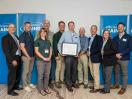
Studio B amplified the work of all of these organizations (and more) through exhibitions, workshops, and youth programs. With 27 events experienced by thousands, including four countywide screenings of Elisif’s Story, a month-long social justice arts festival, and multiple International Overdose Awareness Day events, it offered access to resources, generated meaningful discussion, and centered the voices of those affected by opioid addiction. The impact of this work was recognized when Governor Janet Mills awarded Executive Director Peter Bruun the Governor’s Award at Maine’s annual Opioid Response Summit.
An additional benefit to the Commissioners’ strategy has been increased collaboration among the county’s grassroots resources: all of these recipients have coordinated efforts to eliminate redundancy and complement each other’s work serving county residents.
Lincoln County’s transparent, community-informed strategy for distributing opioid settlement funds is helping local organizations save lives, and has the potential to do so for years to come.