Losing Bobby and How it Shaped us

 Robert Kennedy on June 5, 1968Losing Bobby
Getty Photo abcnews.com
Robert Kennedy on June 5, 1968Losing Bobby
Getty Photo abcnews.com
Losing Bobby
We had already buried one bright promise by then.
The crack of Dallas still echoed through the years like a rifle shot rolling across a frozen lake, and though we were children when President John F. Kennedy fell, something tender and untested in us had fallen too. We learned young that history was not a storybook, that heroes bled, and that crowds could turn in an instant from celebration to mourning.
By 1968 we were older, though not yet old enough to understand how much grief a nation could bear.
In West Warwick, we made our signs for Robert F. Kennedy with the earnest certainty that belongs only to the young. We painted letters that wobbled across poster board and spoke of campaigns and rallies as though we ourselves might help bend the great wheel of the world. The future seemed close enough to touch. We could almost hear it coming down the road toward us.
Yet even as we painted those signs, another wound was still fresh.
Only two months before, in April, the nation had watched Martin Luther King Jr. fall to an assassin's bullet in Memphis. The man who spoke of dreams had been murdered before our eyes, and America seemed to stagger beneath the blow. Churches filled. Cities burned. People wept openly in grocery stores and on front porches. We told ourselves such sorrow could not possibly come again so soon.
Then came the night of June 5.
The radio interrupted ordinary life with extraordinary horror. The Ambassador Hotel. Gunfire. Confusion. Reports spoken in careful voices that tried to sound hopeful. We gathered around televisions and radios as families all across America gathered, watching doctors disappear behind hospital doors and emerge with words that revealed nothing and everything at once.
All that long night we hoped.
We hoped with the stubbornness of the young, with the same fierce conviction that makes children believe a prayer whispered hard enough can alter the stars. We told one another he was strong. We repeated every encouraging rumor. We searched the faces of newsmen for signs they dared not yet speak aloud.
Surely not again.
Surely America could not lose two voices of hope within the span of a single spring.
Surely fate would not be so cruel.
And on June 6, the waiting ended.
The grown-ups cried openly. Some stared in silence. Some shook their heads as though trying to wake from a nightmare. Across the country another light had gone out, and for many of us it felt as if the century itself had taken a wrong turn.
That was the season that shaped us.
Not merely because Dr. King died.
Not merely because Bobby died.
But because they died sixty-two days apart, teaching a generation a lesson it never quite unlearned: that when we dared to place our faith in someone who called us toward a better country, danger seemed to follow close behind.
A fear settled into our bones.
We learned to cheer with one eye on the horizon.
We learned to hope while bracing for loss.
We learned that every bright possibility carried a shadow.
And so we carried that fear through decades.
When Barack Obama stood before cheering crowds and spoke of hope, many of us cheered too, but beneath the applause another emotion moved quietly through our generation. We remembered Dallas. We remembered Memphis. We remembered Los Angeles.
We held our breath.
For eight years we watched, not only as citizens but as veterans of old heartbreaks, waiting for the terrible interruption we had come to expect. We celebrated, but carefully. We believed, but cautiously. Somewhere deep inside lingered the memory of those terrible lessons from 1963 and 1968.
Yet the years passed.
No rifle shattered the moment.
No funeral train crossed the nation.
And perhaps that, too, was a kind of healing.
Now we are the old folks ourselves, the ones who remember where we were when the news came over the radio, the ones who can still see unfinished campaign signs leaning against a wall in a West Warwick summer. We know better than most that history is fragile. We know how swiftly joy can become mourning.
Yet we also know something else.
Despite Dallas.
Despite Memphis.
Despite Los Angeles.
Despite every disappointment that followed.
We never stopped making signs.
We never stopped gathering in church basements and union halls and school gyms. We never stopped believing that tomorrow might be kinder than today. We never stopped looking for leaders who could call forth the better angels of our nature.
Hope, after all, survived every bullet.
That may be the truest story of my generation.
We learned that hope could break your heart.
And still, with trembling hands and stubborn souls, we carried it forward.
Robert Kennedy on June 5, 1968Losing Bobby
Getty Photo abcnews.com
About this blog:
 ,
, 
What's the Buzz? About the Author
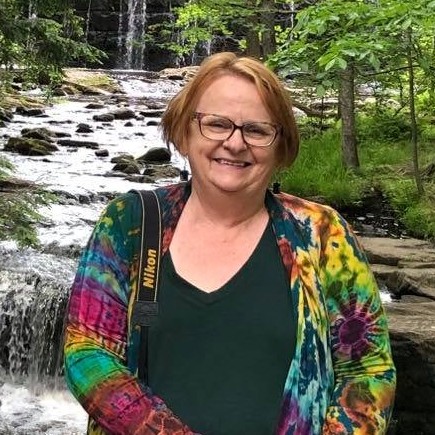
Eleanor Cade Busby: Unpublished, Unfiltered, and Unrepentant
Eleanor Cade Busby is an unpublished award-winning writer, photographer, blogger, and chronic user of the Oxford comma. She simply adores writing about herself in the third person, and therefore considers this bio a personal highlight of her literary career.
-
Writing from Midcoast Maine, where the air is salty, the coffee is strong, and the opinions come with footnotes.
A preacher’s kid who made it her mission to lovingly obliterate every single stereotype about “the minister’s daughter,” Busby grew up all over New England collecting stories, theater programs, and at least three kinds of student loan debt. She attended Goddard College, the Rhode Island Conservatory of Music, and the School of Life—majoring in everything she could wedge into her skull without a crowbar.
She has had her own office (with an actual door!) and a red stapler that was not to be touched, thank you very much. She has worked in social services for decades, won both national and local awards, and was recently named a co-recipient of the PEN/Toni and James C. Goodale Freedom of Expression Courage Award—along with one million of her closest friends—for being loud in the best way possible.
Busby has directed more plays than she can count, acted in more than she should probably admit, and written a few too—including some that were performed on purpose. She’s done everything in theater except hang the lights, because she has a strict “no ladders” clause in her personal safety policy.
Her work has appeared in publications ranging from earnest local weeklies to CRACKED magazine, which pretty much sums up her range. She believes if it isn’t funny or relevant, it probably belongs in a compost heap, not her blog.
Eleanor lives in Midcoast Maine with a cat who believes in early-morning blood sacrifice (hers), and she writes "What's the Buzz?" to chronicle what’s happening, what might be happening, and what absolutely should be happening, according to her and no one else.
Suggestions for topics and comments are always welcome at eleanorcadebusby@hotmail.com