Linc Sample: A former Seabee
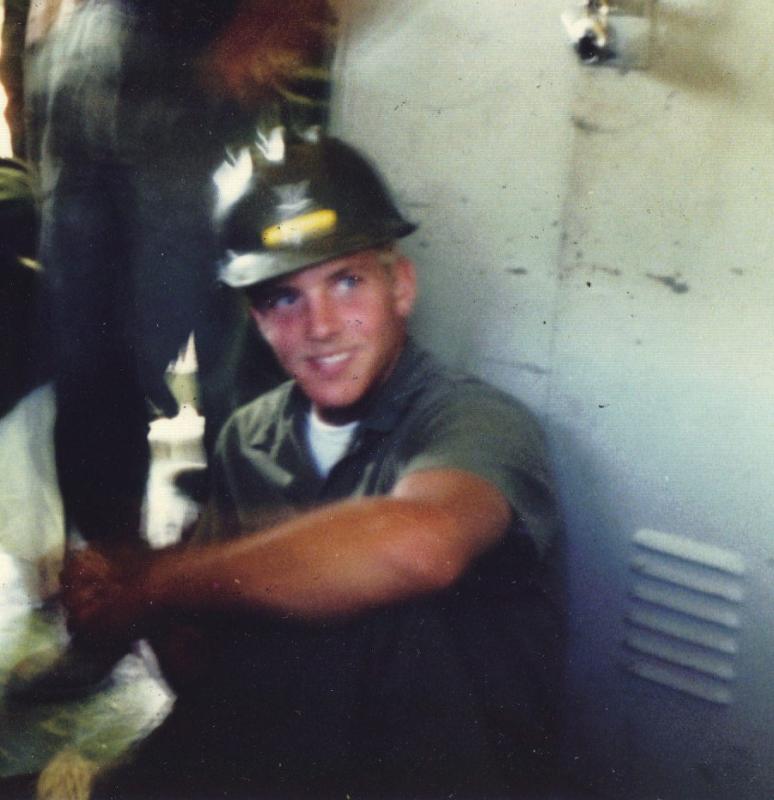 Linc Sample in his Seabee days. Courtesy photo
Linc Sample in his Seabee days. Courtesy photo
Linc Sample in his Seabee days. Courtesy photoAs Boothbay Harbor prepares to celebrate the 64th annual Windjammer Days, this year’s theme proudly honors the past, present, and retired members of the United States Navy who have served our nation with dedication and distinction. Throughout the coming weeks, we will feature a series of profiles highlighting local Navy service members—sharing their stories, experiences, and the lasting impact of their service. These articles are a tribute to the men and women whose commitment to duty reflects the maritime heritage at the heart of Windjammer Days and the deep appreciation of our community. Unfortunately not all current or former Navy service members in the area can be individually featured. To have a Navy veteran or active-duty member mentioned on the Windjammer Days webpage, please email Friends of Windjammers (www.boothbayharborwindjammerdays.org). Please include name and rank.
By Linc Sample
I guess you could say that I was destined to join the Navy at an early age. According to my mother, when I was four, she left me outside the old post office on McKown Street; you could do that back then. When she came out,I was standing next to a metal recruitment sign, the one with the sailor in a peacoat in front of an aircraft carrier. I pointed to the picture and announced that I was going to be a sailor when I grew up. Later, when I was eight, my brother-in-law came home from his first tour in Vietnam as a Seabee. It was then that I learned that I could be in the Navy and build things. The die, as they say, was cast. Anyone who grew up with me knew I was bound for the military; my fascination with militaria made that clear.
My father had an idea of me going to one of the service academies, but I certainly lacked the academic discipline for that. When he passed away shortly after my 18thbirthday, knowing that college would be a waste of my mom’s resources, I contacted the recruiter in Brunswick, took the ASVAB and on May 6,I signed up on the early enlistment program. It was 1978, Carter was president, there were gas shortages and the economy was failing. I left Maine on Nov. 27 bound for boot camp in Orlando with two classmates, Andy Poore and Steve Gray. We graduated on Jan. 20, exactly one year after my dad passed.
I attended Steelworker “A” school to learn welding, cutting, concrete reinforcement, drafting, sheet metal work and steel erection. I was meritoriously advanced to E3 and given my choice of orders. I chose Adak AK which is the middle knuckle of the Aleutian finger.I landed therein May 1979.On Adak I worked in the Public Works Department repairing and fabricating for base maintenance, mostly overhead and hanger doors. The experience of getting caught in anAleutian whiteout or “williwaw” is certainly something I’ll never forget. In November of that year Iranian students took the embassy personnel hostage and suddenly, we were on alert.
I left Adak the next May with orders to Naval Mobile Construction Battalion 74 deployed to Rota Spain. I was assigned to a crew building a 40 x 140-footmechanics shop for the Construction Mechanics maintaining the battalion’s equipment and moved to become assistant crew leader on a 40 x 60-foot building in the material liaison yard. In October, we returned to the states.
The battalion’s homeport was in Gulfport, Mississippi, and there we immediately started planning for our next deployment, continued training and conducted field exercises. The battalion was to deploy to Roosevelt Roads,PuertoRico, but I was assigned a detachment to Argentia,Newfoundlandwhere we were to complete a 60-foot x 720-foot pier. The original had been built by the Seabees during World War 2. Completing that project ahead of schedule, we were sent to Puerto Rico to finish the deployment. There I was assigned to Charlie Company staff as Education Petty Officer until the battalion returned to the states.
Once again “74” was back in Gulfport readying for its next deployment to Guam, but I wouldn’t be going with them. Instead, I was assigned to Det. Iwakuni on the mainland of Japan at a Marine Corps Air Station there. My first project was as crew leader for a4-inch elevated steam line into the base hospital. Upon completion we moved on to the steel crew for a 160-foot x 140 – footwarehouse for the Navy Exchange. Then it was back stateside once again.
The next deployment for NMCB 74 was to be Puerto Rico once again for some reason, but my enlistment was coming to an end. I had extended it for a year in Japan as per the conditions of my original enlistment. I spoke to the Navy detailers several times attempting to get an assignment on the upper East coast but to no avail and on Oct. 14, 1983, I separated from active service.
I’m not sure if there was any one experience that stands out as my service was full of memorable times and comrades. I was assigned to the armory as a range instructor during every homeport and that was terrific garrison duty. I forged a number offriendships with exceptional menworking on challenging projects and gaining and honing skills that would last a lifetime. Where else could a kid between 19 and 23 have a chance to be crew leader on projects that in today’s dollars would be worth a hundreds of thousands of dollars. Planning and estimating, manpower management as well as the military leadershipchallenges were priceless in my endeavors in civilian life. I can honestly say that a day has not gone by that I have not used some skill from my service whether it be professionally or in my personal life.
I have always encouraged young men and women to join the service, whatever the branch. My advice is to go into it with their eyes open and make sure what they want is clearly written in their enlistment papers. The chance to learn a great trade, gain leadership experience and meet people from all over the nation and from so many walks of life are to be had in very few other places.
The fact that I was able to serve in a unit as storied as the Seabees and followed in the footsteps of the men who built the roads to victory in the Second World War and those who that continued their tradition of excellence was a great privilege and honor. To have been part of thegroup that exemplified the “Can Do” spirit is what I am proudest of. The fact that the Navy still relies on this little-known group is a testimony to their outsized impact. That’s why when asked if I served in the Navy I always reply, “No, I was a Seabee.”