From green burial back to green again
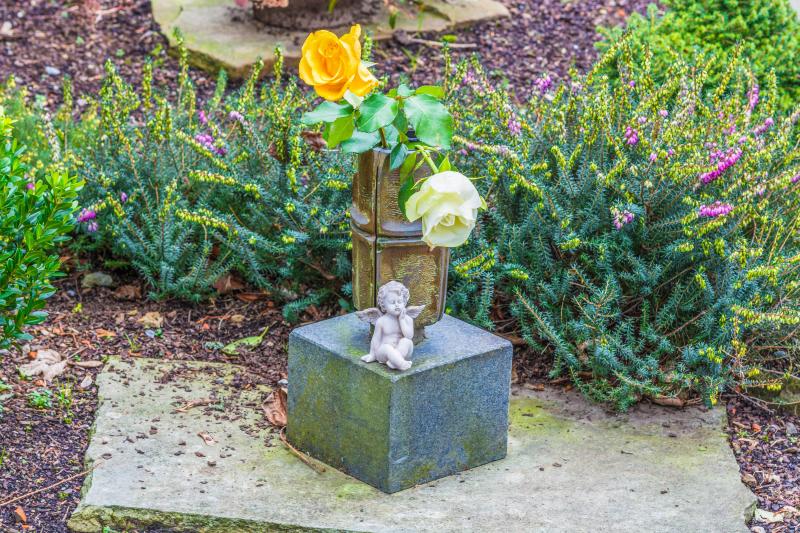
As more people strive to live a sustainable life, many are seeking sustainability in death. Hence the green burial.
The green burial is not new. Early Americans were frequently buried in just a shroud. A reusable “parish coffin” was used to transport the deceased from the church to the graveside. Permanent burial in a wooden coffin was reserved for the rich. They were hexagonal in shape, designed to fit the human body and were tapered at the feet. They were wooden and hand carved to order.
Embalming
Embalming dates back thousands of years, but it was during the Civil War when it became common practice in the United States, driven by the need to preserve the bodies of fallen soldiers transported home. Arsenic was widely used in the embalming process until formaldehyde was discovered in the late 1800s.
Massive Civil War casualties also prompted a demand for burial containers. Coffins were replaced with caskets - rectangular boxes with hinged covers as they were thought to beautify death and considered more dignified.
Cremation
Flame cremation was a common practice among American Indians and still the preferred method for Hindus and Siks in India.
Cremation began in 1876 in the United States with the first crematorium in Pennsylvania. Today there are more than 3,000 crematoriums. Sixty percent of all U.S. burials are cremations.
The Catholic Church prohibited cremation because it was associated with pagan rites and prevented the resurrection of the body. The ban was lifted in 1963, but ashes must be buried, not scattered, kept at home or divided among family members.
Columnbarium
Maine's high cremation rate has increased the demand for columbariums, permanent structures above ground with niches for individual urns.
Conventional burials
Conventional burials are done with formaldehyde embalming in caskets in a landscaped grave site. Headstones are generally large. Steel caskets are placed inside concrete vaults.
Green burial
A green burial is a natural approach to care for the dead. The body is placed directly in the ground in a biodegradable shroud or coffin. The coffin would be made of untreated pine, cedar or bamboo, willow or wicker. There is no embalming. Synthetic liners or metal hardware. The term is interchangeable with “natural” or “eco-friendly.” If there is a marker it needs to be a flat unpolished stone. The Jewish and Muslim cultures still follow these practices today. Green burials are legal, but embalming may be required by individual funeral homes and cemeteries
Water cremation
Alkaline hydrolysis, also known as water cremation and green cremation, was first patented in the United States in 1888 by Amos Herbert Hobson, who developed the process for decomposing animal carcasses to create fertilizer. The technique places the body in a chamber filled with water and alkaline chemicals. Heat and agitation is applied and the result is bone fragments and sterile liquid called effluent. This is allowed to dry and then pulverized.
The process was introduced in the United States in 2011. It is legal in 29 states, including Maine. While not considered green, water cremation is more environmentally friendly than flame cremation.
Natural Organic Reduction (NOR)
NOR is also known as human composting. It is a process that transforms human remains into nutrient rich soil using microbes and organic materials. The body is placed in a vessel with wood chips, straw, alfalfa, mulch and wildflowers. The process takes about four to six weeks and is considered a green friendly alternative.
Although legal in Maine, there are no NOR facilities operating at this time. It is still considered a controversial method of burying. Critics see it as something that erodes human dignity by blurring the line between human remains and organic trash.
Types of green cemeteries
Hybrids have both natural and conventional burials. Natural cemeteries have only green burials. Midcoast Maine Green Burial is planning to open a green burial site in Warren in the spring of 2027.
Conservation cemeteries are natural burial grounds protected by easements or land trusts. The landscape is actively managed to ensure the native ecosystems. Although not mandated in Maine, it is recommended that conservation cemeteries be certified by the Green Burial Council to maintain the strictest standards.
Questions comments and suggestions are welcome here or you can email bbcemeteries@proton.me. I will also help find the gravestones of family members.
Bibliography: Civilwarmed.com; Talkdeath.com; Midcoast Maine Green Burial.org; Memorials.com; and Greenburialcouncil.org
Please note: This column is being written as a private citizen and has no connection to the Boothbay- Boothbay Harbor Cemetery District. All content, including projects and opinions is the responsibility of the author.