Memories in miniature
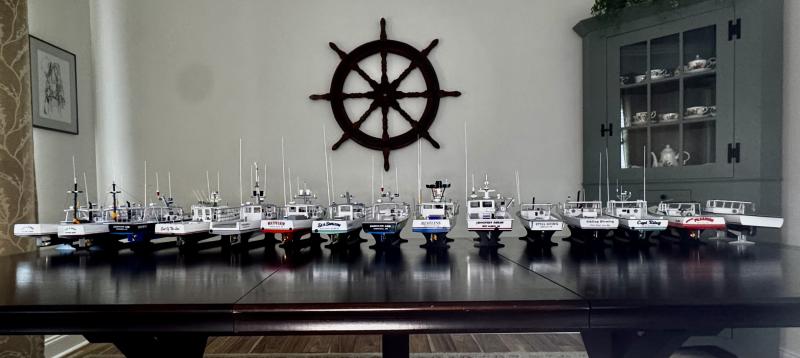
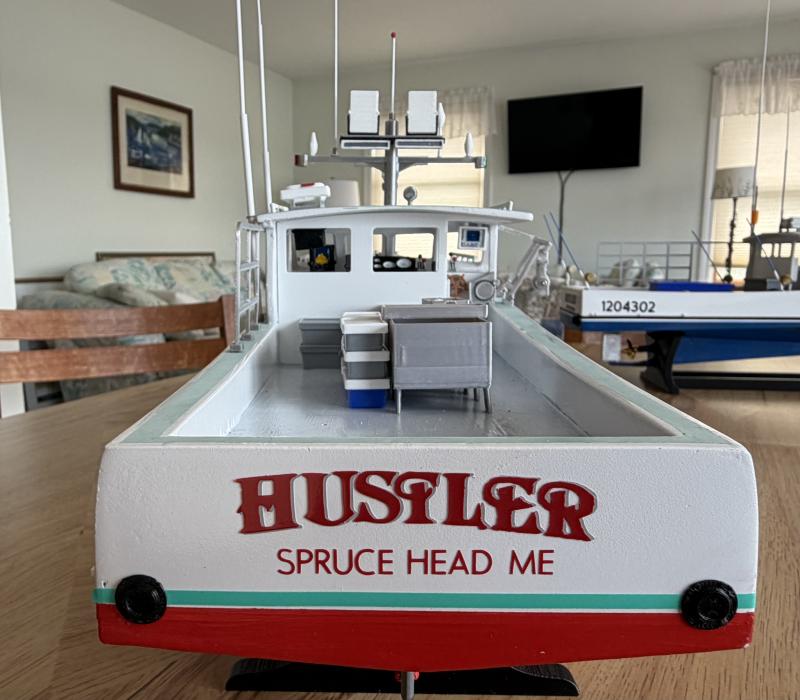
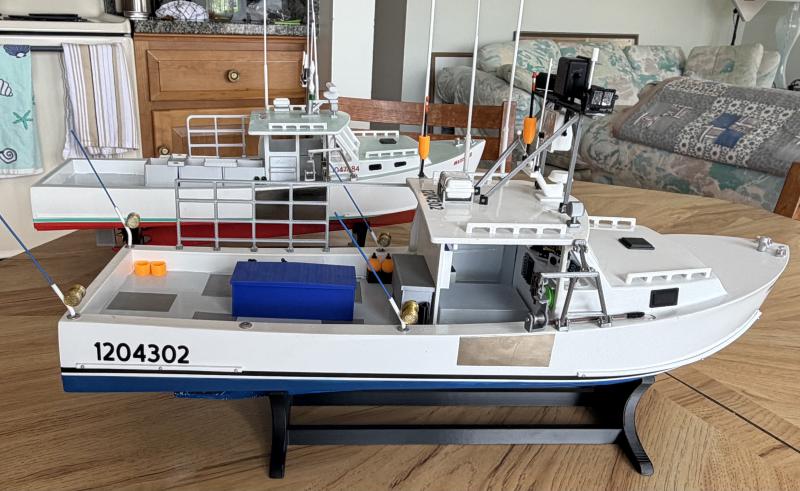
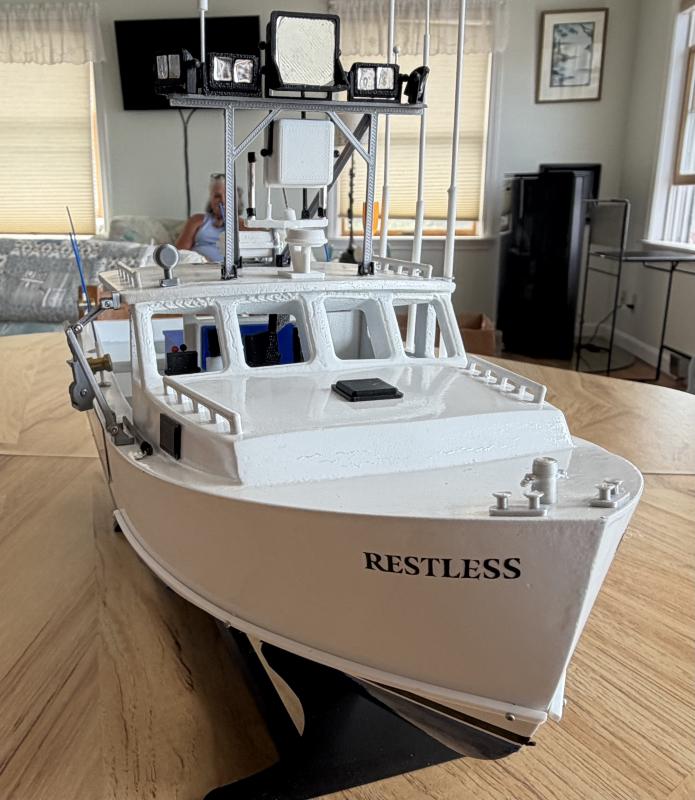
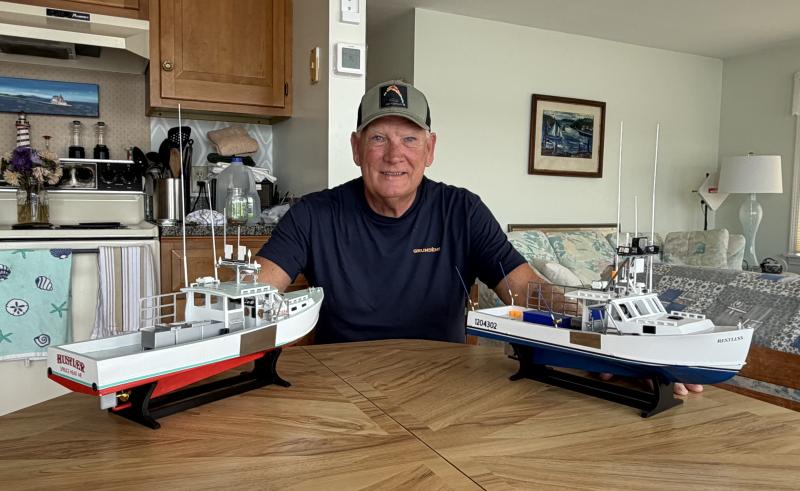 With almost 30 custom lobster boats under his belt, Dan Williams' new hobby helps him stay connected to the working waterfront. ISABELLE CURTIS/Boothbay Register
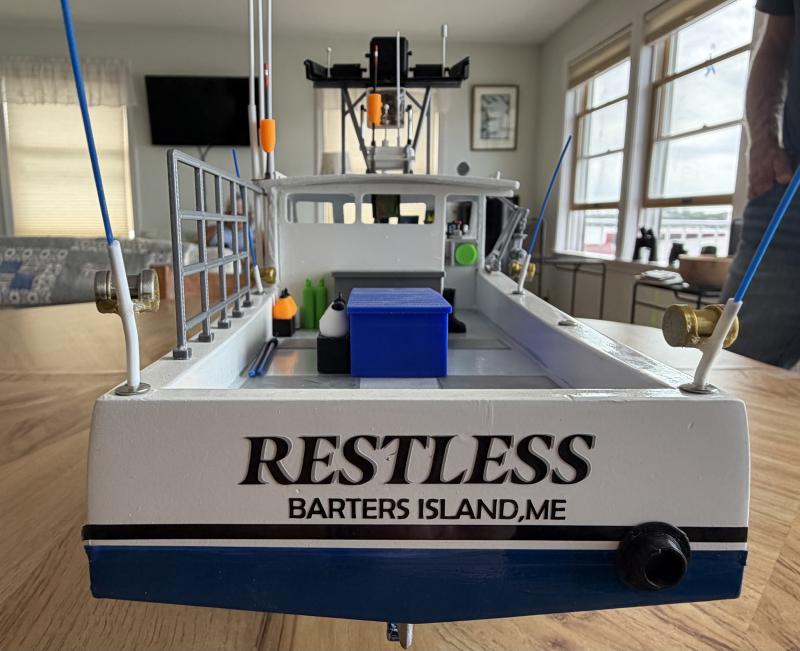
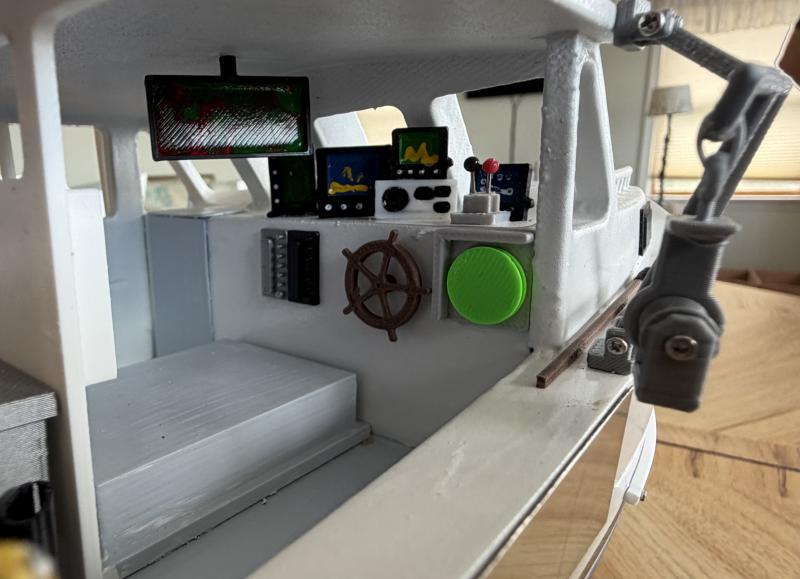 Williams focuses on small details, down to the radar layout. ISABELLE CURTIS/Boothbay Register
 ISABELLE CURTIS/Boothbay Register
 Courtesy of Teresa Williams
 Courtesy of Teresa Williams
 ISABELLE CURTIS/Boothbay Register
 ISABELLE CURTIS/Boothbay Register
 ISABELLE CURTIS/Boothbay Register
 ISABELLE CURTIS/Boothbay Register
With almost 30 custom lobster boats under his belt, Dan Williams' new hobby helps him stay connected to the working waterfront. ISABELLE CURTIS/Boothbay Register
Williams focuses on small details, down to the radar layout. ISABELLE CURTIS/Boothbay Register
ISABELLE CURTIS/Boothbay Register
Courtesy of Teresa Williams
Courtesy of Teresa Williams
ISABELLE CURTIS/Boothbay Register
ISABELLE CURTIS/Boothbay Register
ISABELLE CURTIS/Boothbay Register
ISABELLE CURTIS/Boothbay Register
ISABELLE CURTIS/Boothbay Register
With almost 30 custom lobster boats under his belt, Dan Williams' new hobby helps him stay connected to the working waterfront. ISABELLE CURTIS/Boothbay Register
Williams focuses on small details, down to the radar layout. ISABELLE CURTIS/Boothbay Register
ISABELLE CURTIS/Boothbay Register
Courtesy of Teresa Williams
Courtesy of Teresa Williams
ISABELLE CURTIS/Boothbay Register
ISABELLE CURTIS/Boothbay Register
ISABELLE CURTIS/Boothbay Register
ISABELLE CURTIS/Boothbay Register
No matter where he goes, the working waterfront will always be a part of Dan Williams.
No stranger to a boat deck, Williams spent his early years alongside old-time fishermen like Butch Brewer, worked aboard Cap'n Fish's vessels Mystery and Buccaneer, and went on multiple deep-sea fishing excursions. But he may be best known for the 28 years he owned and ran Dan’s Auto Repair in Boothbay before he and wife Teresa moved to North Carolina to be closer to their children and grandkids.
As a way to stay connected to his roots and try his hand at new technology, Williams fell into a hobby that is swiftly turning into a small business: 3-D printing model lobster boats.
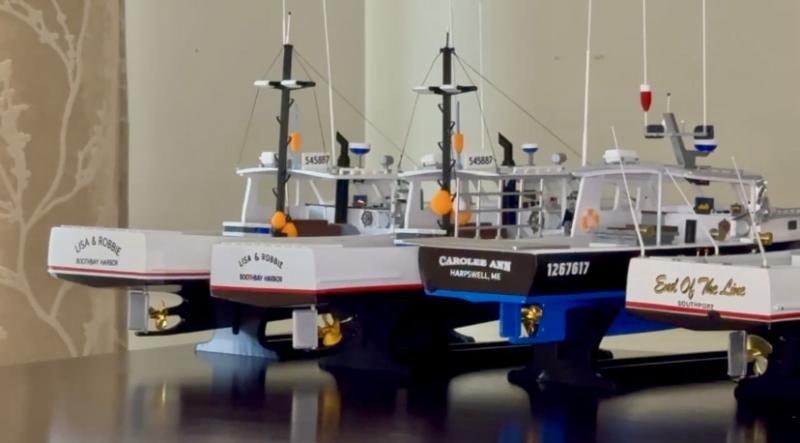
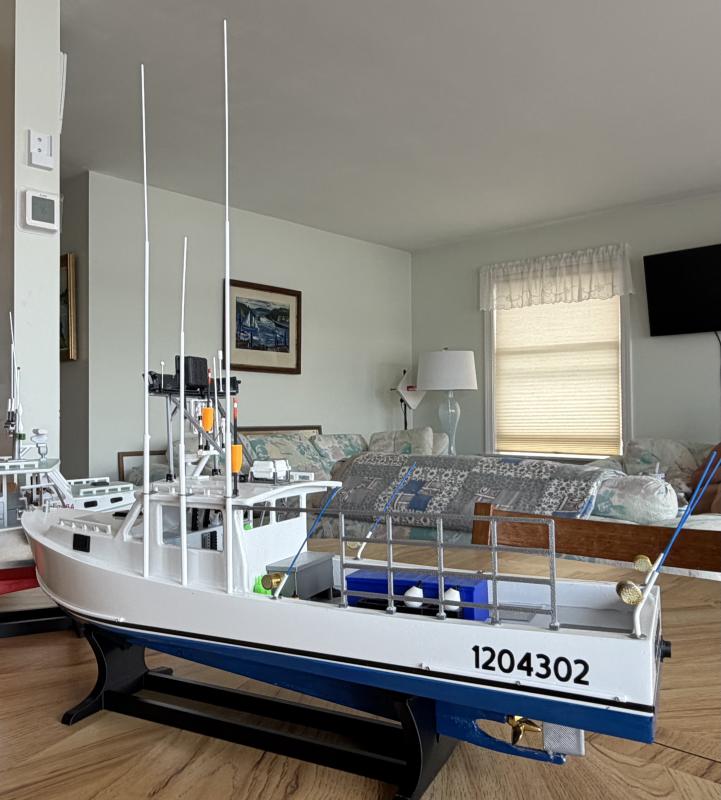
Each one is custom, from the height of the antennas and the layout of the radar, to the design of the muffler.
“I just like doing things that have memory,” he explained.
Each boat takes about 20 to 40 hours of gluing, sanding, priming, painting and decal setting to complete. About half of that time is spent 3-D printing the hull, which takes 19 hours. Williams uses a mix of self-designed, commissioned and publicly available assets to craft the vessel, life jackets, bait trays, boots and any other desired details.
As a result, the printer runs 24/7, and it's like Christmas waking up each morning to see what's been completed overnight, said Williams. However, sometimes it's a rat's nest that greets him. Beyond learning how to use a Computer-Assisted Design (CAD) program to figure out what to print, Williams has become proficient at troubleshooting said printer.
The whole process has been trial and error and, while the final product isn't perfect, Williams thinks the rustic nature adds to the appeal.
"I've had some people that send me these (reference photos of) sport fishing boats that you can eat off the floor, and I'm afraid I'm not going to give them what they're looking for … (A lobster boat is) a working man's livelihood. A lot of fishermen spend a lot of their time on these vessels. It's meaningful.”
Others agree. Hearing people's reactions, how they point out details and reminisce, is Williams' favorite part. Often people commission vessels belonging to lost loved ones, and it becomes a physical tool of remembrance.
Seeing her husband create these boats has also been meaningful to Teresa in a different way. A whole crafting station has sprung up in the spare room they use when their grandchildren visit, with Williams occasionally emerging to show off his latest creations. It's almost like he's been pulled back in time, regional memories fresh on his tongue.
"(It shows) that there is life outside of your work, and you can still bring your love of where you came from, even far away," she said.