BHML one of two Maine libraries visited during Government Accountability Office Tour
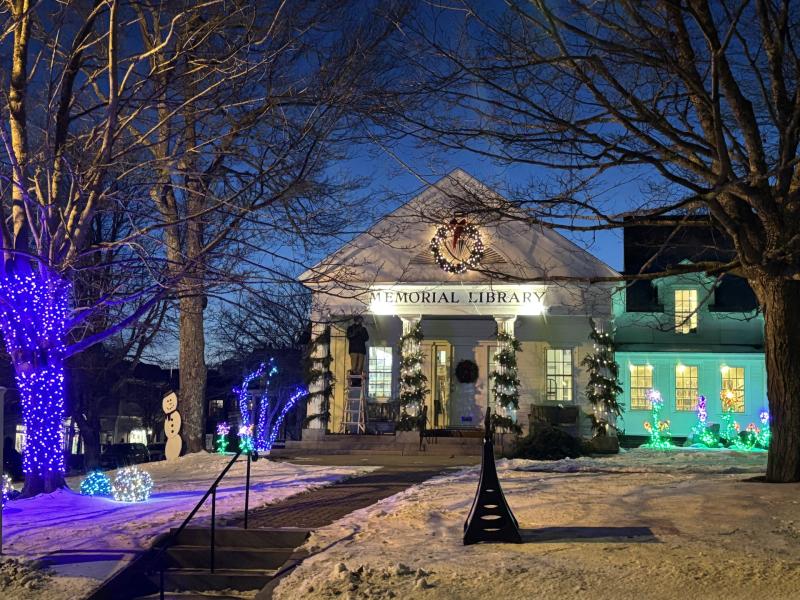 Boothbay Harbor Memorial Library December 2025. LISA KRISTOFF/Boothbay Register
Boothbay Harbor Memorial Library December 2025. LISA KRISTOFF/Boothbay Register
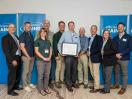
Boothbay Harbor Memorial Library December 2025. LISA KRISTOFF/Boothbay RegisterIn October 2024, three federal officials arrived at the library for an in-depth site visit. Dispatched from Washington, D.C., they came to assess the physical condition of the building and to better understand the operational challenges of delivering modern library services in a repurposed historic structure. The visit followed a referral from Marijke Visser, director of Library Development at the Maine State Library.
The visitors represented the U.S. Government Accountability Office (GAO), which conducted a nationally representative survey of approximately 16,400 public libraries across all 50 states, the District of Columbia, and four U.S. territories. Beginning in 2024, the GAO selected 21 libraries nationwide, including ours, for site visits to deepen their understanding of how building conditions affect library operations. Their findings were published on Dec. 18.
Boothbay Harbor Memorial Library (BHML) fits the GAO’s definition of a repurposed building. The original portion of the Library was built in the 1840s as a private homestead and remodeled into a public library in 1923. Like many historic libraries, the building was never designed for the demands of contemporary library service. At first glance, BHML compares favorably to many libraries included in the report. That is largely due to a stopgap renovation completed in 2014, which addressed BHML’s most urgent needs: structural integrity, floor load capacity, roof deficiencies, ventilation and insulation, lighting, and restroom access. That project transformed a dark, cramped (and much-loved) space into a bright, two-floor library with a public, ADA-accessible restroom.
But “stopgap” is the key word. In 2024, BHML recorded 37,649 in-person visits, circulated 27,158 items, and hosted 428 programs serving 5,866 children, teens, and adults. The library is heavily used year-round by residents, seasonal workers, and visitors alike, with peak summer demand placing extraordinary pressure on a building never designed for this level of activity. Today, the absence of an elevator is a glaring issue, and BHML’s stair-access-only second floor—featured in the GAO report—underscores the limits of the decade-ago renovation. While the library appears cheerful, well cared for, and welcoming (it is!), the building’s shortcomings become immediately apparent as soon as more than a handful of people occupy any given space.
Circulation takes place in the entryway, which is also where the library’s single public restroom is located, which serves patrons, visitors, staff, the Used Bookstore, and a healthy share of downtown tourist traffic. With 100% of all daily visits passing through this space, congestion is constant. Book stacks create narrow pathways that barely accommodate a wheelchair. The library lacks an accessible community program room, so public events are offered in “The Great Room” and routinely block access to collection areas.
Behind the scenes, staff shoulder a heavy burden—quite literally. Rooms are reconfigured multiple times a week (sometimes multiple times a day) as staff regularly pivot between traditional library services and community programming, chairs are precariously carried up and down stairs. In a single week, library staff and volunteers handle thousands of pounds of materials, moving books between floors for shelving, holds, and deliveries. We do this work gladly, but it’s worth noting: a two-story warehouse with materials in constant circulation would never be designed without a mechanical lift. Yet that is exactly how BHML functions.
The GAO visit gave us an opportunity to articulate these challenges. Programs that require three hours of staff time could be accomplished in half that time with a dedicated, accessible program space (so we could do more). With an elevator, volunteers would no longer carry armloads of books up and down stairs; and most importantly all members of the community would be able to access the entire library. As usage continues to grow, the building itself has become the limiting factor in how effectively, and safely, we can serve the public.
In 2024, as BHML celebrated its 100th anniversary, the Board of Trustees quietly launched the initial phase of a capital campaign to address these long-standing issues, both within the library and in the Used Bookstore. The timing was intentional: we’re looking to make the library work for our community for the next 100 years. Nationwide and locally, the single greatest barrier to safe, accessible public libraries is funding. One purpose of the GAO’s work was to inform discussions about whether Institute of Museum and Library Services (IMLS) funds should be permitted for construction and renovation projects. The need is clear nationwide, and it’s clear in our bright little library.
We are currently in the “quiet phase” of the campaign, so you won’t hear much about it publicly, but it's no secret: we’re working towards a safe and accessible library. If you’d like to learn more about BHML’s capital campaign, including naming opportunities, please email Heather Bryer-Lorrain at next100@bbhlibrary.org. To learn more about the proposed building plans (created with consideration of feedback on past proposals, 2010 and prior) reach out to Joanna Breen at director@bbhlibrary.org.
Read the full GAO report: U.S. Government Accountability Office. “Public Libraries: Many Buildings Are Reported to Be in Poor Condition, with Increasing Deferred Maintenance.” Gao.gov, 2025, www.gao.gov/products/gao-26-107262.