The Arctic Swan
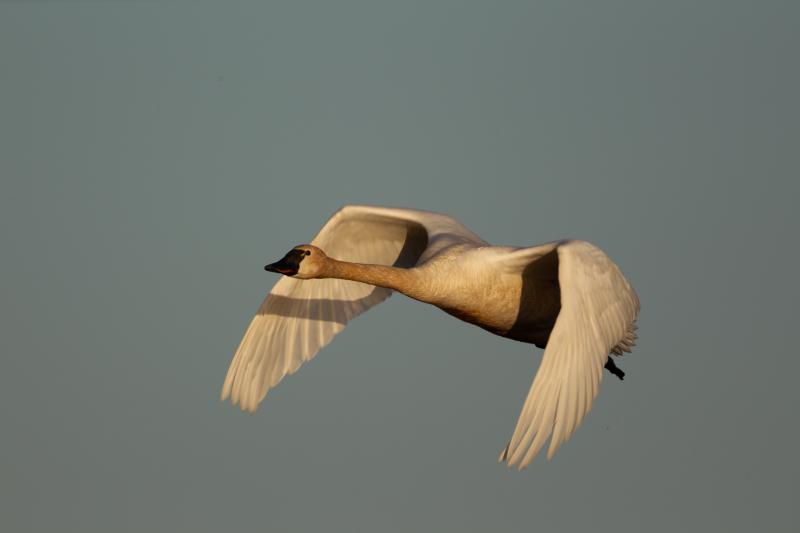 One of few all-white birds, the eastern population of tundra swan winters along the coast from New Jersey to North Carolina and migrates north to the Arctic for nesting. It is a rare bird in Maine. Photo by Peter Pearsall, courtesy USFWS.
 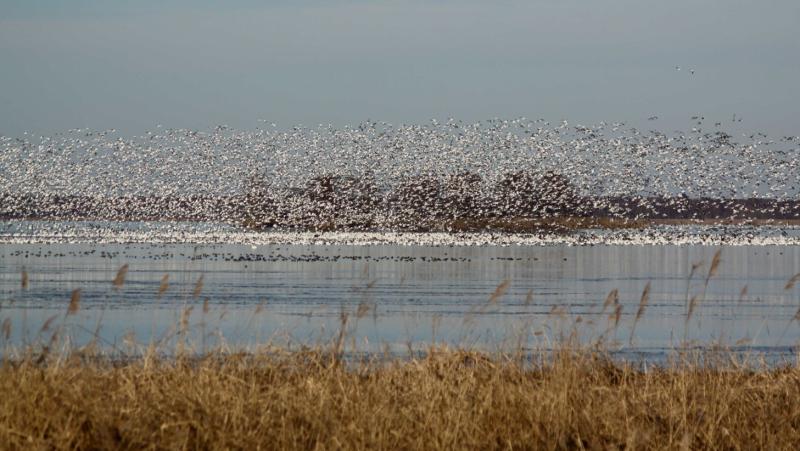 Hundreds of tundra swans take flight at Lake Mattamuskeet at Mattamuskeet National Wildlife Refuge in North Carolina. The bulk of the population now winters in North Carolina. Photo by Michelle Moorman, courtesy USFWS.
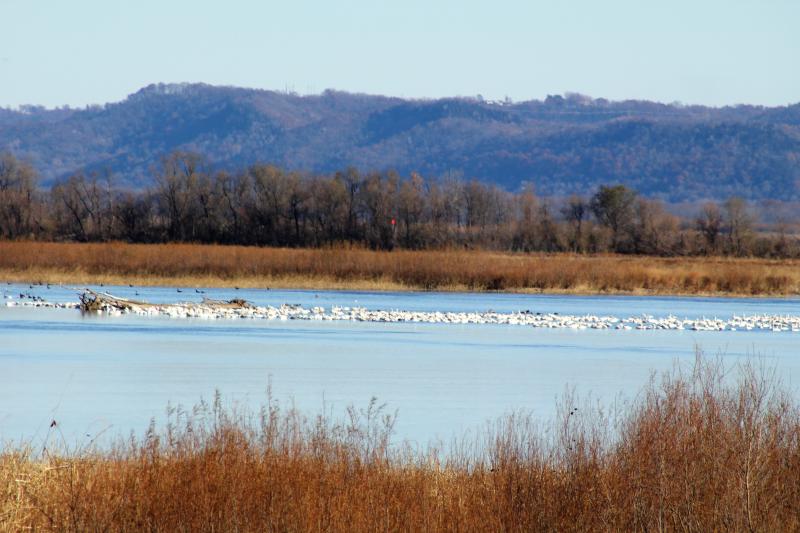 A large proportion of the eastern population of tundra swans migrates through the Upper Mississippi region. In this photo, thousands of tundra swans rest on the Mississippi River at the Upper Mississippi River National Wildlife and Fish Refuge's Brownsville Overlook near Brownsville, Minnesota. Photo by Jamie Bertram, courtesy of USFWS.
One of few all-white birds, the eastern population of tundra swan winters along the coast from New Jersey to North Carolina and migrates north to the Arctic for nesting. It is a rare bird in Maine. Photo by Peter Pearsall, courtesy USFWS.
Hundreds of tundra swans take flight at Lake Mattamuskeet at Mattamuskeet National Wildlife Refuge in North Carolina. The bulk of the population now winters in North Carolina. Photo by Michelle Moorman, courtesy USFWS.
A large proportion of the eastern population of tundra swans migrates through the Upper Mississippi region. In this photo, thousands of tundra swans rest on the Mississippi River at the Upper Mississippi River National Wildlife and Fish Refuge's Brownsville Overlook near Brownsville, Minnesota. Photo by Jamie Bertram, courtesy of USFWS.
A large proportion of the eastern population of tundra swans migrates through the Upper Mississippi region. In this photo, thousands of tundra swans rest on the Mississippi River at the Upper Mississippi River National Wildlife and Fish Refuge's Brownsville Overlook near Brownsville, Minnesota. Photo by Jamie Bertram, courtesy of USFWS.
One of few all-white birds, the eastern population of tundra swan winters along the coast from New Jersey to North Carolina and migrates north to the Arctic for nesting. It is a rare bird in Maine. Photo by Peter Pearsall, courtesy USFWS.
Hundreds of tundra swans take flight at Lake Mattamuskeet at Mattamuskeet National Wildlife Refuge in North Carolina. The bulk of the population now winters in North Carolina. Photo by Michelle Moorman, courtesy USFWS.
A large proportion of the eastern population of tundra swans migrates through the Upper Mississippi region. In this photo, thousands of tundra swans rest on the Mississippi River at the Upper Mississippi River National Wildlife and Fish Refuge's Brownsville Overlook near Brownsville, Minnesota. Photo by Jamie Bertram, courtesy of USFWS.
Three tundra swans showed up last week in Scarborough Marsh, a noteworthy find considering Maine is outside of the normal migratory path for these giant white birds.
We were fortunate when we lived in Ithaca, New York, to have had lots of opportunities to see tundra swans in strong numbers on Cayuga Lake and at Montezuma National Wildlife Refuge, abutting the north end of the 38-mile body of water. During migration periods, there could sometimes be hundreds of these massive, magnificent birds in the area.
Here in Maine, in contrast, swans of any kind are quite rare. Probably most frequent are sightings of individuals from feral populations of mute swans, with their distinctive long, curved necks and orange bills. Trumpeter swans may have nested in Maine hundreds of years ago, based on early mentions of swans in historical accounts. In recent years, a few birds from the restored population of trumpeter swan in the Midwest have wandered into Maine as they expand their range. Maine’s even had sightings of the Eurasian whooper swan but all of these are thought to have been escapes from captive waterfowl collections here in North America, since most have been rather tame.
There are two distinct populations of tundra swans in North America, both nesting in Arctic and sub-Arctic regions. The western population nests in Alaska south of a peninsula called Tikiġaq (also known as Point Hope), at the northwestern edge of the state. Perhaps the largest breeding concentration is in the Yukon-Kuskokwim Delta. The birds from this western population migrate south to the Pacific Coast for the winter from southern Puget Sound to San Francisco Bay. Many pass through marshes near Utah’s Great Salt Lake on their way south.
The eastern population of tundra swan nests from the North Slope of Alaska (north and east of Tikiġaq) across the Canadian Arctic to Baffin Island and south to the shores of Hudson Bay. Places near the shore of the Beaufort Sea in the Northwest Territories, like the vast Mackenzie Delta (second largest coastal Arctic delta in the world) and the incredibly intricate striations and indentations of Imaryuk (Husky Lakes wetlands) near Tuktoyaktuk, host remarkable breeding concentrations of tundra swans. Farther east, they nest in places like Aviqtuuq (Boothia Peninsula) and Southampton Island, both in Nunavut, and in the estuaries of the pristine Seal River Watershed, where the river flows into Hudson Bay in northern Manitoba. The most southerly extent of their nesting range encompasses the coastal sections of Tawich (the waters and coast of the Hudson Bay Lowlands of northern Ontario).
Birds from this wide expanse (Alaska to Baffin Island) all migrate south to winter in the Mid-Atlantic region of the U.S., with the largest concentration now found in coastal North Carolina. During both fall migration and the northward spring migration, which begins in March, most of the birds travel north through Pennsylvania and western New York. Then they move westward across the Great Lakes states into Minnesota and eastern North Dakota before turning northward into Manitoba and Saskatchewan. From here they split up, some going northwest to reach Alaska and the Northwest Territories, while others travel northeast to skirt the western side of Hudson Bay on their way to the Canadian Central and Eastern Arctic.
Very few tundra swans ever seem to take a more easterly route from the mid-Atlantic states to get north, so here in Maine we rarely see them. But every year or two (at least in recent years), a few do show up.
The tundra swans that stopped in Scarborough Marsh last week appeared to have stayed for just one day, but they delighted a good many birders. Is it possible that the occasional birds that come through Maine are from the most easterly breeding populations that occur in far northern Quebec and Baffin Island? Are a few birds scouting out what will be a new migration route?
The eastern population of tundra swan has been increasing since the 1980s and is now estimated at over 100,000 individuals. Maybe we’ll be seeing more? We’ll be on the lookout for this special Arctic breeding bird!
Jeffrey V. Wells, Ph.D., is a Fellow of the Cornell Lab of Ornithology and Vice President of Boreal Conservation for National Audubon. Dr. Wells is one of the nation's leading bird experts and conservation biologists. He is a coauthor of the seminal “Birds of Maine” book and author of the “Birder’s Conservation Handbook.” His grandfather, the late John Chase, was a columnist for the Boothbay Register for many years. Allison Childs Wells, formerly of the Cornell Lab of Ornithology, is Senior Director of Communications at the Natural Resources Council of Maine, a nonprofit membership organization working statewide to protect the nature of Maine. Both are widely published natural history writers and are the authors of the popular books, “Maine’s Favorite Birds” (Down East Books) and “Birds of Aruba, Bonaire, and Curaçao: A Site and Field Guide,” (Cornell University Press).