What's Next
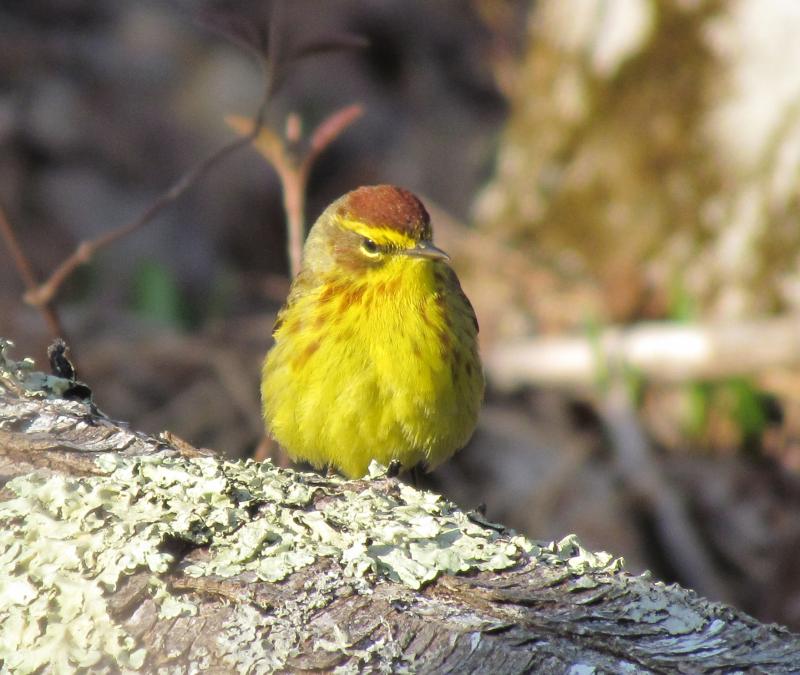 After spending the winter hanging around palm trees (hence the name), palm warblers begin arriving in Maine in April. Courtesy of Jeff Wells.
 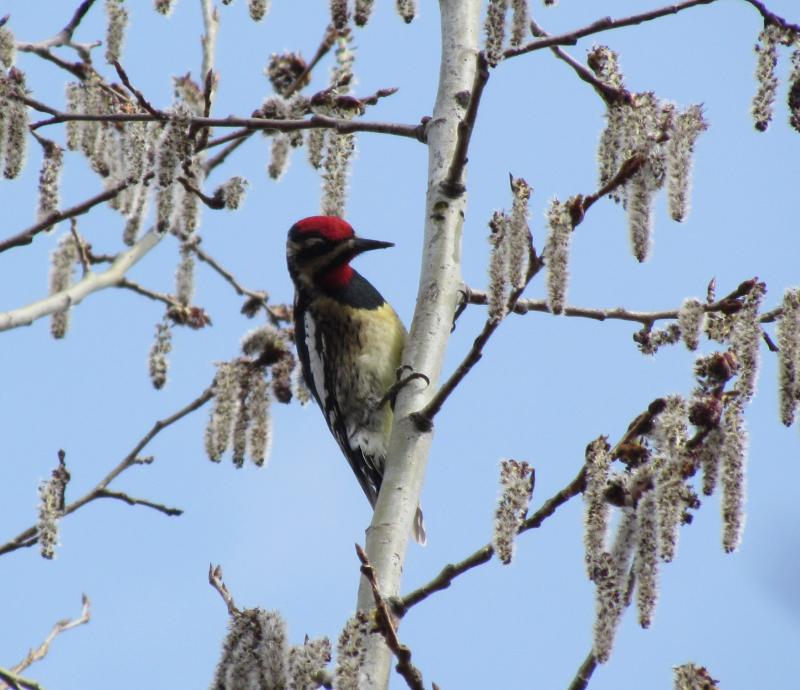 One of only two migratory woodpecker species in eastern North America, the yellow-bellied sapsucker begins arriving in Maine in April. (If you're wondering, the other migratory woodpecker in the eastern U.S. is the northern flicker.) Courtesy of Jeff Wells.
After spending the winter hanging around palm trees (hence the name), palm warblers begin arriving in Maine in April. Courtesy of Jeff Wells.
One of only two migratory woodpecker species in eastern North America, the yellow-bellied sapsucker begins arriving in Maine in April. (If you're wondering, the other migratory woodpecker in the eastern U.S. is the northern flicker.) Courtesy of Jeff Wells.
One of only two migratory woodpecker species in eastern North America, the yellow-bellied sapsucker begins arriving in Maine in April. (If you're wondering, the other migratory woodpecker in the eastern U.S. is the northern flicker.) Courtesy of Jeff Wells.
After spending the winter hanging around palm trees (hence the name), palm warblers begin arriving in Maine in April. Courtesy of Jeff Wells.
One of only two migratory woodpecker species in eastern North America, the yellow-bellied sapsucker begins arriving in Maine in April. (If you're wondering, the other migratory woodpecker in the eastern U.S. is the northern flicker.) Courtesy of Jeff Wells.
It’s still early enough in spring that migratory bird species are arriving relatively slowly. The first wood ducks one day, then maybe there’s a week or so before the next arrival—perhaps tree swallows swooping around over the stream or wetland. Then it’s another week before the familiar buzzy “free-bree” sounds of the eastern phoebe sound out near the shed where they will be soon building their nest. A few days later, it could be the reddish-capped chipping sparrow showing up on the lawn or you hear its familiar trill that will quickly become the background music for the rest of the spring and summer.
We were blessed to have a fox sparrow spend a couple of days with us about a week ago. For three days, we reveled in its loud, cheerful whistled song that’s quite unlike anything else heard around here. The fox sparrows always come and go quickly as they fly north from their wintering grounds in the southeastern U.S. to their breeding grounds across the Boreal Forest of Canada (a few nest in northern Maine, too). We rarely have them stay in our backyard more than a day or two, and the one this year was no exception.
Yesterday, we glanced out into the leafless lilac bush to see another new arrival, a tiny bird, actively moving about and flicking its wings—a ruby-crowned kinglet. Like the fox sparrow, these little sprites spend the winter in the southeastern U.S. and return our way in April. We missed hearing its rollicking song, but there will be more; we’re sure to hear that song before the month is over.
What bird will be next, we’re wondering?
We’ve been kind of surprised that our local osprey hasn’t yet appeared. When the osprey are back, they are usually obvious, either from the their loud, persistent breeding display calls or their presence hovering over the stream and river, or sitting in the trees along the water’s edge. Brother Andrew reported that his local osprey is already back and hanging around the nest down Georgetown way, so some are indeed already back.
Pine warblers should be giving their liquid trills from groves of white pines.
Blue-headed vireos, with their white “spectacles” and yellow sides, usually come back around the same time as the ruby-crowned kinglets (many also winter in the southeastern U.S. but also south into Mexico and Central America). Palm warblers, those yellow-bellied tail-waggers, also should be showing up along with the famous “butter-butts” that are otherwise known as yellow-rumped warblers.
Another April favorite arrival are the yellow-bellied sapsuckers, soon to be staccato drumming on metal camp stovepipes all over the state, waking up anyone enjoying time “up to camp” in the early spring.
Some of you may have already seen or heard many of these early arrivals, but we’re still waiting for some where we are. And yet there are also still some winter birds lingering. Today, we even had a flock of bohemian waxwings, which still have to travel back up to northern Canada. A few dark-eyed juncos continue to hang around as well, and we saw some of American tree sparrows just last week in Brunswick.
Soon the migrants will be pouring in so quickly that there be many new arrivals appearing every day. That will be fun, too. But for now, we’ll be enjoying watching for the next in the line-up of the April arrivals.
Jeffrey V. Wells, Ph.D., is a Fellow of the Cornell Lab of Ornithology and Vice President of Boreal Conservation for National Audubon. Dr. Wells is one of the nation's leading bird experts and conservation biologists. He is a coauthor of the seminal “Birds of Maine” book and author of the “Birder’s Conservation Handbook.” His grandfather, the late John Chase, was a columnist for the Boothbay Register for many years. Allison Childs Wells, formerly of the Cornell Lab of Ornithology, is a senior director at the Natural Resources Council of Maine, a nonprofit membership organization working statewide to protect the nature of Maine. Both are widely published natural history writers and are the authors of the popular books, “Maine’s Favorite Birds” (Down East Books) and “Birds of Aruba, Bonaire, and Curaçao: A Site and Field Guide,” (Cornell University Press).