Stretch Your Migration Mind
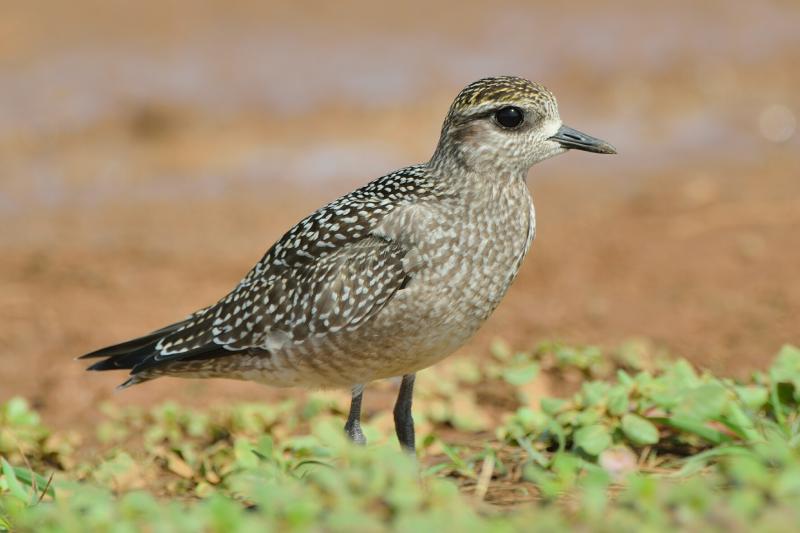 American golden-plovers nest in the Arctic and sub-Arctic of Alaska and Canada, and but instead of heading straight south they head to the East Coast before departing across the ocean for their southern South American wintering grounds. Photo courtesy of Michiel Oversteegen.
 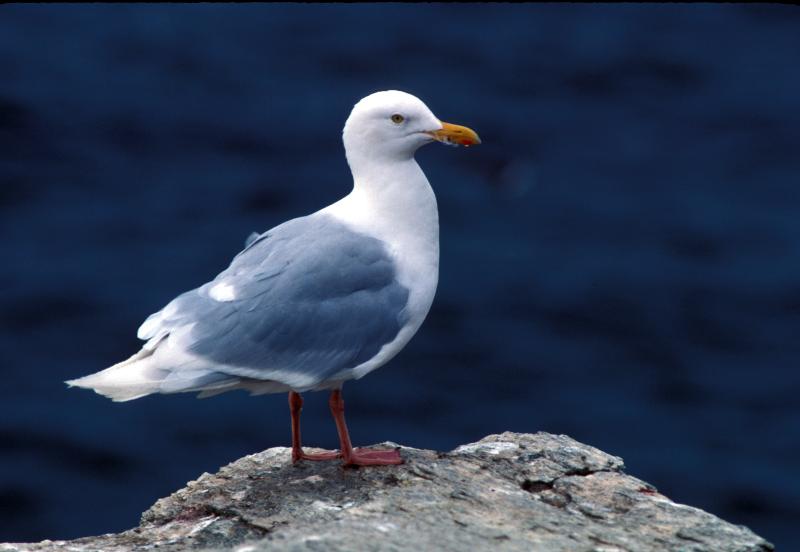 While some glaucous gulls that nest in the central Arctic move south to our area each winter, a larger number of them go east to Greenland or west to Russia. Photo by Art Sowls, courtesy of USFWS.
American golden-plovers nest in the Arctic and sub-Arctic of Alaska and Canada, and but instead of heading straight south they head to the East Coast before departing across the ocean for their southern South American wintering grounds. Photo courtesy of Michiel Oversteegen.
While some glaucous gulls that nest in the central Arctic move south to our area each winter, a larger number of them go east to Greenland or west to Russia. Photo by Art Sowls, courtesy of USFWS.
While some glaucous gulls that nest in the central Arctic move south to our area each winter, a larger number of them go east to Greenland or west to Russia. Photo by Art Sowls, courtesy of USFWS.
American golden-plovers nest in the Arctic and sub-Arctic of Alaska and Canada, and but instead of heading straight south they head to the East Coast before departing across the ocean for their southern South American wintering grounds. Photo courtesy of Michiel Oversteegen.
While some glaucous gulls that nest in the central Arctic move south to our area each winter, a larger number of them go east to Greenland or west to Russia. Photo by Art Sowls, courtesy of USFWS.
Birds fly south in the winter and north in the spring. That’s probably how most people in the U.S. would describe the phenomenon of bird migration.
And it’s broadly and generally true. A great mass of billions of individual birds make a migratory trek to be in northern landscapes when those places are warm and full of food and mirror that movement to escape back south when the weather turns cold and food is unavailable.
Individual birds that stray from the north-south pattern are what stoke the fires of many a birder’s passion. Here in Maine this winter, birders have excitedly traveled to see birds like western tanagers in Portland and Rockland, a Bullock’s oriole in Blue Hill, and a black-headed grosbeak in Madison. These are all species that nest in the western U.S. and Canada and winter in Mexico and/or south into Central America. They are considered birds that follow that classic north-south migration route.
So when one veers east instead of south and shows up in Maine, it’s pretty special. We tend to describe such individual birds as off-track and chalk up their arrival here as bad luck (for them), perhaps from getting caught in unfavorable winds or from faulty internal navigation.
And that may be true.
It’s interesting to note, though, that there are always a fair number of individuals of these and some other western species that end up in places along the East Coast every winter when the bulk of the species is in Mexico and points south. Do any of these birds survive, and do any of them come back and do it again? We don’t really know.
There are some species that show versions of a more east-west or west-east migration track at least in some portion of the migration cycle. Many landbirds that nest in the Boreal Forest, as far east even as Alaska, move eastward across the continent before finally turning south. One of the most extraordinary examples is the blackpoll warbler. Those that nest or are hatched in Alaska and western Canada migrate in fall all the way to the Canadian Maritimes, New England, and the mid-Atlantic states of the U.S. before striking out for a multi-day flight to northern South America, where they will spend the winter. Shorebirds like American golden-plovers and whimbrels fly eastward across the Arctic and sub-Arctic to the East Coast in fall to do a version of the same thing.
Some Arctic breeding birds make interesting east-west or west-east movements. Common eiders nesting on Southampton Island in northern Hudson Bay of Nunavut fly eastward to winter along the coast of Greenland. Some harlequin ducks nesting in northeastern Canada fly to Greenland for the summer and then back west to the Maritimes and the Maine coast for the winter. Some glaucous gulls nesting on Coats Island, in northern Hudson Bay, migrate eastward to the waters between Canada and Greenland, but others fly westward to winter on the coast of Russia!
A bird identified in Ogunquit in January takes the east-west/west-east migration to another level: it was the Kamchatka subspecies of the common gull, a species that nests in Siberia (including the Kamchatka Peninsula) and winters from Siberia south through Japan to China. Amazingly, a few are spotted now annually from Quebec south to Pennsylvania.
Next time you think of the concept of bird migration, we hope we’ll have convinced you to stretch your migration mind in all directions!
Jeffrey V. Wells, Ph.D., is a Fellow of the Cornell Lab of Ornithology and Vice President of Boreal Conservation for National Audubon. Dr. Wells is one of the nation's leading bird experts and conservation biologists. He is a coauthor of the seminal “Birds of Maine” book and author of the “Birder’s Conservation Handbook.” His grandfather, the late John Chase, was a columnist for the Boothbay Register for many years. Allison Childs Wells, formerly of the Cornell Lab of Ornithology, is a senior director at the Natural Resources Council of Maine, a nonprofit membership organization working statewide to protect the nature of Maine. Both are widely published natural history writers and are the authors of the popular books, “Maine’s Favorite Birds” (Down East Books) and “Birds of Aruba, Bonaire, and Curaçao: A Site and Field Guide,” (Cornell University Press).