Half of the World’s Migratory Birds Are in Decline
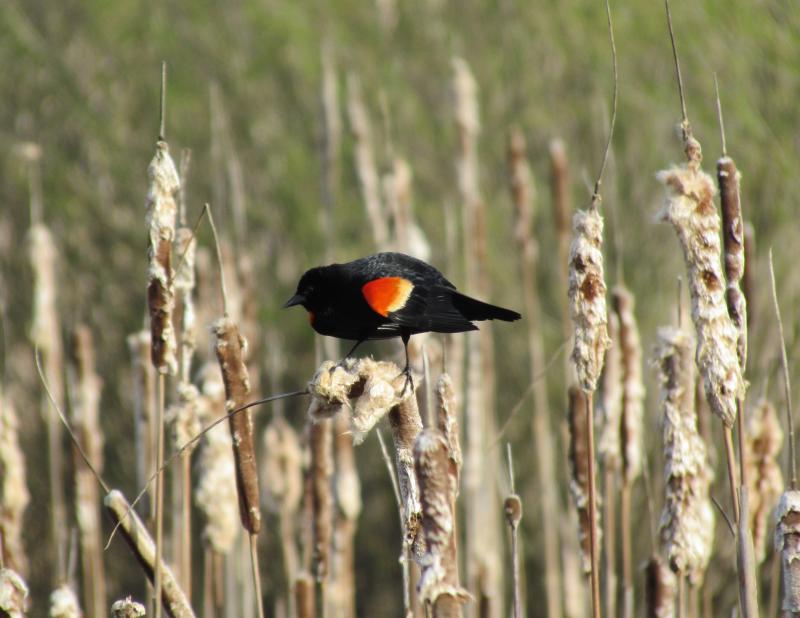 Red-winged blackbirds are among the birds species that are declining in Maine. More than fifty percent of the blackbird family worldwide are showing declines. Courtesy of Jeff Wells
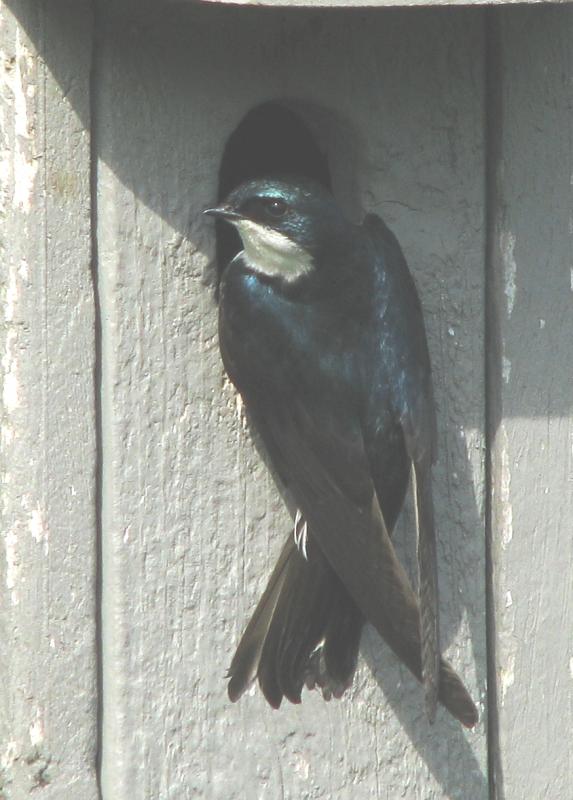 Aerial insectivores like the tree swallow are among the most rapidly declining bird species in Maine. Nearly thirty percent of swallows worldwide are showing declines. Courtesy of Jeff Wells
Red-winged blackbirds are among the birds species that are declining in Maine. More than fifty percent of the blackbird family worldwide are showing declines. Courtesy of Jeff Wells
Aerial insectivores like the tree swallow are among the most rapidly declining bird species in Maine. Nearly thirty percent of swallows worldwide are showing declines. Courtesy of Jeff Wells
Aerial insectivores like the tree swallow are among the most rapidly declining bird species in Maine. Nearly thirty percent of swallows worldwide are showing declines. Courtesy of Jeff Wells
Red-winged blackbirds are among the birds species that are declining in Maine. More than fifty percent of the blackbird family worldwide are showing declines. Courtesy of Jeff Wells
Aerial insectivores like the tree swallow are among the most rapidly declining bird species in Maine. Nearly thirty percent of swallows worldwide are showing declines. Courtesy of Jeff WellsThe “review.” It’s how we decide whether to watch a movie or show, dine at a new restaurant, even hike a trail we’ve never taken before.
Scientists have their own kind of review: summary of the current state of a particular field of research, often with recommendations as to how a different perspective or a new approach might yield better results.
A new review paper was recently published, the author list of which includes several of our friends and colleagues. As the title makes obvious—“Status, threats and conservation of Earth’s migratory birds”—it’s an ambitious attempt to consider the major themes related to the conservation of migratory birds across the entire world.
The first line of the abstract is striking: “Half of all migratory bird species have declining population sizes.” That includes migratory birds from every part of Planet Earth. Sadly, that is true of Maine’s avifauna as well. In fact, of the Maine species monitored by the Breeding Bird Survey in which an increase or decrease is significant, nearly 70% are declining. The authors go on to make the true but stark statement that “Without intervention, continued declines and extinctions are inevitable.”
Some of the findings in the review are just plain interesting. For example, they find that one global bird database may characterize a species as “migratory” while another considers it a “non-migratory resident.” That may be because certain kinds of migratory movements, such as migration from upper elevations to lower elevations in mountainous areas or movements within the tropics, are not being taken into consideration. The authors also point out that many migratory movements of birds in South and Central America, Africa, and southern Asia are poorly documented.
We know from our study of the birds of Aruba, Bonaire, and Curaçao (islands off the northern coast of South America) that there are many migratory mysteries yet to be uncovered. Various new bird species show up on these islands every year, birds that clearly have to travel sometimes long distances to get there. Various flycatchers—elaenias, tyrannulets, kingbirds—but also swallows, swifts, blackbirds, and many other birds are discovered unexpectedly on these islands. Many are species whose migratory tendencies, timing, and routes are unknown or unclear.
The paper points out that the solutions to these problems include a need for more large-scale funding to go toward land conservation and habitat restoration efforts. That includes efforts like those of the Boothbay Region Land Trust and other regional land trusts, funding for the Land for Maine's Future program, funding to the U.S. Fish and Wildlife Service and the U.S. National Park Service. It also needs to include more funding for such efforts outside of the U.S. including those initiated by Indigenous governments and organizations working to protect massive landscapes across the Boreal Forest and Arctic biomes of Canada and efforts like Conserva Aves in Latin America. These are all efforts that many groups can help you to find ways to support, including the National Audubon Society.
That’s not going to be enough, the paper’s authors point out. We also need to have efforts focused on reducing threats and negative impacts from climate change, pollution, habitat degradation, and others. That’s been the focus of groups like the Natural Resources Council of Maine since its founding in 1959. And finally, we sometimes need very species-specific management interventions—like those of National Audubon’s Seabird Institute founded by Steve Kress who pioneered methods for restoring Atlantic puffins and other seabirds right here on the Maine coast.
We need all these types of initiatives, and we need more interconnecting of such efforts to have any hope of bringing back the birds we love and maintaining healthy ecosystems that will allow us humans to also live healthy and happy lives. We hope you’ll consider finding ways to get involved and support efforts for positive impact for birds and for us all.
Jeffrey V. Wells, Ph.D., is a Fellow of the Cornell Lab of Ornithology and Vice President of Boreal Conservation for National Audubon. Dr. Wells is one of the nation's leading bird experts and conservation biologists. He is a coauthor of the seminal “Birds of Maine” book and author of the “Birder’s Conservation Handbook.” His grandfather, the late John Chase, was a columnist for the Boothbay Register for many years. Allison Childs Wells, formerly of the Cornell Lab of Ornithology, is a senior director at the Natural Resources Council of Maine, a nonprofit membership organization working statewide to protect the nature of Maine. Both are widely published natural history writers and are the authors of the popular books, “Maine’s Favorite Birds” (Down East Books) and “Birds of Aruba, Bonaire, and Curaçao: A Site and Field Guide,” (Cornell University Press).