Patriotism is in their blood
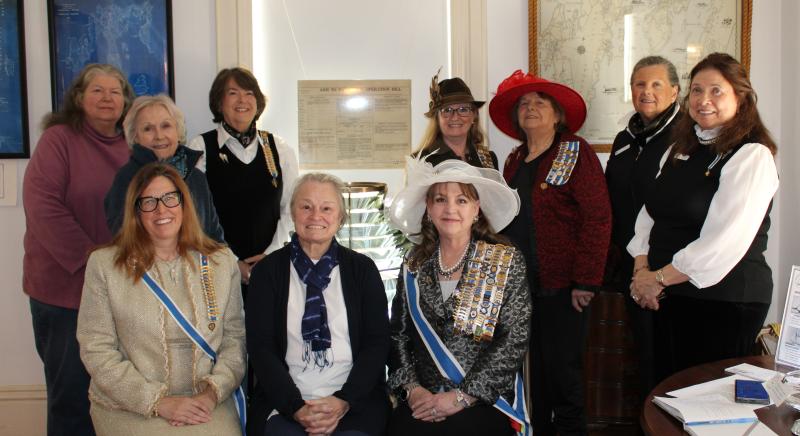 Daughters of the American Revolution members gather at Boothbay Harbor Historical Society to celebrate the chapter's 92nd birthday. ISABELLE CURTIS/Boothbay Register
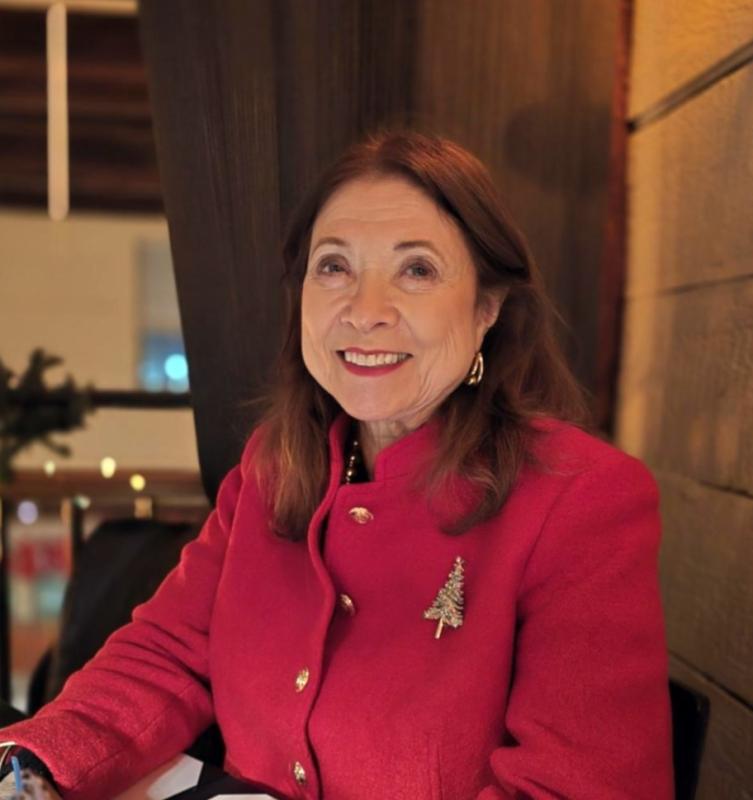 Audrey Leeds Miller, Chapter Regent from 2016 to 2022 and 2025 to 2028. ISABELLE CURTIS/Boothbay Register
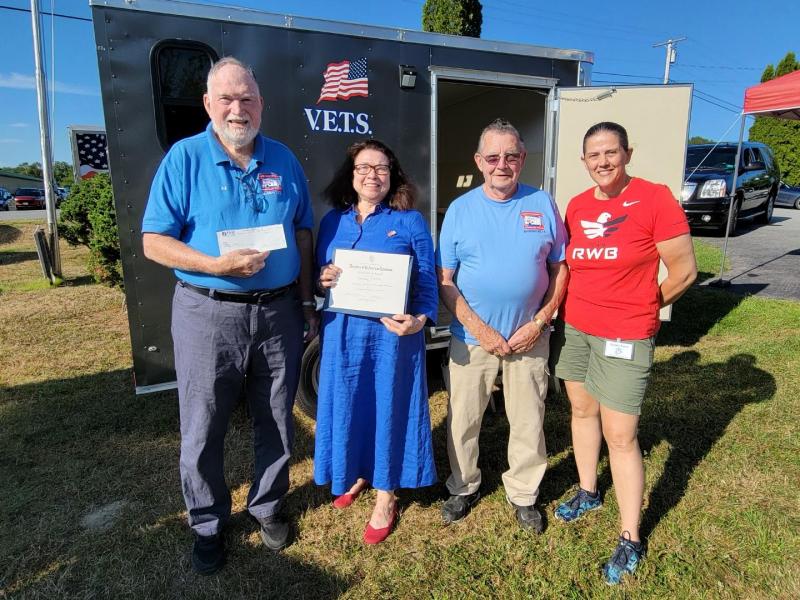 DAR donates $1,000 to Boothbay V.E.T.S. for trailers. ISABELLE CURTIS/Boothbay Register
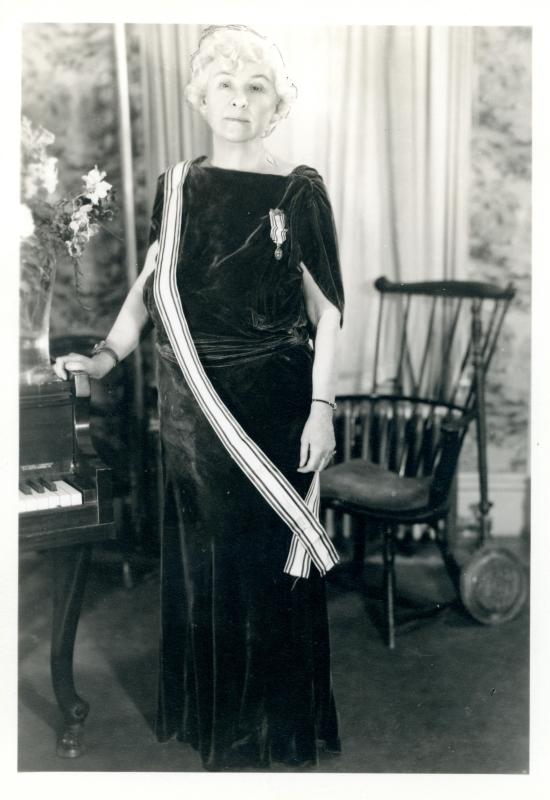 Elizabeth F. Reed served as the DAR regent from 1940 to 1941. Courtesy of Boothbay Region Historical Society
Daughters of the American Revolution members gather at Boothbay Harbor Historical Society to celebrate the chapter's 92nd birthday. ISABELLE CURTIS/Boothbay Register
Audrey Leeds Miller, Chapter Regent from 2016 to 2022 and 2025 to 2028. ISABELLE CURTIS/Boothbay Register
DAR donates $1,000 to Boothbay V.E.T.S. for trailers. ISABELLE CURTIS/Boothbay Register
Elizabeth F. Reed served as the DAR regent from 1940 to 1941. Courtesy of Boothbay Region Historical Society
Elizabeth F. Reed served as the DAR regent from 1940 to 1941. Courtesy of Boothbay Region Historical Society
Daughters of the American Revolution members gather at Boothbay Harbor Historical Society to celebrate the chapter's 92nd birthday. ISABELLE CURTIS/Boothbay Register
Audrey Leeds Miller, Chapter Regent from 2016 to 2022 and 2025 to 2028. ISABELLE CURTIS/Boothbay Register
DAR donates $1,000 to Boothbay V.E.T.S. for trailers. ISABELLE CURTIS/Boothbay Register
Elizabeth F. Reed served as the DAR regent from 1940 to 1941. Courtesy of Boothbay Region Historical SocietyThe patriotism of Revolutionary War soldiers lives on through the Daughters of the American Revolution (DAR)’s Pemaquid Chapter.
The members’ commitment to fostering education, historic preservation and patriotism manifests through community involvement. DAR donates about $3,000-$4,000 a year to support veterans' causes, like the Boothbay V.E.T.S. trailers for veterans experiencing homelessness.DAR also maintains a $500 Good Citizen Award scholarship for regional high schoolers.
Beyond monetary support, members conduct education programs with students, gather clothing and personal care items for Augusta’s Togus VA Medical Center, and write Christmas cards for active service members, among other activities. Various historic markers recognizing the area’s contributions to the Revolutionary War era have also been erected by the DAR.
“The women that I have met in DAR, no matter what their age is, are strong. They are very, very devoted to this country, they love history, they love the United States, and they want to help their neighbors,” said Audrey Leeds Miller of East Boothbay, Pemaquid Chapter regent.
DAR women also have a common ancestry, as members must be able to prove they descend from someone who fought in the War of Independence. The careful recordkeeping has resulted in the DAR having one of the best genealogical libraries in the world, according to Miller.
However, while members trace their lines back to male soldiers, the war wasn’t won by them alone. Women were on the frontlines too, whether they enlisted under false identities, followed the Continental Army’s movements, or kept the war effort and society turning through manual labor, said Miller.
“The war couldn't have happened without their support, but you don't hear as much about it as you should.”
Highlighting female contributions is the goal of DAR’s Dazzling Daughters archive, a section of its website dedicated to profiling historically significant DAR members.
Although not a featured member online, Boothbay Harbor has its own Dazzling Daughter in Elizabeth Freeman Reed (1874-1953), whose 1874 home Boothbay Region Historical Society resides in. Reed was one of the original 20 members behind the Pemaquid Chapter’s 1932 founding and served as its regent from 1940 to 1941.
Reed was also an active participant in political and feminist movements of the era, according to Society trustee Julia O’Brien-Merrill. As a devout suffragette, Reed engaged in community organizing, promoting in the Boothbay Register “Suffragette Teas” on her lawn, and penning a 1917 “Appeal to the Voters of Boothbay Harbor” arguing why the region's men should vote yes on a Maine referendum to extend voting rights to women (it’s unclear whether this was a speech or a newspaper article).
Just because women didn’t have the vote, didn't mean they weren’t involved in intellectual thought and community actions. The chief example of this is the Monday Club (1895- 1998), a weekly gathering of local women to learn, educate and socialize that was founded in part by Annie Kenniston, Reed’s aunt. Reed was the president from 1942 to 1943, and her home served as the group's clubhouse for about 30 years after her death.
One of the exceptional things about the Monday Club was its diligent recordkeeping, a habit Reed was known for, explained O’Brien-Merrill.
“Somebody who keeps all of these documents, all of these letters, all of (this) historical evidence of what's going on in the world around them. I think there's something to be said for that ... I'm questioning whether or not we would have had a different look at American history if it had been written by women,” she said.