CSD school committee reviews student data, growth
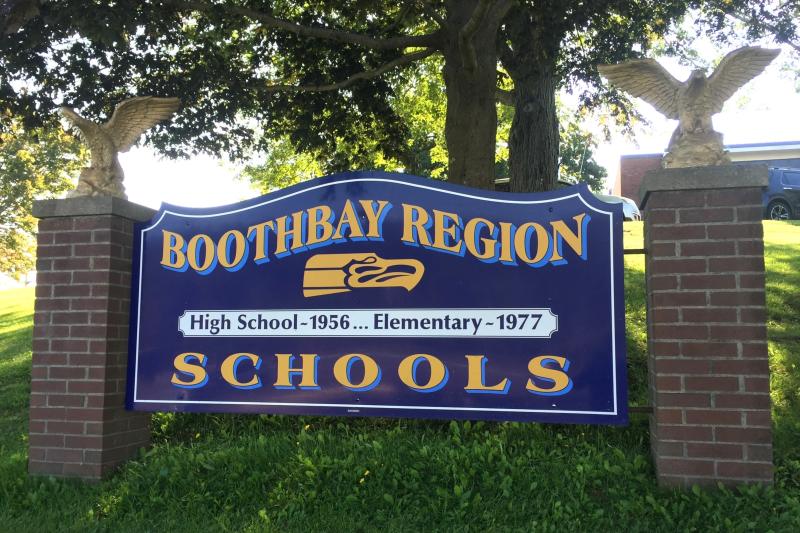
Education has moved beyond simple report cards into a complex system where data-driven assessments shape student support. Jan. 13, the Community School District (CSD) School Committee examined how staff use some of this data to understand each student's performance and needs.
Technology Integrator Stacy Gauthier opened the workshop with a report on what data can tell educators about high school performance. She said most students fall at or above the 50th percentile in math and reading, with higher reading performance. However, Gauthier said growth is the key area to monitor.
Gauthier said the bulk of the work falls into comparing growth in relation to achievement. Students with high growth and achievement may not need extra attention, while students with low growth and achievement may be given intervention and support.
“We want to take kids from struggling to stable, from stable to steady, and then from steady to strong,” she said. “We aim to see growth for each student. We celebrate growth even when achievement is lagging.”
Gauthier said students have individual growth goals monitored through an assessment with NWEA, a third-party organization. According to the testing, most students did not meet expected growth goals in reading or math for the ‘23-’24 school year. In the ‘24-’25 year, most students met math growth goals, but average reading growth was still below expectations.
However, there were improvements, several in the double digits. For example, 29% of freshmen in the ‘23-’24 year were meeting reading growth goals and, by their sophomore year, 60% were on track. Chair Jenn Whitney pointed out, only 21% of sophomores were meeting their reading growth goals in the ’23-’24 year but, by the end of their junior year, that was 45%.
“This is the data that shows the teachers are doing the hard work by implementing MTSS (Multi-Tiered Systems of Supports) and other strategies to meet the needs of the students that struggle,” Whitney said.
Gauthier also said data shows how teachers are applying strategies to best target areas where students need help, and where they can make the most difference.
“We are making gains,” she said. “And we’re not just doing that because we are crossing our fingers and holding our breath and hoping for the best.”
In her report on Boothbay Region Elementary School, Principal Shawna Kurr said students were largely meeting targets. According to the 2025 NWEA reading assessment, over half of students are also above the 50th percentile in reading and math.
Kurr also discussed behavioral issues and concerns.
She there were 20 fewer office referrals in ‘24-’25 than ‘23-’24, with around 80% of those being one occurrence. Kurr said truancy, excessive absenteeism defined by state standards, was down from 11.6% to 4.2%; chronic absenteeism, missing 10% or more of school, was down from 26% to 22%.
The board paid special attention to Kurr’s concerns about bullying. According to results from the Maine Integrated Youth Health Survey, around 90% of students in grades 5-8 said they felt safe at school. However, the survey showed that around 51% of students said they had been bullied on school property; also, almost 33% of 5-6 graders and 40% of 7-8 graders said they had been electronically bullied.
When asked about presentations against bullying, Kurr said research suggests the approach doesn’t really work. Instead, she said educators support students based on their individual needs.
Whether an academic or social challenge, Kurr said information from assessments, surveys and observations can be used to identify where students need help and how much. She said this helps identify if an issue is rooted in a child’s academic capabilities, something in their social and emotional development, or something else.
“We’re constantly looking at data and wanting to do better by our kids,” she said. “Sometimes it's not just as easy as saying ‘There's a reading problem: Change (the) focus, change (the) reading.’ Sometimes it’s way more deep and complex than that ..."
In other business, the board approved a first read of its public comment policy, to be further reviewed and discussed. Whitney suggested several items, including that public commenters be required to identify themselves and their town, be acknowledged by the board before speaking, and not have their questions answered during the meeting.
Board members Tom Perkins and Stephanie Hawke disagreed with parts of the policy and said the board should be able to answer questions directly if they are able. Hawke also said some procedures have not been applied consistently. “I think you’re trying to solve a problem that doesn't exist,” Perkins said.