Congregational Church to focus on a variety of spiritual and social issues at Sunday services

Doom and gloom are contagious diseases. There is no vaccine for unrelenting negativity, and many people wouldn’t trust it if there was one. Science cannot cure us of cynicism or despair about the way things are. Even though we can instantly communicate by satellite and design chatbots that answer our questions, these technologies cannot put hope in our hearts. In fact, we may experience all the changes not as progress, but as dread. We are left to our all-too-human selves to confront a challenging time. So, let me ask a different question than the one we usually ask,“What if we get it right?”
First, it is important to recognize our built-in negativity bias and learn to work with it. Our brains are designed to keep us alive. We survive by recognizing potential threats. Our minds are always surveilling our surroundings for potential dangers. Our threat systems are very good at helping us react quickly to saber-tooth tiger attacks or people who want to give us fruitcakes. The problem is our oldest wiring, the reptile brain, is like a circuit breaker panel that can only take in so many things at once before it shorts out. Every single day, we are saturated with murder, mayhem, and social media uproar. And we have our own mini but real crisis in our lives. Our brains struggle to keep up with all the crises, sorting out which ones aren’t immediate threats and which ones we need to prepare and act upon. It is hard to pay attention without blowing a fuse, and that leads to doom and gloom.
But our brains do more than just threaten detection. We are most successful as a species when we communicate, share ideas, and adapt. When people work together and trust each other, we can build railroads, cure malaria, or have yard sales.
Until we lose trust. When trust is gone, the threat-seeking part of the brain takes over. Which brings us to a fundamental choice. Survival takes both recognizing danger and drawing on creativity, ingenuity, and cooperation. Dangers are real and must be faced. But not all dangers are resolved by fighting off and eliminating threats. We need to restore the balance of meeting our challenges through cooperation, ingenuity, and adapting together.
What if we get it right? That question isn’t mine. I found it in the work of Ayana Elizabeth Johnson, the Roux Distinguished Scholar at Bowdoin College.Her recent book brings together people from multiple perspectives to answer challenges about climate change.She asks how we can possibly transform our energy, our food, our whole economy, “if we can’t envision the outcome of our efforts?”Before we go all in, we need a compelling sense of what we might achieve.
We forget that our big cities in the 1970s were smog-choked, and the Cuyahoga River was so polluted that it caught fire. We started recycling, stopped destroying the ozone layer, and banned DDT to save the songbirds thanks to our own Southport hero, Rachel Carson. Maybe we need fewer preppers who are figuring out how to survive the apocalypse and more people asking this question, “What would it look like if we got it right?”
This question goes beyond climate change. What if we started thinking we could get things right and make a difference? We would start noticing lots of great things actually are happening. And we could start using the creative parts of our brains instead of the old reptile wiring that keeps blowing the fuse.
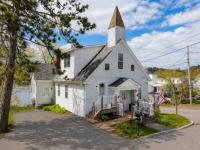
When you drive by the Congregational Church this summer, you will see our sign asking, “What if we get it right?” Each Sunday, we will focus on a variety of spiritual and social issues. What if we get it right about grace, grief, religious freedom, being human in an AI world, work and rest, belonging and accepting others, and climate change? You are welcome to join us, either by showing up on Sundays at 10 a.m. or by keeping the question in your mind and watching for places where people are doing great things. I think you will be surprised by what you see if you ask the question.