'Look how happy I am': BRHS art teacher Manon Lewis celebrates 48 years
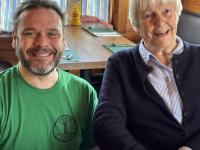
 Since 1977, Manon Lewis has fostered the joy of creativity with students in the Boothbay region school system. ISABELLE CURTIS/Boothbay Register
Since 1977, Manon Lewis has fostered the joy of creativity with students in the Boothbay region school system. ISABELLE CURTIS/Boothbay Register
Since 1977, Manon Lewis has fostered the joy of creativity with students in the Boothbay region school system. ISABELLE CURTIS/Boothbay RegisterWalking into Manon Lewis’ classroom at Boothbay Region High School (BRHS) is not unlike viewing Bosch’s painting "The Garden of Earthly Delights." First, the eye is overwhelmed by the colors and scale of the scene, but soon it focuses on the vignettes: the box of mosaic tiles for the week’s lesson, the orange San Pellegrino cans lined on the table edge being saved for a future project, or the handprints from former students climbing the walls.
For the past 48 years, Lewis has been fostering a love of creativity in the Boothbay Region school system. “I love the kids. I love the subject matter ... I love getting (students) engaged and seeing the excitement when they are using a new material ... It’s very joyful for me.”
While growing up with artistic parents kept the subject close to Lewis’ heart, the interest in teaching came in her teen years after positive feedback she received while leading peers through a yoga and meditation workshop for a school project. Not only did her classmates listen to her; they enjoyed themselves, and that was a revelation for the “painfully shy” high schooler.
“It gave me a sense of empowerment, and that's why I think it's really important for kids to have chances like that too.”
The freedom in the art curriculum, which focuses on big picture ideas rather than specific artists or mediums, allows Lewis to push her students outside their comfort zones. The curriculum's freedom is partly her doing, as Lewis spent 35 years on the Maine Art Education Association and helped make taking a fine arts course a state graduation requirement.
In her classes, students get to see what artists do and try their hand at it as she bridges the gap between different creatives: Jackson Pollock with abstract emotional expressions, the surrealism of Frida Kahlo, or Keith Haring’s industrial-sized social messages.
In addition to representing female, male and artists of color, Lewis introduces students to non-western art forms, such as Japanese printmaking or Aboriginal spirit sticks. “I want to have a variety, so different people can see themselves in that situation ... I want all people to be able to see that they are able to (create art).”
Lewis believes anybody can be an artist; all it takes is dedication and giving themselves “permission to fail" regardless of innate ability. Hesitancy around failure is a common issue for all students, yet those with natural skills often have the most trouble, as they are used to creating and receiving compliments on certain things, she explained.
As Lewis shares with her students, she, too, gets nervous when comparing herself to other people, but this natural reaction shouldn't prevent students from trying something new: “Sometimes discomfort means you're making progress. There's no improvement with comfort. It's just stagnant.”
Discomfort can also have more positive outcomes than just skill improvement. Lewis recalled a time a student ended up in her class after trying to get an exemption from the fine arts graduation requirement. “Needless to say, he was pretty angry.”
It was also a stressful time for the student as his parents were going through a divorce; however, Lewis’ class slowly became a therapeutic outlet, as he detailed in an end-of-the-year note to her: “He said ‘I'm so glad I had to take art, because I would never have taken art (otherwise), but it has helped me to get through this difficult situation.’ Oh my god, that was so moving to me.”
Experiences like these make Lewis love her job, and that's her advice for all her students, whether they want to pursue an artistic career or not: “Find something that you love, that you feel passionate about ... Look how happy I am.”