Boothbay Harbor honors fishermen lost at sea
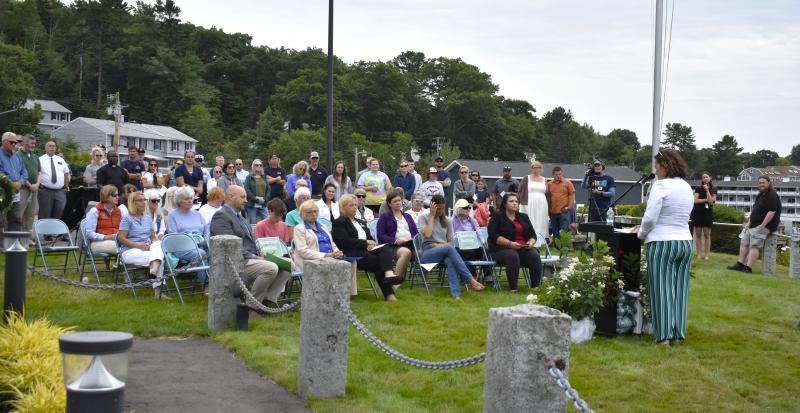
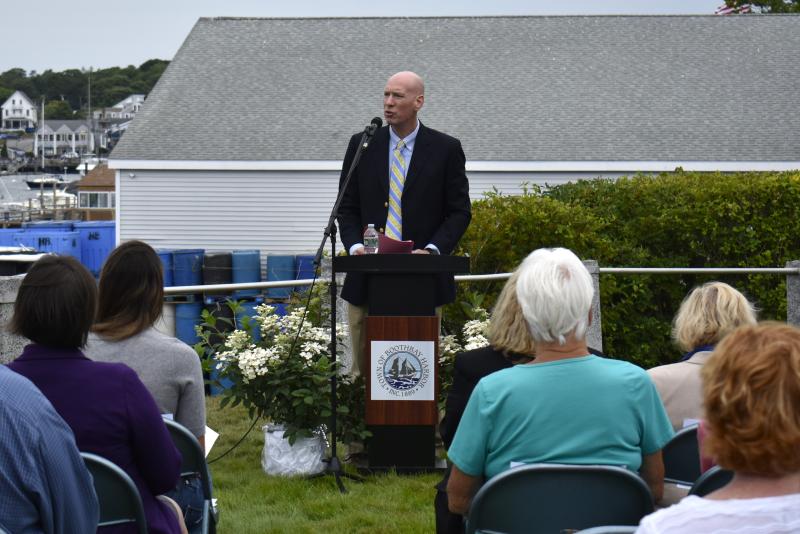
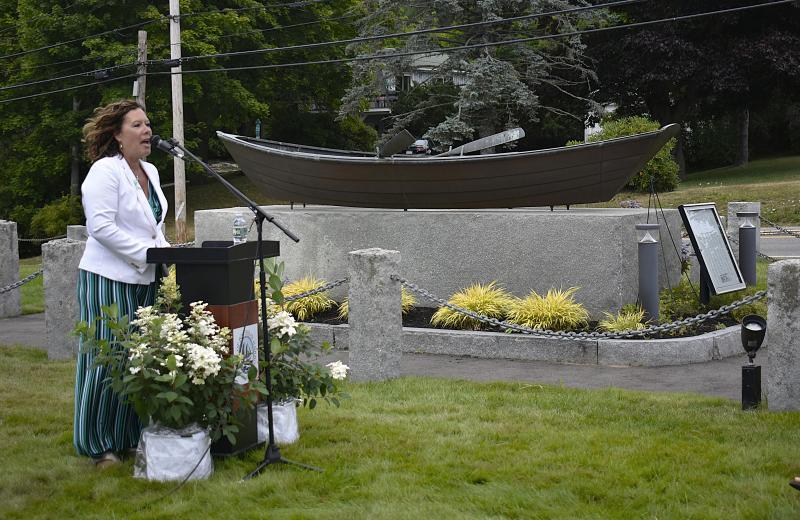 White and Green Hope Founder Liz Michaud opens ceremonies July 21 in Boothbay Harbor for Maine's first state Commercial Fishing Remembrance Day. ISABELLE CURTIS/Boothbay Register
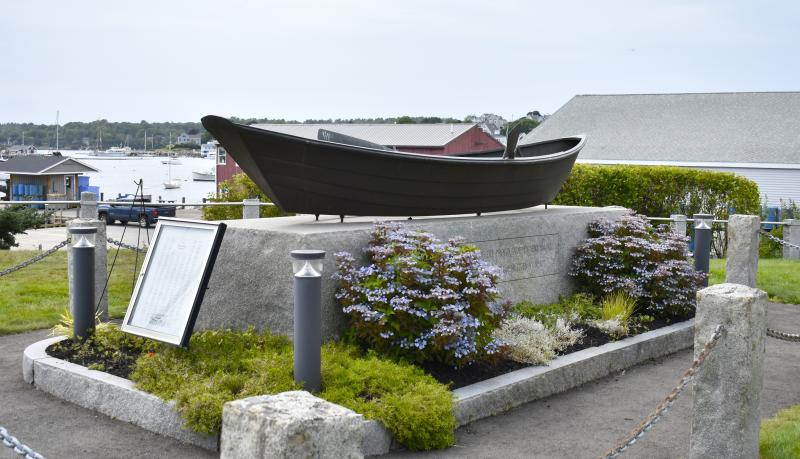
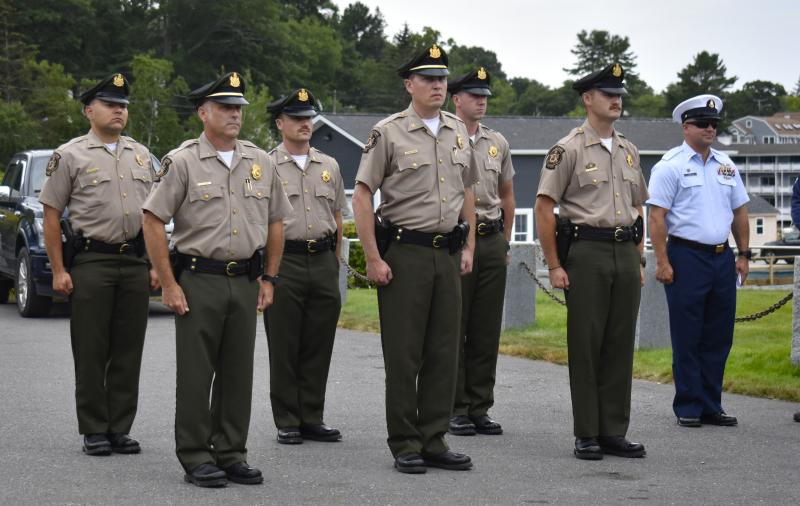
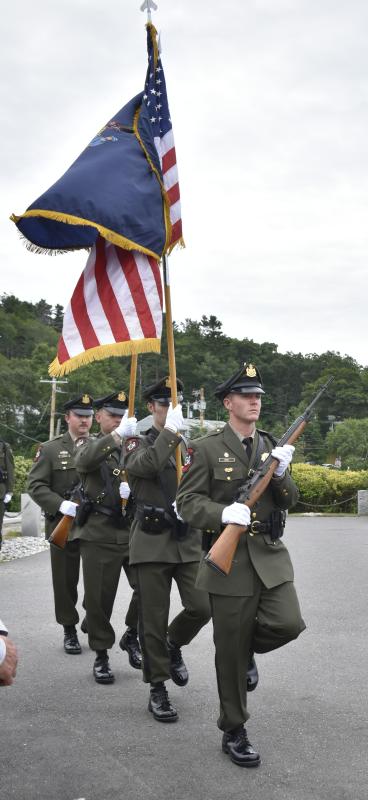
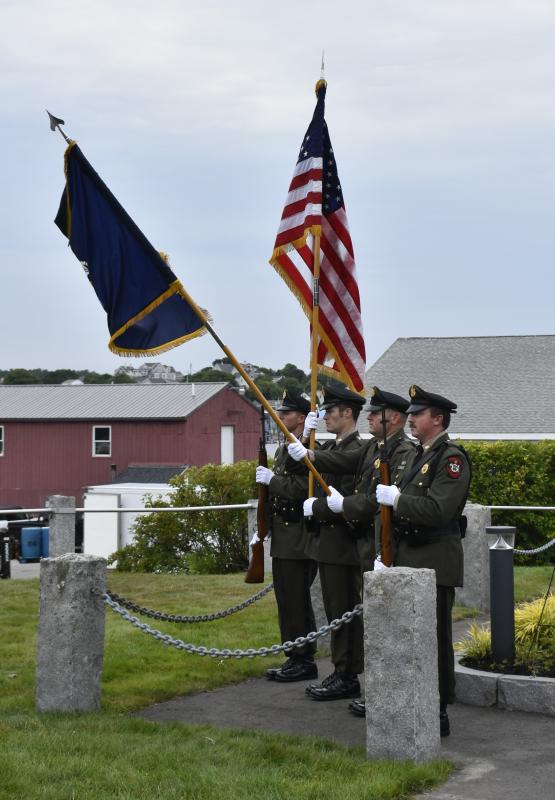
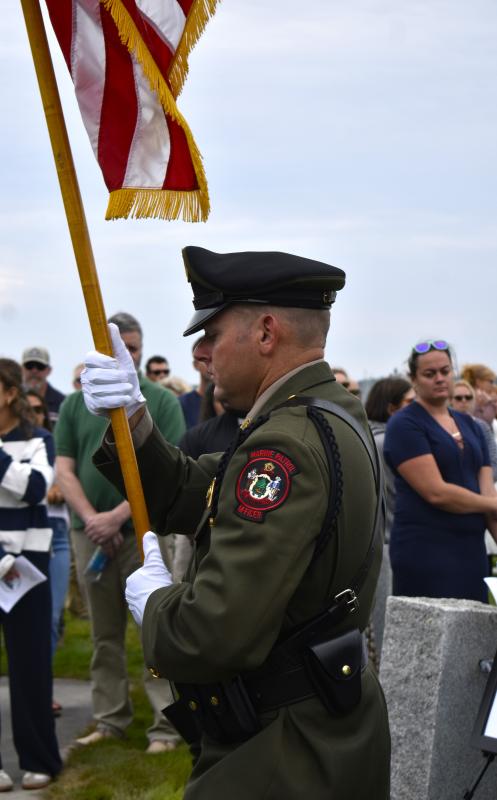
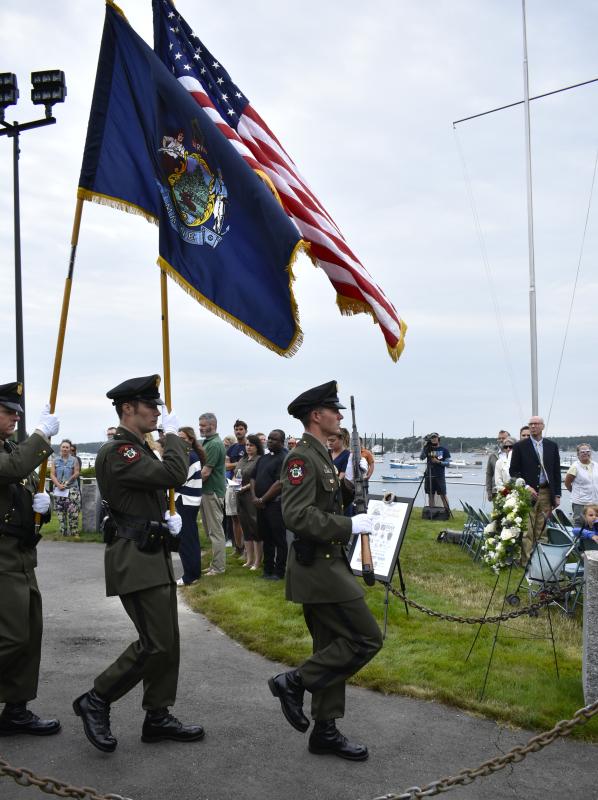 Maine Marine Patrol Honor Guard completes a presentation of colors at the memorial. ISABELLE CURTIS/Boothbay Register
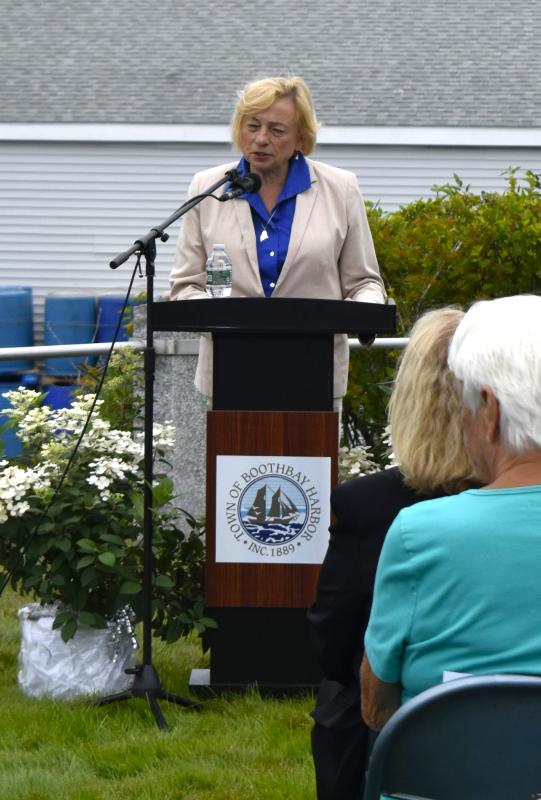 Gov. Janet Mills signed the law marking July 21 as a state holiday in March. ISABELLE CURTIS/Boothbay Register
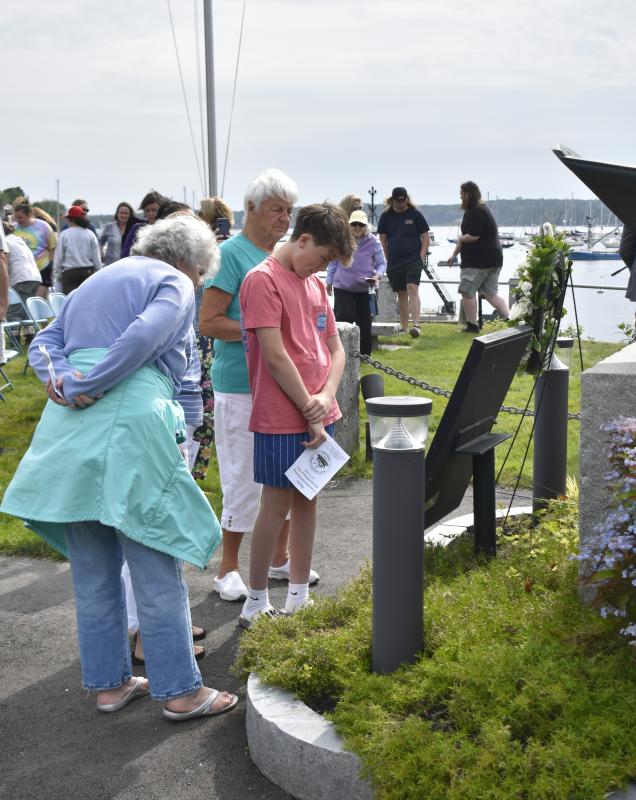
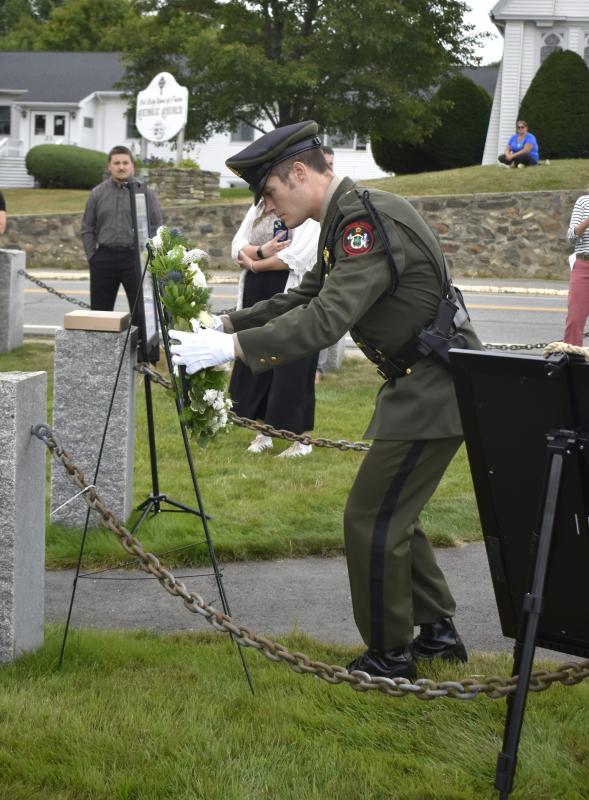
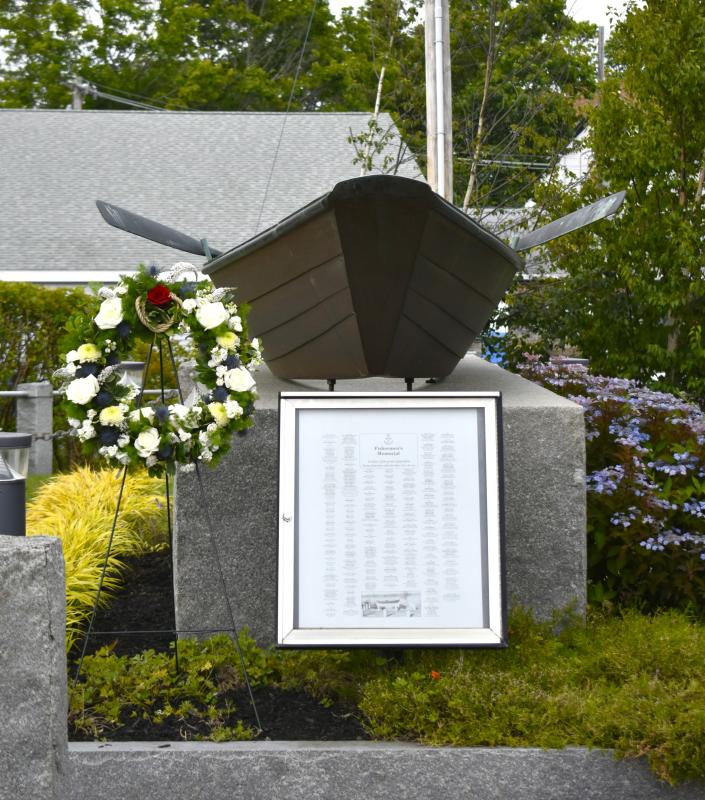 A wreath is placed in front of the memorial in remembrance. ISABELLE CURTIS/Boothbay Register
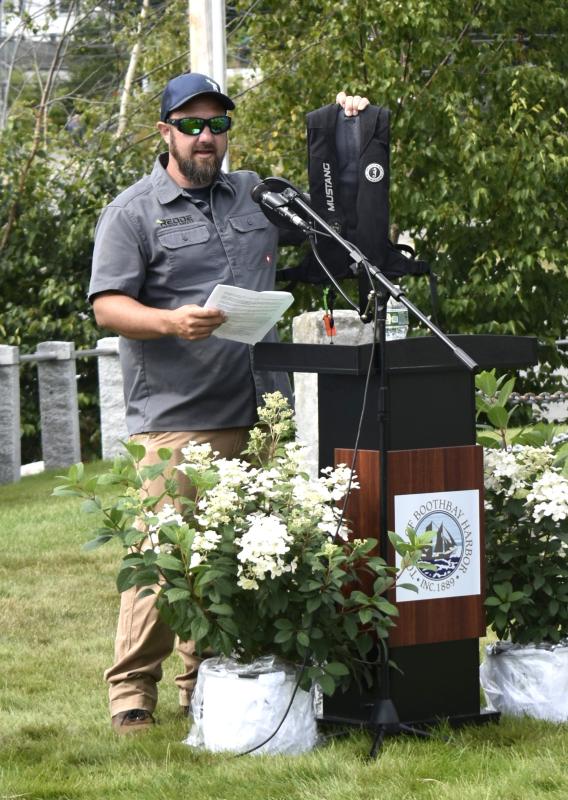 Co-owner of REDDE Marine Safety Pat Shepard holds up a personal flotation device, narrating its 60-second response time as a live demonstration occurs in the harbor. ISABELLE CURTIS/Boothbay Register
 ISABELLE CURTIS/Boothbay Register
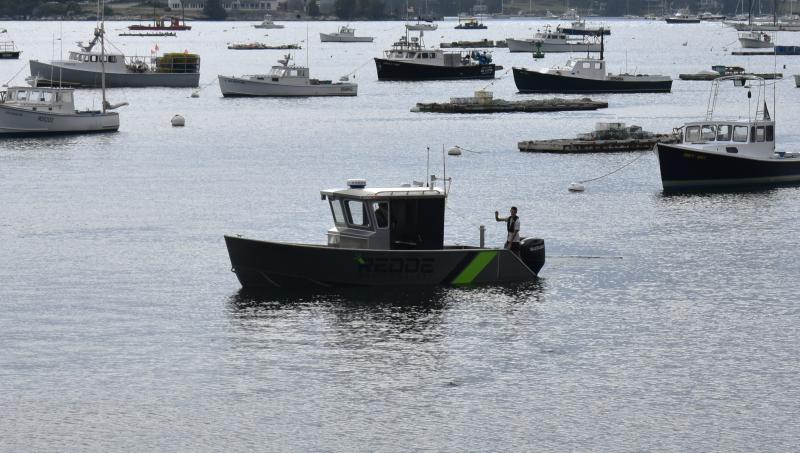 A volunteer showcases how a personal flotation device would deploy if a person fell overboard. ISABELLE CURTIS/Boothbay Register
 ISABELLE CURTIS/Boothbay Register
 ISABELLE CURTIS/Boothbay Register
 ISABELLE CURTIS/Boothbay Register
 ISABELLE CURTIS/Boothbay Register
 ISABELLE CURTIS/Boothbay Register
 ISABELLE CURTIS/Boothbay Register
 ISABELLE CURTIS/Boothbay Register
 ISABELLE CURTIS/Boothbay Register
 ISABELLE CURTIS/Boothbay Register
 ISABELLE CURTIS/Boothbay Register
 ISABELLE CURTIS/Boothbay Register
 ISABELLE CURTIS/Boothbay Register
White and Green Hope Founder Liz Michaud opens ceremonies July 21 in Boothbay Harbor for Maine's first state Commercial Fishing Remembrance Day. ISABELLE CURTIS/Boothbay Register
Maine Marine Patrol Honor Guard completes a presentation of colors at the memorial. ISABELLE CURTIS/Boothbay Register
Gov. Janet Mills signed the law marking July 21 as a state holiday in March. ISABELLE CURTIS/Boothbay Register
A wreath is placed in front of the memorial in remembrance. ISABELLE CURTIS/Boothbay Register
Co-owner of REDDE Marine Safety Pat Shepard holds up a personal flotation device, narrating its 60-second response time as a live demonstration occurs in the harbor. ISABELLE CURTIS/Boothbay Register
ISABELLE CURTIS/Boothbay Register
A volunteer showcases how a personal flotation device would deploy if a person fell overboard. ISABELLE CURTIS/Boothbay Register
ISABELLE CURTIS/Boothbay Register
ISABELLE CURTIS/Boothbay Register
ISABELLE CURTIS/Boothbay Register
ISABELLE CURTIS/Boothbay Register
ISABELLE CURTIS/Boothbay Register
ISABELLE CURTIS/Boothbay Register
ISABELLE CURTIS/Boothbay Register
ISABELLE CURTIS/Boothbay Register
ISABELLE CURTIS/Boothbay Register
ISABELLE CURTIS/Boothbay Register
ISABELLE CURTIS/Boothbay Register
ISABELLE CURTIS/Boothbay Register
ISABELLE CURTIS/Boothbay Register
White and Green Hope Founder Liz Michaud opens ceremonies July 21 in Boothbay Harbor for Maine's first state Commercial Fishing Remembrance Day. ISABELLE CURTIS/Boothbay Register
Maine Marine Patrol Honor Guard completes a presentation of colors at the memorial. ISABELLE CURTIS/Boothbay Register
Gov. Janet Mills signed the law marking July 21 as a state holiday in March. ISABELLE CURTIS/Boothbay Register
A wreath is placed in front of the memorial in remembrance. ISABELLE CURTIS/Boothbay Register
Co-owner of REDDE Marine Safety Pat Shepard holds up a personal flotation device, narrating its 60-second response time as a live demonstration occurs in the harbor. ISABELLE CURTIS/Boothbay Register
ISABELLE CURTIS/Boothbay Register
A volunteer showcases how a personal flotation device would deploy if a person fell overboard. ISABELLE CURTIS/Boothbay Register
ISABELLE CURTIS/Boothbay Register
ISABELLE CURTIS/Boothbay Register
ISABELLE CURTIS/Boothbay Register
ISABELLE CURTIS/Boothbay Register
ISABELLE CURTIS/Boothbay Register
ISABELLE CURTIS/Boothbay Register
ISABELLE CURTIS/Boothbay Register
ISABELLE CURTIS/Boothbay Register
ISABELLE CURTIS/Boothbay Register
ISABELLE CURTIS/Boothbay Register
ISABELLE CURTIS/Boothbay Register
ISABELLE CURTIS/Boothbay RegisterFrom Portland to Pleasant Point, 10 communities came together July 21 to honor the lives of commercial fishermen lost at sea in Maine's first statewide celebration. Boothbay Harbor held a ceremony at the Fishermen's Memorial with speakers including Gov. Janet Mills, and White and Green Hope Founder and Downeast native Liz Michaud.
Signed into law by Mills in March, Maine Commercial Fishing Remembrance Day was spurred on by Michaud following the deaths of four Downeast fishermen in 2025, and the loss of her 18-year-old nephew Tyler exactly three years ago. Tyler had recently graduated from high school and planned to attend Maine Maritime Academy.
"It wasn't until I lost my nephew ... that it really hit me hard that there isn't the acknowledgment or appreciation of the danger (of commercial fishing) ... Tragedy strikes people in different ways, and that's the way it struck my heart to take some action," said Michaud in a pre-event interview.
In addition to honoring lost fishermen, her organization works to improve survival through education, safety awareness, community collaboration and the advancement of lifesaving practices and technologies.
"Every commercial fisherman in Maine risks their safety. 13,000 of them risk their safety every day to make a living on the water and contributing, at the same time, to one of our most iconic industries and our way of life,” said Mills. She highlighted the lives of those lost this year: Thomas West of Steuben, Stephen Johnson of Machias, Marshal Ames of North Haven and Sgt. Freeman Short of Presque Isle.
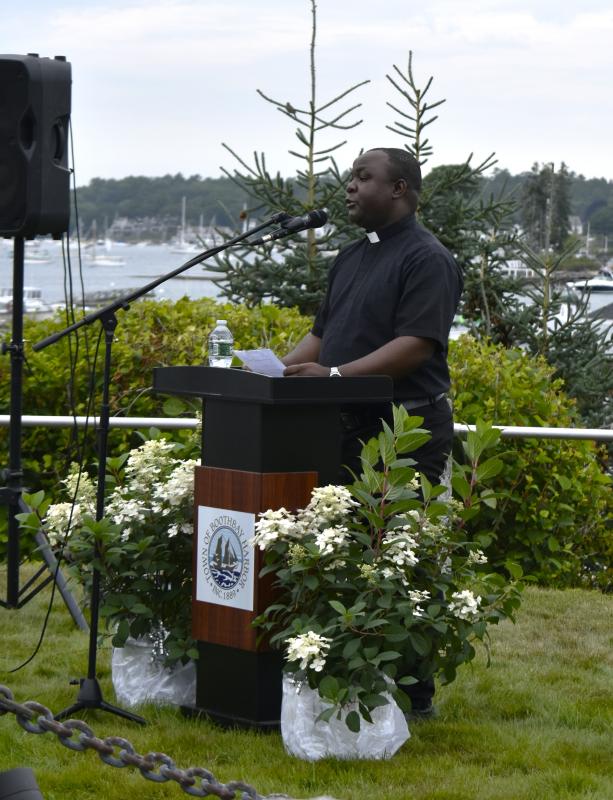
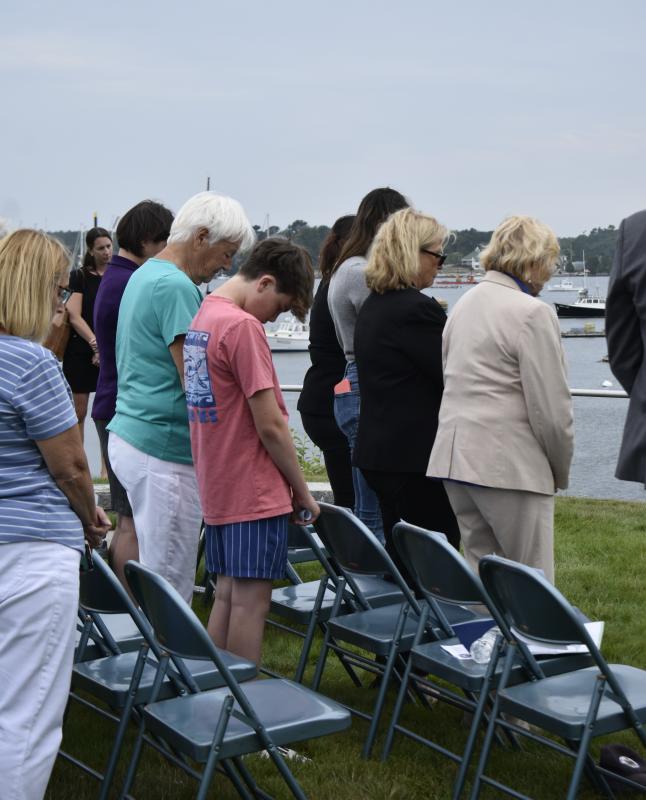
In remembrance, there was a presentation of colors and wreath laying/moment of silence by the Maine Marine Patrol Honor Guard, and a prayer from Our Lady Queen of Peace's Father Patrick Machayi.
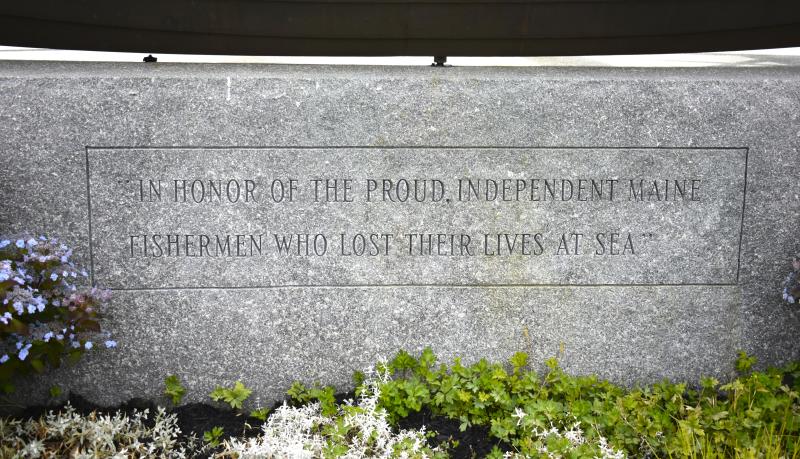
Brian Blethen spoke of the regional efforts to remember fishermen. In 1983, a nonprofit was formed to create and maintain the Fishermen's Memorial. The committee put on the Fishermen's Festival for many years as a tribute to the working waterfront and still offers a scholarship to local high schoolers seeking maritime careers.
As reported in the Register, the Fishermen's Memorial Committee, in partnership with Carousel Marina’s Boothbay Harbor Tuna Challenge, created the commercial fishing casualty fund. It is available to anyone in the state, and applicants may receive up to a $10,000 one-time, stipulation-free payment.
Other organizations are exploring ways to improve emergency response time and prevent these tragedies.
"Through (surveys we conducted), fishermen said that they would adopt many life-saving measures if they could afford them," said Brooke Hachey of Sunrise County Economic Council.
This is why the organization is launching the Commercial Fishing Safety Initiative to provide fishermen with free personal flotation devices (PFDs) equipped with a personal locator beacon (PLB), and equip offshore vessels with Starlink technology. Installation and the first year of service are free.
Co-owner of REDDE Marine Safety Pat Shepard explained how the PFD's function, accompanied by a live man overboard simulation in the harbor. According to Shepard, an average of 43 deaths every year are caused by a traumatic injury while commercial fishing, a third of which are due to a fall overboard.
"Most of (these falls) are not witnessed by other crew members, or the individual was fishing alone. That's 13 lives lost every year simply by being on the wrong side of the hull," he said.
But a PFD automatically deploys the instant its wearer hits the water. In a 60-second sequence, the PLB activates, a distress message is sent to area vessels with an exact location, the owner's fishing boat shuts down, a local alarm sounds and another distress signal goes to the Coast Guard. In normal circumstances, the average time from a person falling overboard to emergency response getting underway is six hours, said Shepard.
Green and White Hope is advocating for community emergency response planning meant to prepare harbors for when accidents occur. Speed is of the essence, and often it's marine patrol or community members who are on site faster than the Coast Guard, especially in remote areas, said Michaud.
These plans include lists of first primary and secondary responders, community response protocols, emergency personnel numbers, emergency response kits, and asset catalogs for sonars and divers. Michaud said about six towns, including Lubec, are in the process of adopting such plans. The organization's target is 68.
More information is on its website.
Other event speakers were Emma van der Veen, who presented on behalf of her sister, Jax Hepburn, and brother-in-law Evan Hepburn, and Maine Department of Marine Resources Commissioner Carl Wilson.