Birds and Their Wildest Dreams
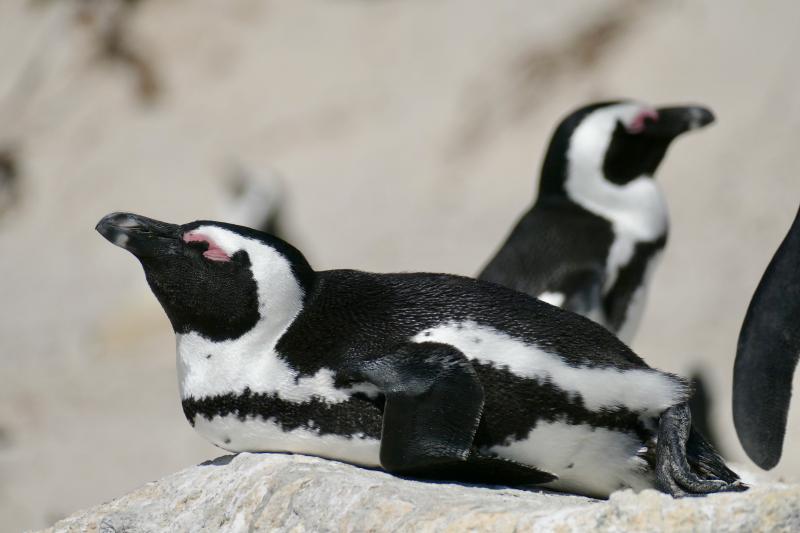 Certain penguin species sleep in four-second micro-naps during incubation so they can remain vigilant against predators. (Pictured: African penguin, photo by Bernard Dupont, courtesy of Wikipedia Commons)
 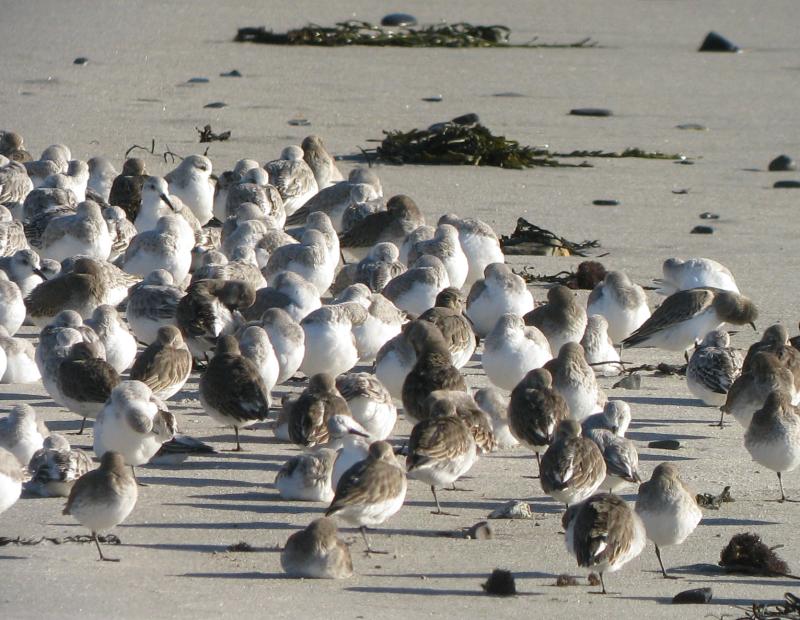 Shorebirds, like these dunlin and sanderlings on the beach in Biddeford Pool, grab quick naps during migration, as some of these are doing. (Photo courtesy of Jeff and Allison Wells)
Certain penguin species sleep in four-second micro-naps during incubation so they can remain vigilant against predators. (Pictured: African penguin, photo by Bernard Dupont, courtesy of Wikipedia Commons)
Shorebirds, like these dunlin and sanderlings on the beach in Biddeford Pool, grab quick naps during migration, as some of these are doing. (Photo courtesy of Jeff and Allison Wells)
Shorebirds, like these dunlin and sanderlings on the beach in Biddeford Pool, grab quick naps during migration, as some of these are doing. (Photo courtesy of Jeff and Allison Wells)
Certain penguin species sleep in four-second micro-naps during incubation so they can remain vigilant against predators. (Pictured: African penguin, photo by Bernard Dupont, courtesy of Wikipedia Commons)
Shorebirds, like these dunlin and sanderlings on the beach in Biddeford Pool, grab quick naps during migration, as some of these are doing. (Photo courtesy of Jeff and Allison Wells)A few nights ago, we took our little black dog Loki, out for a last chance to answer “nature’s calling” before we retired for the evening. We had been lured into watching a good show rather late; it was around midnight when we stepped outside into the cool night air. The stars were brilliant in the dark sky, the neighborhood was peaceful and quiet, when suddenly, erupting from the hedges across the street, came the boisterous music of a song sparrow.
Just one phrase, just once. Then all went silent.
We all know that there are species that vocalize primarily at night (owls, whip-poor-wills). But there are a few species that, while mostly day time singers, will also sing at night. Mockingbirds are one of the better-known species that sometimes do this. Years ago, we stepped out of a car at night at Mom and Dad Childs former home in Winthrop, Maine, and were shocked to hear a yellow-breasted chat singing away in the overgrown field nearby! Yellow-breasted chats are known to do this in their normal breeding range in the southern US, but they’re not even supposed to be here in Maine at all during the breeding season!
In contrast, the song sparrow we heard at midnight didn’t seem to be actively singing like it does in the daylight hours. We had to wonder if its outburst was the avian equivalent of a human talking in their sleep, or even sleepwalking.
People who keep pet birds have reported, for years, stories of their parrots and parakeets making different sounds while they sleep. We read one story of a person who’s African gray parrot made sounds like a man talking or growling that was frightening for the parrot owner to hear in the middle of a dark night. Some parrot owners have reported that their birds sometimes awaken seemingly disturbed, as if they had experienced a nightmare, and would seek out reassurance from their human companion like a child.
Researchers have now well-documented that birds dream. We were interested to find that much new research on this topic has been coming from a group called the Avian Sleep Group at the Max Planck Institute for Biological Intelligence. They and other scientists have been making some amazing discoveries.
They’ve found, for example, that birds have both REM and non-REM sleep and that the parts of a pigeon’s brain that process signals related to flying were sometimes activated during sleep. Others have found that, in some songbirds, the muscles used in singing are active during sleep, indicating that the birds were dreaming of singing in their sleep.
Not all birds show regular sleep cycles. Frigatebirds, those big black, long-winged birds that can soar long-distance across the tropical oceans, can allow one side of the brain to sleep at a time while flying for days. Some penguins, while incubating, sleep in a series of four-second mini-naps so they can remain vigilant for predators. Do these birds dream? What could a four-second dream be like? What would a dream be like in one brain hemisphere when the other side of the brain is awake?
Pretty fascinating to consider. Does it make you sleepy even to think about?
Jeffrey V. Wells, Ph.D., is a Fellow of the Cornell Lab of Ornithology and Vice President of Boreal Conservation for National Audubon. Dr. Wells is one of the nation's leading bird experts and conservation biologists. He is a coauthor of the seminal “Birds of Maine” book and author of the “Birder’s Conservation Handbook.” His grandfather, the late John Chase, was a columnist for the Boothbay Register for many years. Allison Childs Wells, formerly of the Cornell Lab of Ornithology, is a senior director at the Natural Resources Council of Maine, a nonprofit membership organization working statewide to protect the nature of Maine. Both are widely published natural history writers and are the authors of the popular books, “Maine’s Favorite Birds” (Down East Books) and “Birds of Aruba, Bonaire, and Curaçao: A Site and Field Guide,” (Cornell University Press).