Bird Name Color Commentary
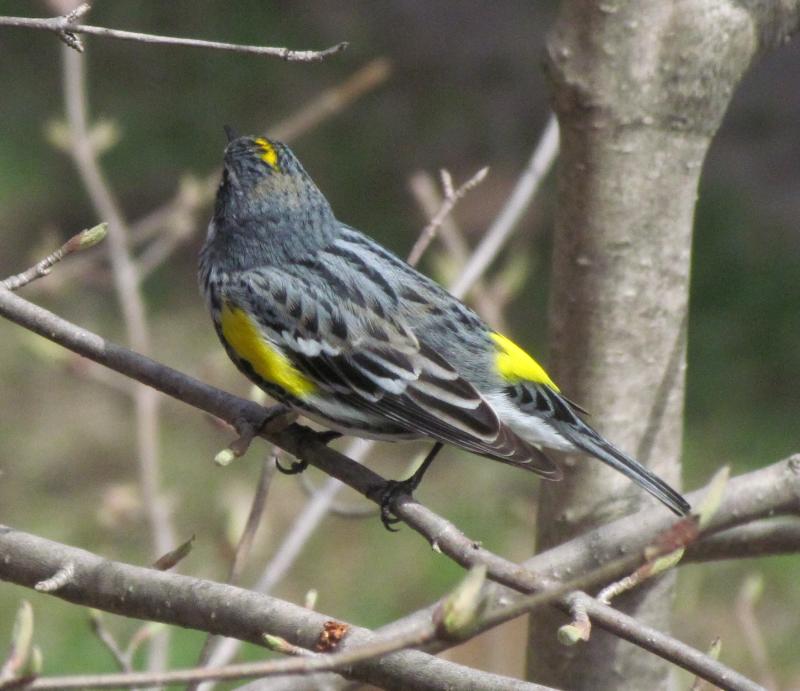 Given that the informal name many birders use for this bird is the "butterbutt," it's no surprise that its formal English name is the yellow-rumped warbler. Courtesy of Jeff Wells
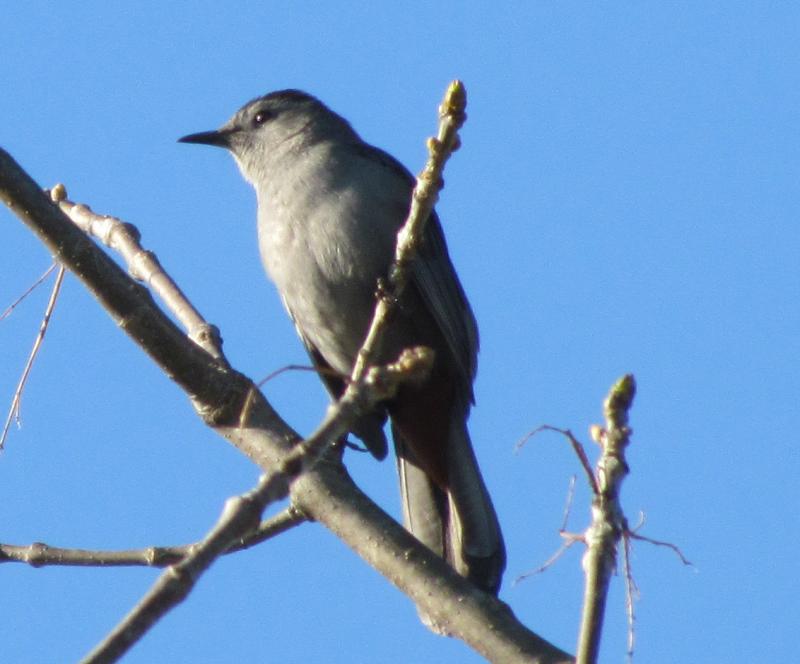 Approximately half of the world's birds are named according to one of their physical features such as their color. The gray catbird is one of them. Courtesy of Jeff Wells
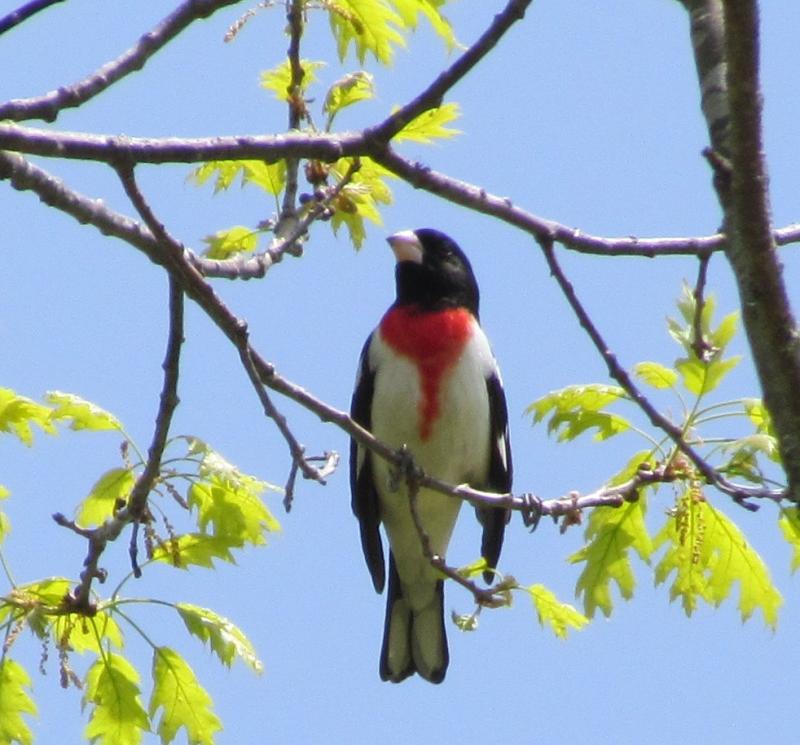 The term "rose" to describe the color on the breast of the rose-breasted grosbeak is among the more unusual of the color terms used in bird names. Courtesy of Jeff Wells
Given that the informal name many birders use for this bird is the "butterbutt," it's no surprise that its formal English name is the yellow-rumped warbler. Courtesy of Jeff Wells
Approximately half of the world's birds are named according to one of their physical features such as their color. The gray catbird is one of them. Courtesy of Jeff Wells
The term "rose" to describe the color on the breast of the rose-breasted grosbeak is among the more unusual of the color terms used in bird names. Courtesy of Jeff Wells
The term "rose" to describe the color on the breast of the rose-breasted grosbeak is among the more unusual of the color terms used in bird names. Courtesy of Jeff Wells
Given that the informal name many birders use for this bird is the "butterbutt," it's no surprise that its formal English name is the yellow-rumped warbler. Courtesy of Jeff Wells
Approximately half of the world's birds are named according to one of their physical features such as their color. The gray catbird is one of them. Courtesy of Jeff Wells
The term "rose" to describe the color on the breast of the rose-breasted grosbeak is among the more unusual of the color terms used in bird names. Courtesy of Jeff WellsSome of you may know of our sometimes obsession with bird names. We’ve written before on topics that fit that bill, including the question about colors in North American bird names, birds that say their names, and birds named after what or how they eat.
As a family friend pointed out a gray catbird during our Fourth of July backyard cookout—a bird that he had recently learned, thanks to his use of the Merlin app, occurred in his own backyard—we resumed the challenge of tallying local birds with a color in their name. Black-capped chickadees and white-breasted nuthatches were quick easy ones, calling in the neighborhood even as our quest commenced. The never-ceasing voice of the singing red-eyed vireo added a touch of color to the names even if we couldn’t see its red eye as it sang from the leafy green top of a tall white ash tree.
In all the birds of the world, we mused, what color appears most commonly in their names? Several of us guessed “yellow” and “red” based on the idea that brightly colored birds would be more likely to be named after that feature. Others thought maybe “brown” since that color is predominant in many birds, including the diverse sparrows and ducks. The answer, though, is “white” and “black”—maybe we should have known, given those readily apparent black-capped chickadees and white-breasted nuthatches in our midst. When you start thinking globally, you realize that there are also many birds named after specific features like white or black “browed,” “throated,” “backed,” “capped,” “crowned,” “faced,” or “tailed.” Right here in our great state, there’s the black-throated blue warbler, great black-backed gull, white-throated sparrow, and black-crowned night-heron, to name a few.
Yellow, red, green, and blue land in the middle of the color name popularity graph, worldwide. Surprisingly, “grey” is next—and yes, that’s “grey” spelled with the “e,” at least in the standard database that we used (there were only three birds listed with the spelling as “gray”). The color “brown” follows, followed by more specialized color uses like purple, orange, cinnamon, and pink. Colors like “scarlet” and “ruby” are rarer.
A 2025 paper explored patterns in the English common names applied to birds worldwide. They found that about half of bird species across the globe sported English names that described something about the physical feature of the bird, including plumage color. The second-most common category of bird name, though, was related to geography—think of how often we use “American” or “northern” in bird names, for example.
The authors also found that about 1,000 bird species had a human name reference. That’s a naming convention that has attracted an increasing number of critics. Here in our part of the world, it includes species like Lincoln’s sparrow and Wilson’s warbler.
There are geographic trends in the anointing of English names to birds, the authors discovered. North American and European birds carry more human names than do birds of South and Central America and Asia. South and Central American birds are more often named after physical features of the birds rather than behavioral or natural history characteristics, perhaps because so many of those species were described based only on specimens identified in a museum far from their native range. Oceanic birds are more often named after either a geographic name or a natural history trait.
We wonder what patterns there may be in how birds are named in other languages? And what might such patterns tell us about how humans in different places have interacted with birds over the course of human history?
Jeffrey V. Wells, Ph.D., is a Fellow of the Cornell Lab of Ornithology and Vice President of Boreal Conservation for National Audubon. Dr. Wells is one of the nation's leading bird experts and conservation biologists. He is a coauthor of the seminal “Birds of Maine” book and author of the “Birder’s Conservation Handbook.” His grandfather, the late John Chase, was a columnist for the Boothbay Register for many years. Allison Childs Wells, formerly of the Cornell Lab of Ornithology, is a senior director at the Natural Resources Council of Maine, a nonprofit membership organization working statewide to protect the nature of Maine. Both are widely published natural history writers and are the authors of the popular books, “Maine’s Favorite Birds” (Down East Books) and “Birds of Aruba, Bonaire, and Curaçao: A Site and Field Guide,” (Cornell University Press).