Trill Seekers
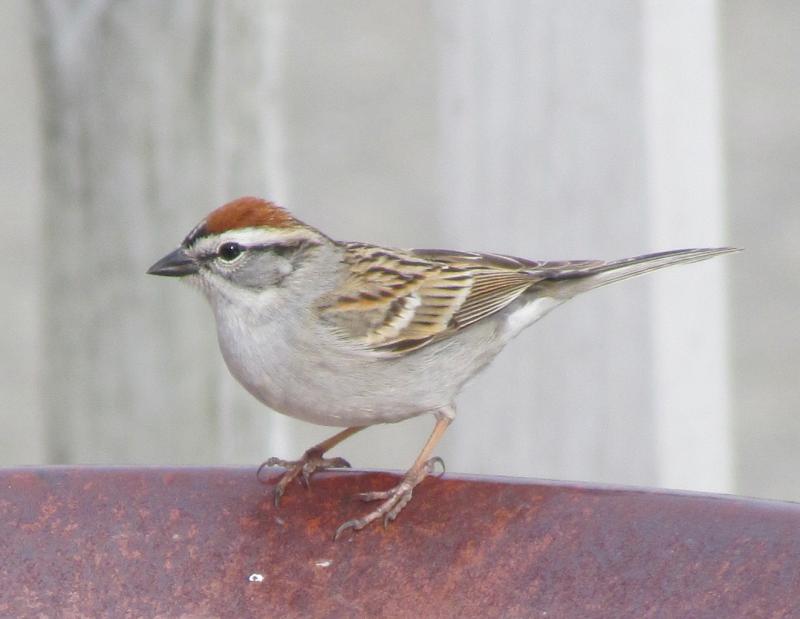 The trills of chipping sparrows can be heard in neighborhoods across Maine and the U.S., but recognizing their songs from other trillers can be tricky. Courtesy of Jeff Wells
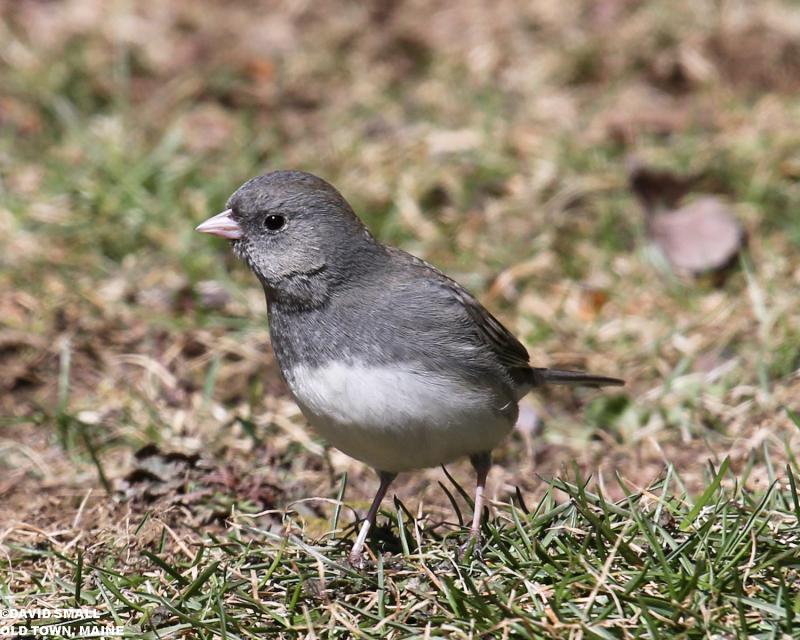 To some ears, the trill of the dark-eyed junco is thought to be more "musical" than the trills of other species, but making music isn't what's on the minds of singing juncos. Courtesy of David Small
The trills of chipping sparrows can be heard in neighborhoods across Maine and the U.S., but recognizing their songs from other trillers can be tricky. Courtesy of Jeff Wells
To some ears, the trill of the dark-eyed junco is thought to be more "musical" than the trills of other species, but making music isn't what's on the minds of singing juncos. Courtesy of David Small
To some ears, the trill of the dark-eyed junco is thought to be more "musical" than the trills of other species, but making music isn't what's on the minds of singing juncos. Courtesy of David Small
The trills of chipping sparrows can be heard in neighborhoods across Maine and the U.S., but recognizing their songs from other trillers can be tricky. Courtesy of Jeff Wells
To some ears, the trill of the dark-eyed junco is thought to be more "musical" than the trills of other species, but making music isn't what's on the minds of singing juncos. Courtesy of David SmallOver the last month as we’ve walked our little black dog around the neighborhood each morning, we’ve rarely been out of earshot of the trilling songs of either dark-eyed juncos or chipping sparrows. Both species are among the vast numbers of birds that produce a song made up of rapidly repeated notes.
It can be quite difficult to tell apart the regularly occurring birds of our area that have these trilled songs. The list includes, along with the junco and chipping sparrow, pine warbler, palm warbler, and swamp sparrow. Add in species like worm-eating warbler, which breeds as close as Massachusetts and orange-crowned warbler that migrates through in small numbers, and you have the making of the type of audio conundrum that makes a beginning birder throw up their hands in despair.
If you are musically inclined, you may be personally and intimately acquainted with the idea of a trill. In human musical terms, it is typically embodied by repeatedly alternating two notes very close in pitch. On the piano, this would be accomplished by rapidly pressing two side-by-side keys, alternating, over and over to make a sort of twinkling sound. Birds, on the other hand, repeat the same sound over and over in rapid succession, perhaps sonically more similar to a drummer bouncing the sticks on a drumhead to make a drum roll.
Lots of birds and other animals make repeated sounds as part of what are sometimes described as motor performance displays. These displays, sometimes in the form of songs, convey information to other members of the species. In some cases, that information is sent to let others of the same species know that the displaying individual is strong and best left alone by rivals. In other cases, the information transmitted tells those of the opposite sex that the individual would be a desirable mating partner.
Trills can be produced vocally, as we see in the sparrows and warblers, but also in other ways. Woodpeckers produce what is commonly called a “drum” by quickly rapping a resonant tree cavity (or sometimes a stovepipe, sign, or other structure). Ruffed grouse rapidly beat their wings in a special way to make a series of short, low sounds also typically described as a “drum.”
Many insects make a trilling sound by rapidly vibrating legs or wings, as we know from crickets, grasshoppers, cicadas, and other insects. Some frogs and toads make trills vocally.
Most of us humans may find the trilling songs of birds to be very simple and uninteresting as compared to the varied notes of songs of birds like robins, mockingbirds, song sparrows, and yellow warblers. But if trilling songs are so simple, why do so many species use them, and what information do they convey to potential enemies and mates?
It tuns out that repeating the same note over and over, exactly the same way each time, is actually not so simple and easy. Try it yourself and you’ll see. And doing it faster and for a long time can be physically exhausting. The strongest and most practiced individuals (i.e. longest surviving) can convey those facts about themselves to suitors and rivals by singing trills where the notes are perfectly similar, repeated quickly, and sustained over a long time period.
Even if you can’t tell whether that trill you’re hearing is a junco or a chipping sparrow, we challenge you to start listening to it a little more closely. Does the trilling rate remain constant or begin to slow down or get a little sloppy at the end? Are some trills slower or faster, and does the rate change over the day or when there’s more than one individual nearby? If you start to notice some variation and differences, you may be getting a peek into what the birds are paying attention to every day.
Jeffrey V. Wells, Ph.D., is a Fellow of the Cornell Lab of Ornithology and Vice President of Boreal Conservation for National Audubon. Dr. Wells is one of the nation's leading bird experts and conservation biologists. He is a coauthor of the seminal “Birds of Maine” book and author of the “Birder’s Conservation Handbook.” His grandfather, the late John Chase, was a columnist for the Boothbay Register for many years. Allison Childs Wells, formerly of the Cornell Lab of Ornithology, is a senior director at the Natural Resources Council of Maine, a nonprofit membership organization working statewide to protect the nature of Maine. Both are widely published natural history writers and are the authors of the popular books, “Maine’s Favorite Birds” (Down East Books) and “Birds of Aruba, Bonaire, and Curaçao: A Site and Field Guide,” (Cornell University Press).