The October Wave
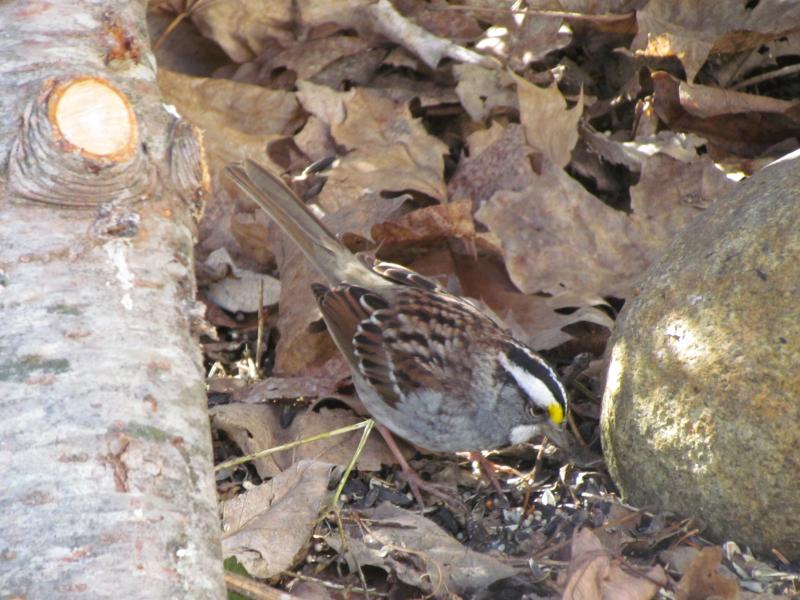 The October wave brings the emphatic “chink” calls of white-throated sparrows rising up in wild places, urban parks, and backyards when the first cold front ushers millions of them into the U.S. from the Boreal Forest of Canada, where they have spent the summer breeding season. Courtesy of Jeff Wells
 Yellow-bellied sapsucker is another signature species of a classic October wave, along with the other migratory woodpecker species seen regularly in Maine, the northern flicker. Courtesy of Jeff Wells
The October wave brings the emphatic “chink” calls of white-throated sparrows rising up in wild places, urban parks, and backyards when the first cold front ushers millions of them into the U.S. from the Boreal Forest of Canada, where they have spent the summer breeding season. Courtesy of Jeff Wells
Yellow-bellied sapsucker is another signature species of a classic October wave, along with the other migratory woodpecker species seen regularly in Maine, the northern flicker. Courtesy of Jeff Wells
Yellow-bellied sapsucker is another signature species of a classic October wave, along with the other migratory woodpecker species seen regularly in Maine, the northern flicker. Courtesy of Jeff Wells
The October wave brings the emphatic “chink” calls of white-throated sparrows rising up in wild places, urban parks, and backyards when the first cold front ushers millions of them into the U.S. from the Boreal Forest of Canada, where they have spent the summer breeding season. Courtesy of Jeff Wells
Yellow-bellied sapsucker is another signature species of a classic October wave, along with the other migratory woodpecker species seen regularly in Maine, the northern flicker. Courtesy of Jeff Wells
Fall bird migration has been underway since July. That’s when short-billed dowitchers, lesser yellowlegs and other shorebirds that breed in the Boreal Forest bogs and other wetlands begin appearing here along the Maine coast. Migrant yellow warblers seem to start skipping through in early July.
In August and September, millions of birds are on the move. Essentially the bulk of the billions of birds that nest across Canada and Alaska pass through during that time.
And yet, when that first cold front passes over us in October and the morning temperature dips low enough to bring a reminder of winter to come, the wave of bird migrants that follows always seems like a particularly potent and in-your-face demonstration of the majesty of the incredible phenomena of bird migration.
Maybe it’s because, during August and September, one must more actively seek out the pulses of migration. They are there, certainly—flocks of shorebirds on mudflats and beaches, warblers feeding in forests and shrubby edges, kettles of broad-winged hawks over mountaintop hawk watches. To witness any of these testaments to migration you typically have to go to a particular place and spend time carefully watching and waiting.
But the October wave is different.
The day after that first October cold front—suddenly, the roadsides are alive with juncos, flashing up as the car approaches, the white sides of the tail flaring. As we walk the neighborhood, their rattly calls seem to come from everywhere.
The emphatic “chink” calls of white-throated sparrows are also part of that first October wave. Whether at a wild place, urban park, or backyard, one or more white-throated sparrows will appear after that first cold front ushers millions of them into the U.S. after they have spent the summer nesting across the Boreal Forest of Canada. A few even can be heard practicing wobbly versions of their iconic “Old-Sam-Peabody” songs (or “Oh-Sweet-Canada” as our friends north of the border prefer).
After the recent October cold front, we were pleased to see a yellow-bellied sapsucker in the park where we walk our dog. That’s another signature species of a classic October wave, along with the other migratory woodpecker species we see regularly in Maine, the northern flicker. In some places along the coast, including out on Monhegan Island, October is the time to see the dark, speedy merlins chasing both of these woodpeckers in hopes of capturing one for a meal.
Peregrine falcons, the larger cousins of the merlin, are also among the birds that ride the October wave as birds from Arctic breeding populations head south.
In the early morning hours after the passage of an October cold front, keep your eyes and ears tuned to the sky, as you are likely to see flocks of hundreds of red-winged blackbirds and grackles, with some brown-headed cowbirds and rusty blackbirds mixed in. Often, they are so high that it may be difficult to tell which species are in the flock as they dart purposefully south.
Last weekend, we were pleased to see tiny golden-crowned kinglets bopping about, giving their exceedingly high-pitched calls in habitats that you will never see them in during summer or winter. They, too, are species of the October wave; while migrating, they may appear in almost any place with shrubs and trees.
The October Wave is one of the more visible ways to see the grand, global spectacle of bird migration. And with the stunning backdrop of fall colors in Maine, what a time to be outside!
Jeffrey V. Wells, Ph.D., is a Fellow of the Cornell Lab of Ornithology and Vice President of Boreal Conservation for National Audubon. Dr. Wells is one of the nation's leading bird experts and conservation biologists. He is a coauthor of the seminal “Birds of Maine” book and author of the “Birder’s Conservation Handbook.” His grandfather, the late John Chase, was a columnist for the Boothbay Register for many years. Allison Childs Wells, formerly of the Cornell Lab of Ornithology, is a senior director at the Natural Resources Council of Maine, a nonprofit membership organization working statewide to protect the nature of Maine. Both are widely published natural history writers and are the authors of the popular books, “Maine’s Favorite Birds” (Down East Books) and “Birds of Aruba, Bonaire, and Curaçao: A Site and Field Guide,” (Cornell University Press).