Maine's cemetery secrets revealed in new book
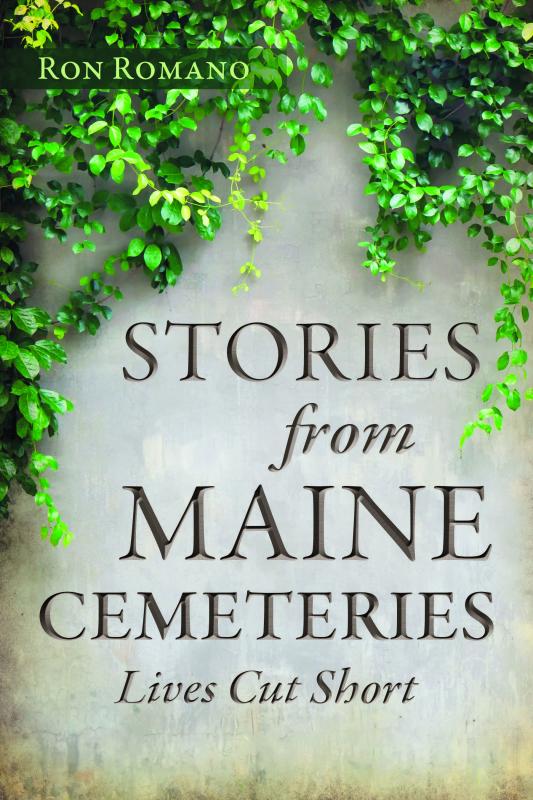
Historian Ron Romano’s “Stories from Maine Cemeteries: Lives Cut Short”
Mon, 07/06/2026 - 12:47am
 Courtesy of Arcadia Publishing
Courtesy of Arcadia Publishing
Courtesy of Arcadia PublishingWith 11 cemeteries dotting the Boothbay region, residents are no strangers to gravestones, but Maine author and historian Ron Romano’s new book “Stories from Maine Cemeteries: Lives Cut Short” may put those markers into a new perspective. The book is out now.
A cemetery tour guide for 15 years, Romano has gathered a wealth of knowledge on the lives of ordinary people from the 19th century, primarily buried in York and Cumberland counties. "I love giving these regular citizens a voice again and letting today’s readers get to know about someone who lived in Maine 200 years ago,” Romano wrote in an email to the Register.
One chapter focuses on a Scarborough pauper’s field and a graveless woman named Priscilla Burnham, whose life was forgotten until Romano unearthed it. Other features include stories of sensational murders and hidden love affairs. Some of the most interesting rabbit holes Romano found himself falling down stemmed from researching grave markers that piqued his interest, and he encourages others to do the same if they ever find themselves wandering their local cemeteries.
“Keep in mind that 'every stone has a story to tell.' No matter where you find an interesting old stone, that is a memorial to someone who was a child, a parent, a sibling, famous or not, Black, white, old, young, religious, military, etc! It’s endless.”
Interspersed with personal histories, the book delves into the rich symbolism found on gravestones. While designs from the 1700s focused on death imagery (skulls, crossbones, etc.), the 1800s saw a more sentimental, natural leaning. During the start of the century, the pairing of the urn and willow was the most popular. The urn being a funerary urn and therefore representing death, while the willow is familiarly known as a “weeping willow,” so together it was “death and mourning,” Romano explained.
As the century progressed, fingers pointing to heaven, clasped hands, or the hand of God plucking a flower from a bouquet (i.e., a link from the family chain) rose in prominence. Members of popular fraternal organizations, such as the Freemasons, Independent Order of Odd Fellows and the Knights of Pythias, also usually had associated images on their stones.
These common reliefs may be found in regional cemeteries but, if not, there’s still plenty of esoteric imagery to spot. In the book, Romano details columns sawed in half to represent a life cut short, or a father-son grave where carved oak leaves show different levels of maturity based on each person's age. Romano’s research provides a field guide for it all.
Romano is doing a talk at Pejepscot History in Brunswick Sept. 24, at 5:30 p.m.
Standard Post