'The Machine Stops': A Cautionary Tale?
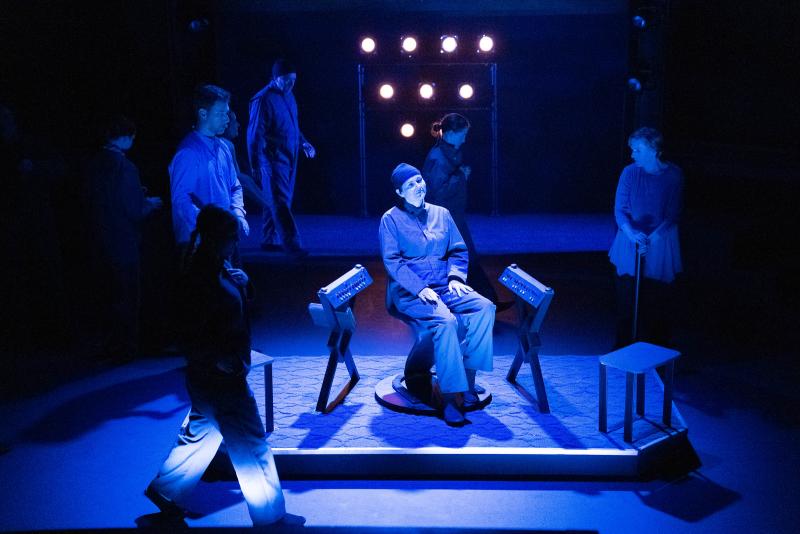 Vashti (Nanette Fraser) leads the cast of Heartwood Theater's "The Machine Stops" running July 17-25. Jenny Maher photo
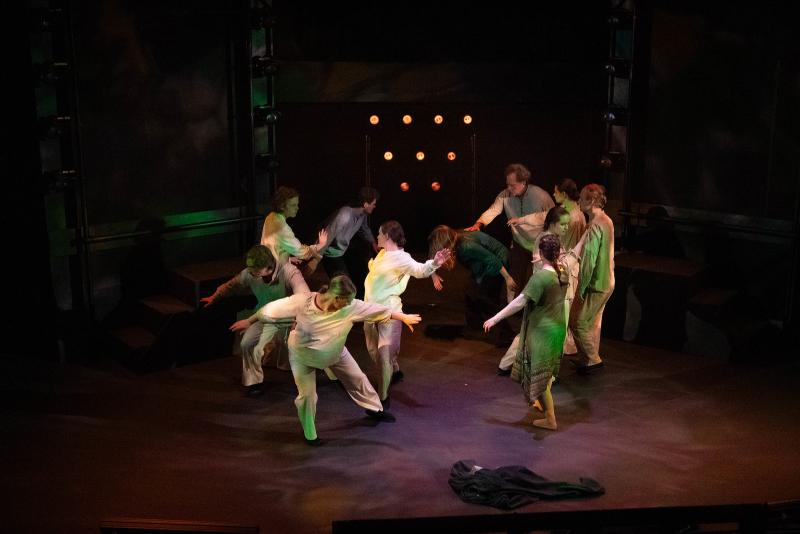 The Machine. Jenny Maher photo
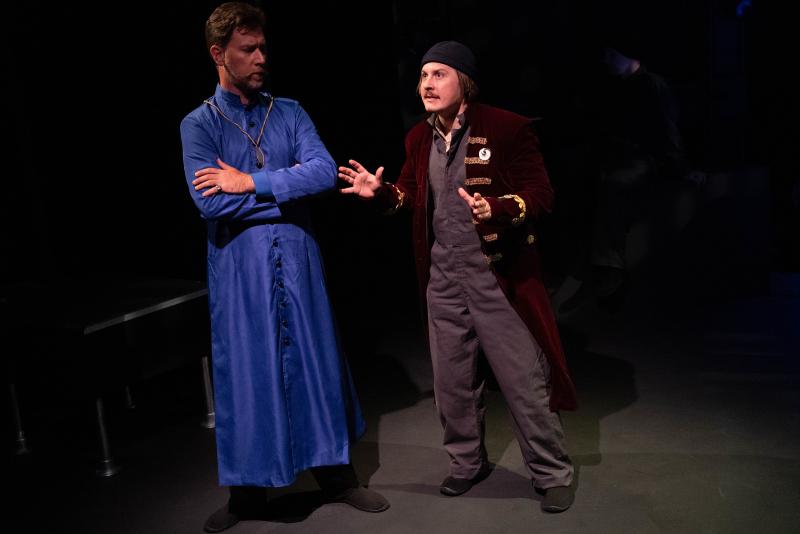 Soren Barker and Roosevelt Bishop, of Boothbay, in a scene from "The Machine Stops." Jenny Maher photo
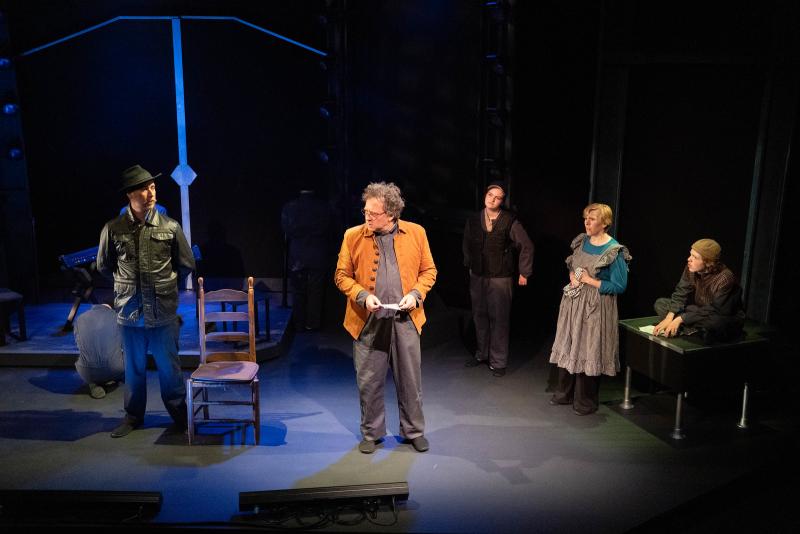 Jenny Maher photo
 Jenny Maher photo
Vashti (Nanette Fraser) leads the cast of Heartwood Theater's "The Machine Stops" running July 17-25. Jenny Maher photo
The Machine. Jenny Maher photo
Soren Barker and Roosevelt Bishop, of Boothbay, in a scene from "The Machine Stops." Jenny Maher photo
Jenny Maher photo
Jenny Maher photo
Jenny Maher photo
Vashti (Nanette Fraser) leads the cast of Heartwood Theater's "The Machine Stops" running July 17-25. Jenny Maher photo
The Machine. Jenny Maher photo
Soren Barker and Roosevelt Bishop, of Boothbay, in a scene from "The Machine Stops." Jenny Maher photo
Jenny Maher photo
Jenny Maher photoTake your seat in the Poe Theater in Newcastle where you will enter a world created in E.M. Forster’s short story, “The Machine Stops,” performed with exquisite perfection by the Heartwood Theater Company. Written in 1909, as science fiction, in the 21st century it is more a cautionary tale, one that will affect your thoughts and emotions long after the curtain call.
In this world, humans live deep within the earth, in tunnels, separate from one another. No direct or physical connections exist – save for acts of procreation. Each individual lives in a small room with a chair and table; its walls are a mass of buttons and lights controlling the atmosphere within. Switches on a remote console on the table provide access to music, and "phone" calls to others known by the individual. That is all the communication allowed. These are the surrounds for Vashti (Nanette Fraser), and all of the others, they live in underground tunnels. "The Book," addresses all questions needing answers to everything related to daily existence. It is their Bible. Vashti actually worships it.
The Machine is all, providing everything needed to be mentally and physically alive, except face-to-face human contact, bonding, love, friendship. Like the absence of natural light as opposed to the dim artificial light permitted by The Machine, the core of human experience is missing. Throughout their lives the only constant is The Machine, humming steadily along. The Machine knows all after centuries of accumulating knowledge of the world. The scenes in which The Machine learns in the play is brilliant.
The premise of the story: Vashti had a son, Kuno (Jonah Daiute). Like all infants he was removed from her care and take to the public nursery (as dictated in The Book). After some time later Kuno was given his own room - but on the other side of the Earth. His curiosity and inquisitive nature lead him to finding out what it is like above the tunnels. Vashti does not want him to do this. It is possible for those who follow The Book's rules, but Kuno wants to explore on his own and his way. Emily Sue Barker portrays Vashti’s inner voice, reacting to situations Vashti herself does not, although whether or not Vashti listens is another matter. Likewise, Soren Barker is such for Kuno, as well as depicting the character’s temporary “escape.”
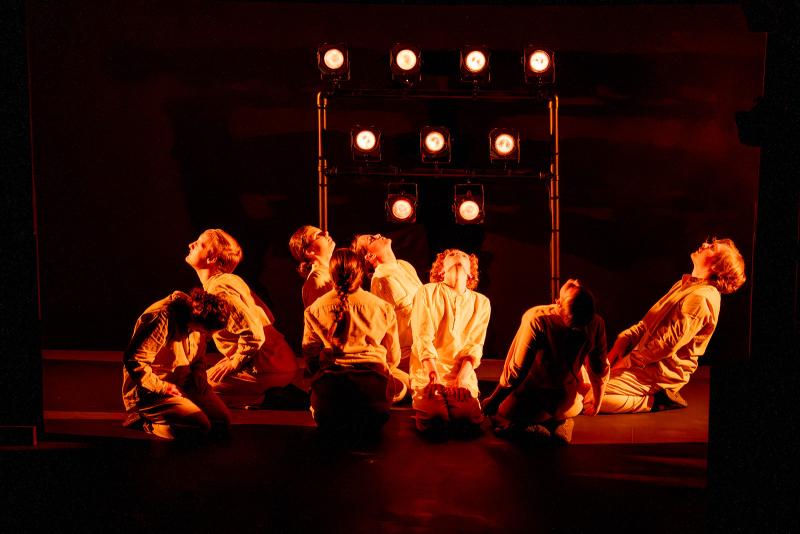
The Machine is made visible to audience members through nine cast members: Rebecca Tomasello, Katelyn Prior, Sophia Mansfield, Addie McCafferty, Natalie Friel Roosevelt Bishop, Jay Morris Long, Tryston Lambert and Tim Cunningham. This approach is genius. The nine move as one with such grace and rhythm - save for the moments, as the machine, each learns about different historical, artistic and inventive time periods. Niall Lessard’s choreography/movement direction for The Machine is both fluid and surreal; dreamlike.
Sophia Scott's staccato musical score complements the dystopian world with just the right emphasis in every scene.
Honora Boothby and Joe Lugosch act as narrators of the tale.
Costuming, lighting and set design by Griff Braley. Set construction and light/sound operator, Ryan Kohnert; production installation - Letitia Munson and Leslie Garnett; costumes - Rosemary Campbell and Heidi Kopishke.
Is this a cautionary tale? With each technological advancement - the internet, computers, i-Phones, voice activated smart homes, artificial Intelligence – Alexa being one good example; Facebook, TikTok … All our information about us out there for anyone to see. We are less social, we text rather than talk to a friend on the phone. Robots are being built with human mannerisms and thought processes … See this play. Read the short story.
In this production, Forster's short story has been adapted by Heartwood co-founder and Artistic Director Griff Braley. Braley also designed the lighting and the set. "The Machine Stops" has been four-and-a-half-years in the making. "With collaborators Niall Lessard and Sophia Scott and this wonderful cast, we've been able to achieve the vision of this original play. I hope audiences appreciate Forster's story as told in our artistic approach. We're grateful to be able to do this work in such a supportive community."
Performances begin July 17 and run through the 25th. Shows are at 7:30 p.m. July 17 and 18, 23-25. There is one 3 p.m. matinee on the 18th. Purchase tickets, $30/adults and $5/students through college, by calling 207-563-1373 or info@heartwoodtheater.org.