Author talk at SML: Claire Ackroyd
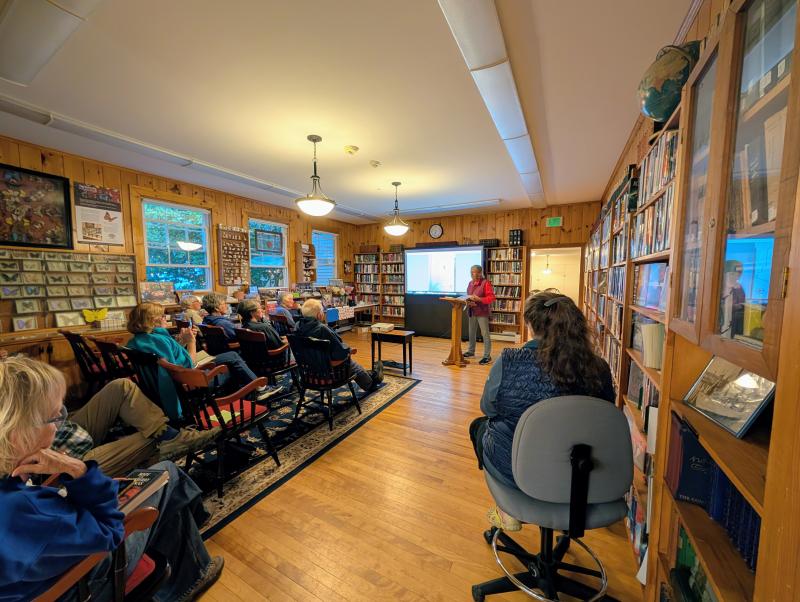
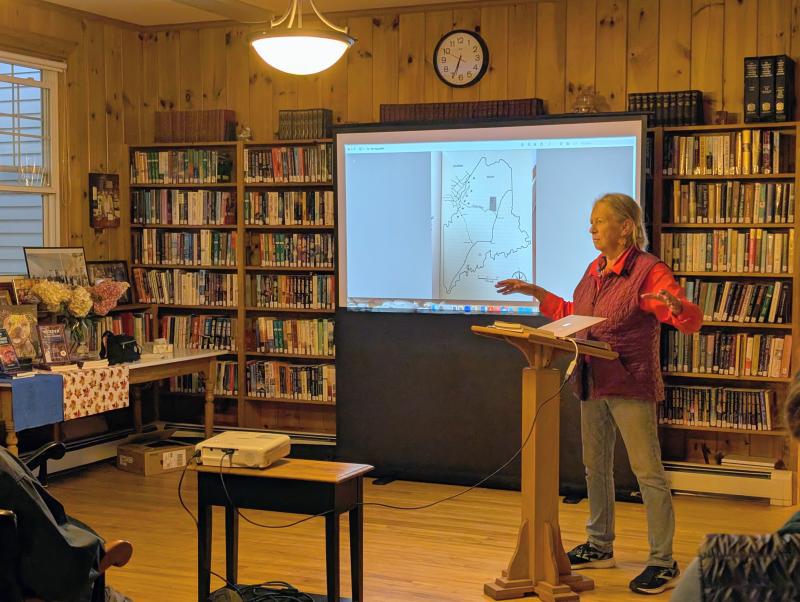
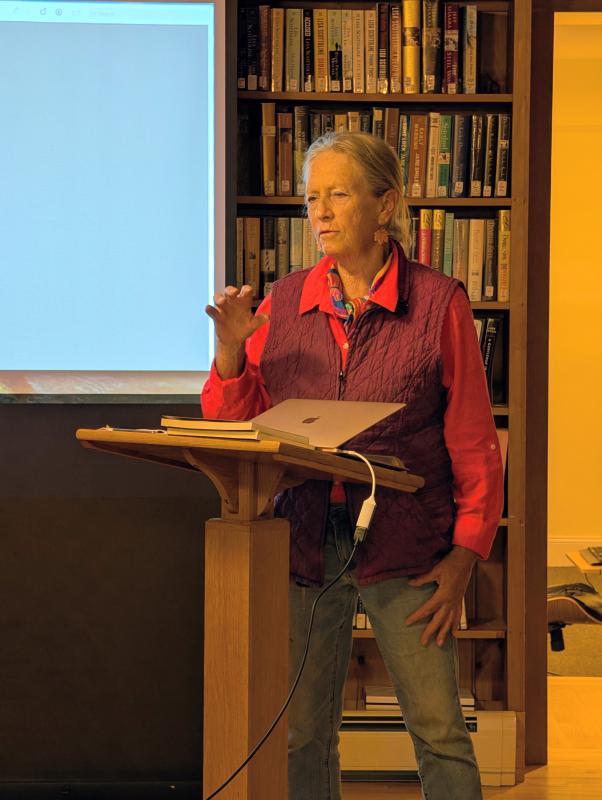
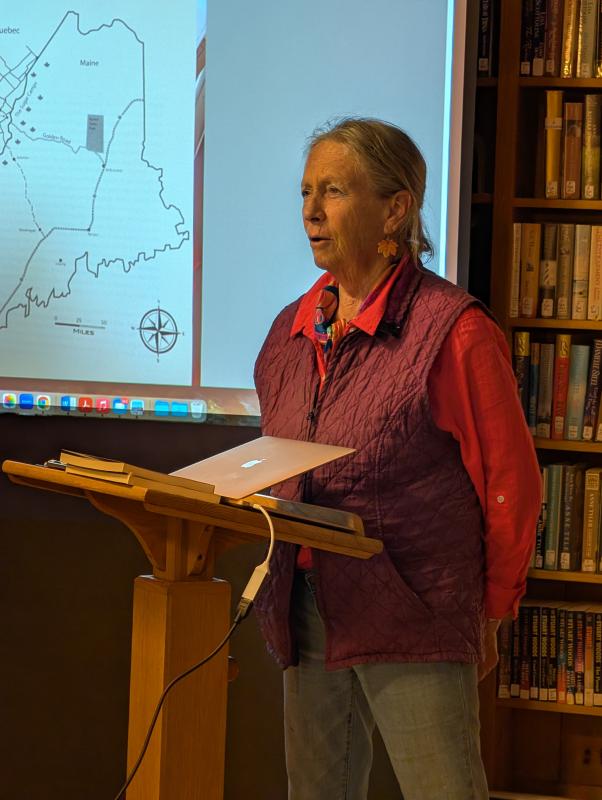 Author Claire Ackroyd speaks about her history as an organic farm inspector and how that specialized knowledge led to writing mystery novels. CANDI JONETH/Boothbay Register
 CANDI JONETH/Boothbay Register
 CANDI JONETH/Boothbay Register
 CANDI JONETH/Boothbay Register
 CANDI JONETH/Boothbay Register
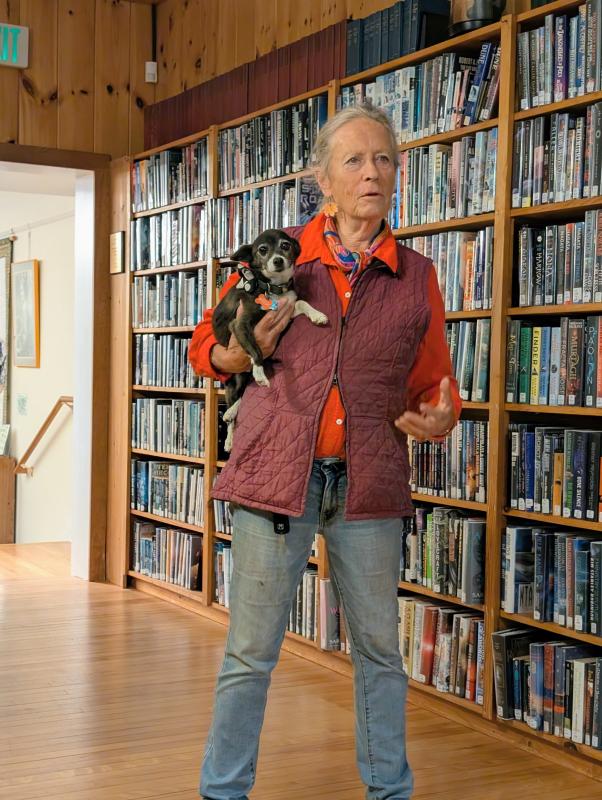 Claire Ackroyd and her dog, Speedbump. CANDI JONETH/Boothbay Register
Author Claire Ackroyd speaks about her history as an organic farm inspector and how that specialized knowledge led to writing mystery novels. CANDI JONETH/Boothbay Register
CANDI JONETH/Boothbay Register
CANDI JONETH/Boothbay Register
CANDI JONETH/Boothbay Register
CANDI JONETH/Boothbay Register
Claire Ackroyd and her dog, Speedbump. CANDI JONETH/Boothbay Register
Claire Ackroyd and her dog, Speedbump. CANDI JONETH/Boothbay Register
Author Claire Ackroyd speaks about her history as an organic farm inspector and how that specialized knowledge led to writing mystery novels. CANDI JONETH/Boothbay Register
CANDI JONETH/Boothbay Register
CANDI JONETH/Boothbay Register
CANDI JONETH/Boothbay Register
CANDI JONETH/Boothbay Register
Claire Ackroyd and her dog, Speedbump. CANDI JONETH/Boothbay RegisterFor Claire Ackroyd, author of two Maine-based mystery novels, "a story isn't worth having unless it has a dead body in it.” Beginning with her childhood in England, Ackroyd has sustained a healthy diet of organic produce and a literary diet of whodunits. Her life and work represent an interconnected tapestry that weaves decades of canvassing Maine as an organic farm inspector and a late-career transition into mystery writing. Sept. 3, she addressed a crowd of enthusiasts at Southport Memorial Library on her vision for creating a mystery series that relied on the protagonist having specialized knowledge to solve the mystery, an inspiration she attributes to a Dorothy Sayers’ novel from her youth. The result was “Murder in the Maple Woods” (Maine Authors Publishing, 2020) and her recent “Body in the Blueberry Barrens” (Maine Authors Publishing, 2025).
Ackroyd grew up in a traditional English farmhouse with a sprawling family garden. This fostered a lifelong devotion to the plant kingdom, which would later bring her to the states for a graduate degree. Ackroyd settled in Orono in 1976, where she began working in landscape design and horticultural/agricultural education. Then, in the 1990s, Ackroyd became an independent organic certification inspector for MOFGA (Maine Organic Farmers and Gardeners Association). This was the dawn of organic standards, predating the U.S. Department of Agriculture rulebook when inspections were still a vision-driven, informal system run by "old hippies,” Ackroyd said. For roughly 30 years, she traveled to farms in every corner of the state, checking records, walking fields, interviewing families and quickly learning the French she spoke was not the same French spoken in Maine’s deep woods.
This demanding, hands-on work exposed her to the extreme geographic and economic realities of rural Maine—revealing the stark "gap between the haves and the have-nots." As well, it showed her Maine’s remote beauty; areas few tourists see. It was only natural that these landscapes became the backdrops to her murder mysteries.
For years, Ackroyd’s organic inspections took her deep into the massive, off-the-grid maple syrup operations along Maine's remote northwestern border near Jackman. “These are not ‘quaint cottage industries’ of wooden cabins and bucket taps; they are multi-million dollar, highly engineered industrial setups tapping 60,000 to 90,000 trees,” she said. Operating completely off the grid with no cellular service or public roads, the producers are mostly French-Canadian families from neighboring Quebec who cross the border to work under harsh winter conditions. This little-known, isolated world was the perfect setting for a murder mystery, and the key to the puzzle would rely on understanding the complex organic certification process of maple syrup.
The character, Simone Thibodeau, a sometimes-cranky young female inspector, along with her pit bull rescue named Ivy, investigates a boy's suspicious death in a remote sugar bush. Her unique and atmospheric debut novel earned a 2021 Maine Literary Award nomination.
“It was out of peer pressure … I was bullied by friends to write ‘Body in the Blueberry Barrens’ because they all said they wanted to know what happened to Steve, or Ivy,” she said. Ackroyd turned her mystery lens toward another iconic, wild-gathered Maine crop: blueberries. “Along with maple syrup, wild blueberries are highly unique because they are not cultivated crops; they are genuine, wild-harvested ecosystems that growers must seek out where they naturally grow,” she said. And the gravelly, glacial-outwash of Washington County's Downeast blueberry barrens made the perfect storyworld for her sequel. Simone transitioned from an organic inspector to a game warden. To ensure absolute authenticity, Ackroyd heavily researched the state's wardens—even consulting Deb Palmer, Maine's first female game warden—to accurately portray the local law enforcement dynamics of Washington County.
“These guys (game wardens), they've got fabulous stories. They all retire and write books, of course, because they've all got amazing stories to tell. They're completely ridiculous, and there are shelves of books written by retired game wardens. You know, they're a very interesting bunch of people. I think they're Maine’s royalty,” she said.
Ackroyd views her keyboard as a tool that gives her the creative freedom and the ability to challenge persistent prejudices. Her novels come have some profane language, a healthy dose of feminism and a deeply rooted love of Maine’s wildest landscapes.