Patrick Lakeman: Active duty in Navy since 2000
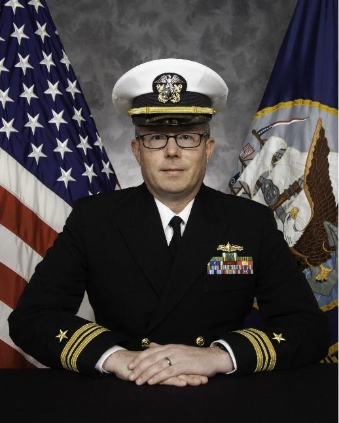 Patrick Lakeman, U.S. Navy. Courtesy photo
Patrick Lakeman, U.S. Navy. Courtesy photo
Patrick Lakeman, U.S. Navy. Courtesy photoAs Boothbay Harbor prepares to celebrate the 64th annual Windjammer Days, this year’s theme proudly honors the past, present, and retired members of the United States Navy who have served our nation with dedication and distinction. Throughout the coming weeks, we will feature a series of profiles highlighting local Navy service members—sharing their stories, experiences, and the lasting impact of their service. These articles are a tribute to the men and women whose commitment to duty reflects the maritime heritage at the heart of Windjammer Days and the deep appreciation of our community. Unfortunately not all current or former Navy service members in the area can be individually featured. To have a Navy veteran or active-duty member mentioned on the Windjammer Days webpage, please email Friends of Windjammers (www.boothbayharborwindjammerdays.org). Please include name and rank.
By Patrick Lakeman
The views expressed are my own and do not constitute endorsement by the Department of War, Department of the Navy, or the U.S. Government.
I enlisted in the United States Navy at the end of May 2000 at the age of 21. I am still on active duty today in the Navy nearly 26 years later and am currently serving as the Task Force Command Center (TFCC) Officer to Task Force 70 permanently embarked on the NIMITZ Class Aircraft Carrier USS GEORGE WASHINGTON (CVN-73) forward deployed in Yokosuka, Japan.
My reasons and inspirations for joining the Navy could be categorized as seeking adventure on a different path - not to mention that I was sick of going to school at that point. I grew up on Southport Island and was always around the water. My father, Marty Lakeman, worked at Bath Iron Works building multiple classes of ships plus we always had the drone of the P-3 ORION Maritime Patrol aircraft overhead from Brunswick Naval Air Station. As I met many P-3 aircrew later in my career, they always told me that the droning noise was known as the “four fans of freedom.” The more I weighed the pros and cons of joining the Navy, the more it seemed to be clearer that I should take a chance and go for it.
When I left for Great Lakes Recruit Training Command in May of 2000, it was a bit of a transition period for the Navy and also the country as a whole. The U.S. Navy was starting to chart a new course into the 21st century while the old Soviet Navy was largely rusting at the pier and the People’s Republic of China blue water Navy had yet to be built. September 11th the following year would change that trajectory in many ways.
I left boot camp in August of 2000 and headed to Dam Neck, Virginia to attend Operations Specialist (OS) Class ‘A’ School. An Operations Specialist works in the Combat Information Center, the tactical nerve center of the ship - often portrayed in movies as the darkened rooms with the glow of radar sets and the crackling of radios in the overhead. Tasks for an OS included tracking of ships and aircraft on radar, plotting on charts, log keeping and drafting operational messages, radio communications, and with advanced training, an OS learned the coordination of tactical data links and tactical controlling of aircraft. While at school, I selected orders to my first ship, the USS COWPENS (CG-63) which was forward deployed to Yokosuka, Japan. The COWPENS was a TICONDEROGA-Class Guided Missile Cruiser which was built at BIW – I remember going to the launching with my brother Ted back in 1991. The COWPENS seemed like a natural fit.
The mission for a Guided Missile Cruiser was the be the Air Defense commander for an Aircraft Carrier Battle Group employing the extremely potent AEGIS Weapons System. AEGIS was, and is to this day, the best Surface to Air Missile Battery system in the world. COWPENS seemed to always sail with the USS KITTY HAWK (CV-63) which was the Forward Deployed carrier in Yokosuka for the 7th Fleet. We patrolled the Western Pacific and deployed to the Arabian Gulf in 2003 for the invasion of Iraq. The COWPENS was the first ship to fire Tomahawk cruise missiles in that war as part of the first few weeks of strike missions and the embarked Carrier Air Wing (CVW 5) on KITTY HAWK destroyed hundreds of targets while supporting the U.S. Army and Marine Corps ground forces. We steamed back to Japan not long after the Saddam Hussein government collapsed. Later that year I attended Air Intercept Controller school in San Diego and learned how to tactically control fighters for Fleet Air Defense. This was one of the most enjoyable jobs I had during my Naval career.
My time in the Navy after the first couple of years on the COWPENS was also great – I met my wife Nely in Bali, Indonesia and we built our family while stationed in Japan. She and our son James are and have been my rock and with their support, I was able to get through multiple patrols and deployments over the years. The military family is an amazing tribe of support as life for those who journey to deploy to sea (or ‘downrange’ in the Army and USAF lingo) can have some significant challenges.
We ended up staying in Yokosuka, Japan through another sea duty tour (this time on the ARLEIGH BURKE Class Guided Missile Destroyer the USS CURTIS WILBUR, another BIW built ship, and a follow-on shore tour at a waterfront training command. Japan is an amazing place and for the tens of thousands of sailors and their families, it is a privilege to be the guests of the Japanese people. Yokosuka is a Navy and shipbuilding town and as such, I would often run into a few BIW people and I always seemed to see Boothbay native Alfred Barter at least once a year. I know that he really enjoyed traveling and working in Japan and one time I was back in Maine for leave, I ran into him at the Irving station on Route 27 of all places. We had a good laugh about that turn of events. I would also always meet a lot of sailors who had spent time in Bath on newly-built ships and they always seem to complain about the cold winters but also remembered the warm and friendly people there in Maine.
I was commissioned as a Surface Operations Limited Duty Officer (LDO) in 2012 and spent the next 10 years on a couple of ships stationed up in Washington State and a shore tour in Hawaii. In 2021, I came back to Japan on another BIW-built cruiser, the USS SHILOH (CG-67) as the Air Defense Officer. My wife and I had promised our son James that he could go back to Japan for his last three years of high school and he had a blast being a ‘Red Devil’ at Nile C Kinnick High School on the base. That is another great benefit of being stationed overseas as your children will get to attend the Department of Defense Education Activity Schools or even in some instances get to attend international schools with the other expat children and that is a great and unique opportunity for a kid to learn about the world. The SHILOH was a great tour and served the Fleet proudly but like the COWPENS, she will decommission later this year after over 35 years of service. The Guided Missile Cruiser’s role is being absorbed by some of the Destroyers but I will miss them.
I didn’t see myself making this a career initially but as every sailor knows that if you have a great first Division/Command, then it becomes a lot harder to leave. Your shipmates enter a strange place between friends and family and no matter how long the period of separation is, we always pick right back up where we were. There is a bond with those that you deploy and go to sea with. I have been able to serve with people from all 50 states and over 30+ different countries as our crews come from all over the place. I have been to ports all over Asia, Oceania and Australia. I have gotten to stuff like sandstorms at sea, a lunar rainbow, the Northern Lights, countless sea spouts and flying fish. I have not yet seen the ‘Green Flash’, but I can tell you that a sunrise trumps a sunset any day of the week. We even got the chance to do a swim call over the Mariana’s Trench, which at over 35,000 feet, is the deepest part of the Pacific Ocean. That swim call was fun but also terrifying.
If you (or someone you know) is thinking of joining the Navy, I can only offer my own opinion and experiences but as I believe that a huge piece of maintaining the all-volunteer Military is by candidly ‘recruiting your relief’, I will share two important things (for me) for consideration for joining the Navy and other branches as well as thank the American people for their support.
The first thing is learning to succeed as part of a team in an organization. I don’t think there is another organization on the planet that will entrust an 18-year-old with the operations of the running a nuclear reactor hundreds of feet under the surface of the ocean nor letting a 23-year-old recent college graduate have the awesome responsibility for maintaining safety of navigation of a billion-dollar destroyer with hundreds of American sailors sleeping soundly below decks. These responsibilities are not given in a vacuum but are rather the result of rigorous training and qualifications which often can only be found inside the United States military. I used to get frustrated by some elements of this but as I got a bit wiser, I saw that an effective team could adapt and flex to a wide variety of challenges while single individuals (while capable) would eventually flame out and fail.
The second thing is the wide variety of jobs and career fields available. The Navy (and military in general) have very detailed websites and apps that outline all of the different paths and benefits of service such as the Post 9/11 GI Bill and TRICARE. These fields extend far beyond ships, aircraft and submarines as there are plenty of room for professionals in medicine, law, industrial hygiene and safety, communications and cyber as well as construction and Special Operations. A potential service member can arm themselves with a large amount of information long before they darken the door of a recruiting station.
Overall, I wouldn’t change a thing and still would join the Navy again tomorrow.