Captain H. Wyman Howard II, USN Ret.
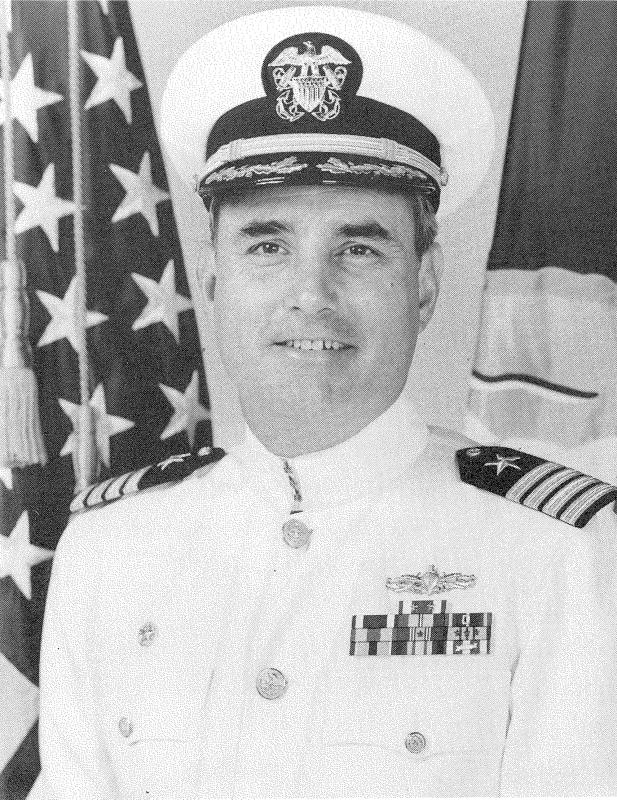 Captain H. Wyman Howard II, USN Ret. Courtesy photo
Captain H. Wyman Howard II, USN Ret. Courtesy photo
Captain H. Wyman Howard II, USN Ret. Courtesy photoAs Boothbay Harbor prepares to celebrate the 64th annual Windjammer Days, this year’s theme proudly honors the past, present, and retired members of the United States Navy who have served our nation with dedication and distinction. Throughout the coming weeks, we will feature a series of profiles highlighting local Navy service members—sharing their stories, experiences, and the lasting impact of their service. These articles are a tribute to the men and women whose commitment to duty reflects the maritime heritage at the heart of Windjammer Days and the deep appreciation of our community. Unfortunately not all current or former Navy service members in the area can be individually featured. To have a Navy veteran or active-duty member mentioned on the Windjammer Days webpage, please email Friends of Windjammers (www.boothbayharborwindjammerdays.org). Please include name and rank.
By Capt. H. Wyman Howard II
My extraordinary Navy journey started very early. I was born during World War II in Georgetown, Washington, D.C. and grew up in a robust Navy family, where my father as well as both grandfathers served in the Navy It did not end there – three uncles served in the Navy, and one of them - Curtis William Howard, Navy Attack Pilot, was lost in World War II in the pacific battle of Midway. My father, grandfather, and two uncles were all graduates of the United States Naval Academy. So, you could say, I was definitely groomed and influenced for eventual Naval service.
When I graduated from Arlington High School in Arlington, Massachusetts, I received a Presidential Appointment from President Kennedy to the United States Naval Academy at the age of 17. My Plebe Summer training began in July 1961, and I graduated four years later as a member of the Class of 1965 - a newly commissioned Ensign on 6 June 1965 – that was the beginning of my 34-year Navy career.
My first sea assignment was aboard the destroyer USS Ernest G. Small (DDR 838), forward deployed to Yokosuka, Japan. From 1965 to 1967 the USS Small participated in numerous operations in the South China Sea in support of the Vietnam war. The USS Small was soon reassigned to a homeport in Pearl Harbor, Hawaii; the new homeport resulted in my serendipitous meeting of my lovely wife Susy, a Pan American Airline stewardess. After a quick six months of dating, we were married in Honolulu at St. Andrews Episcopal Cathedral and we will celebrate are 60th wedding anniversary in May 2027.
In 1968, following Destroyer School, I served as Weapons Officer in USS Charles S. Sperry (DD 697), homeported in Newport, Rhode Island.
After two years in the USS Sperry and the birth of our first son, HWH III, I attended the Naval Postgraduate School in Monterey, California and earned my master’s degree, in Ocean Physics.
After completing graduate studies, I was assigned as Executive Officer in USS Lester (DE 1022), forward deployed to Naples, Italy, from1972 to 1974. After two years in Naples, and the birth of our daughter, Anne-Marie, I reported to Washington, D.C. and was assigned as Flag Lieutenant and Naval Aide to Commander, Naval Ordnance Systems Command, this was followed by assignment as Special Assistant and Naval Aide to Commander, Naval Sea Systems Command. From 1975-1977 I was then assigned to the Aegis Shipbuilding Project (PMS 400), where I headed the project team for Aegis/SM2 at-Sea Testing.
Returning to sea in 1978, after the birth of our second son, Kent, I served as Executive Officer in USS Downes (FF 1070), followed by assignment to Destroyer Squadron Twenty-one as Chief Staff Officer. In 1981, I returned to Washington, D.C., where I was assigned to the Surface Combat Systems Division (OP 35) in the Office of the Chief of Naval Operations. I performed duties as Program Coordinator for the Aegis Combat System and the Arleigh Burke (DDG 51) Class Combatant. In September 1985, I assumed duties as plankowner Commanding Officer of the Bath Built guided missile frigate USS Simpson (FFG 56) – it was an honor and a privilege to command a superb Bath built ship. One of the highlights of my career was being entrusted to assemble and train the crew andbring a new ship to life.
Returning to Washington, D.C., in December 1987 I reported to the Defense Systems Management College where I completed the acquisition management curriculum.In May 1988, I assumed duties as Executive Assistant to Commander, Naval Sea Systems Command.In October 1989, I assumed duties as Deputy Program Manager Aegis Cruiser-Destroyer Shipbuilding Project (PMS 400). At the time, it was the most complex ship-building endeavor in US History and ultimately led to my next command at-sea; building, christening, commissioning, and leading the new Aegis Cruiser – USS Anzio (CG 68)
Bringing to life a new warship with a crew of four hundred whose average age was 20 and only 66% had ever been to sea before – was an extraordinary opportunity to build the team culture that would result in extraordinary performance and safe operations for over 30 years of the USS Anzio (CG 68)’s service life.
We establishedthe “Future as Possibility in Team Anzio”:
Possibility of:
-
Passionate Leadership. Where leaders love those, they lead and those they lead love their leaders.
-
Courageous, high performance.
-
Empowering and enabling ourselves as leaders.
-
High coordinated action made possible by our extraordinary relationships with each other.
-
Well-being of our families
-
Teams manned by self-led individuals who live inside of possibility as a boundless dimension with in which to express their contribution to the Navy and Nation and that their every action shows up as a win for themselves and their families.
-
A breakthrough in teamsmanship and what it means to be on a team and a transformation in what the team is committed to.
-
Being UN-CONDITIONALLY ready to conduct Prompt and Sustained Combat Operations.
-
Mental and Physical readiness to carry out our convictions.
The highlight of my command in both of these two newly commissioned ships was the two week-long port visits to my summer home on West Harbor Pond in Boothbay Harbor. In both visits, the ship hosted Boothbay Harbor’s town leadership to a short cruise and barbeque on the Flight Deck.
If asked why anyone should consider service in the United States Navy, I would say the Navy would provide the most meaningful foundation for learning and mastering leadership skills, and a sense of purpose which will serve and support them in any endeavor for the rest of their life.