Burnt Island: Stories and reflections on time spent on the island
 John Cooper on Burnt Island. Courtesy photo
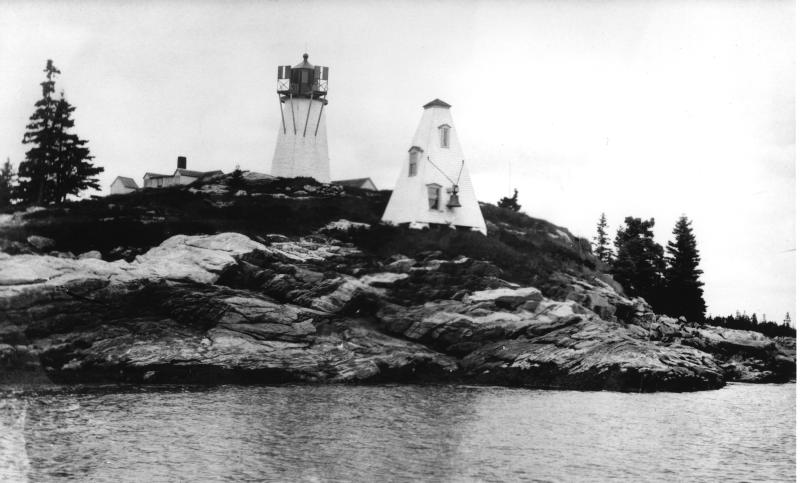 Bell tower and lantern with sectors. Courtesy photo
 Burnt Island Light's white sectors. Courtesy photo
 Steve McCullough on the island in the 1960s. Courtesy of Steve McCullough
 View from the lighthouse. John Cooper photo
 The lighthouse spiral steps. John Cooper photo
 A window in the lighthouse. John Cooper photo
 Old pictures of the island. Courtesy photo
 Map of local islands. Courtesy photo
 The kitchen in the keepers house. John Cooper photo
 Supplies in the keepers house. John Cooper photo
 A washtub in the keepers house. John Cooper photo
 Office area in the keepers house. John Cooper photo
 A view of the keepers house from the lighthouse. John Cooper photo
 A view from the lighthouse.John Cooper photo
 Heading to the island. John Cooper photo
 Summer scene on Burnt Island. John Cooper photo
 Courtesy photo
 Books in the keepers house. John Cooper photo
 Nancy and Steve McCullough stripping paint in 2003. Courtesy photo
 John Cooper photo
John Cooper on Burnt Island. Courtesy photo
Bell tower and lantern with sectors. Courtesy photo
Burnt Island Light's white sectors. Courtesy photo
Steve McCullough on the island in the 1960s. Courtesy of Steve McCullough
View from the lighthouse. John Cooper photo
The lighthouse spiral steps. John Cooper photo
A window in the lighthouse. John Cooper photo
Old pictures of the island. Courtesy photo
Map of local islands. Courtesy photo
The kitchen in the keepers house. John Cooper photo
Supplies in the keepers house. John Cooper photo
A washtub in the keepers house. John Cooper photo
Office area in the keepers house. John Cooper photo
A view of the keepers house from the lighthouse. John Cooper photo
A view from the lighthouse.John Cooper photo
Heading to the island. John Cooper photo
Summer scene on Burnt Island. John Cooper photo
Courtesy photo
Books in the keepers house. John Cooper photo
Nancy and Steve McCullough stripping paint in 2003. Courtesy photo
John Cooper photo
John Cooper photo
John Cooper on Burnt Island. Courtesy photo
Bell tower and lantern with sectors. Courtesy photo
Burnt Island Light's white sectors. Courtesy photo
Steve McCullough on the island in the 1960s. Courtesy of Steve McCullough
View from the lighthouse. John Cooper photo
The lighthouse spiral steps. John Cooper photo
A window in the lighthouse. John Cooper photo
Old pictures of the island. Courtesy photo
Map of local islands. Courtesy photo
The kitchen in the keepers house. John Cooper photo
Supplies in the keepers house. John Cooper photo
A washtub in the keepers house. John Cooper photo
Office area in the keepers house. John Cooper photo
A view of the keepers house from the lighthouse. John Cooper photo
A view from the lighthouse.John Cooper photo
Heading to the island. John Cooper photo
Summer scene on Burnt Island. John Cooper photo
Courtesy photo
Books in the keepers house. John Cooper photo
Nancy and Steve McCullough stripping paint in 2003. Courtesy photo
John Cooper photoThe following article was written by John Cooper, a ninth grader at Boothbay Region High School. This is an article about Burnt Island history, and its education program for 4th-6th graders in the AOS 98 school district. He wrote this for an extra-credit in a college-prep English class.
Burnt island … what a place to spend your summer, helping kids learn their local waterfront geography. I talked with Steve McCullough, a lighthouse keeper’s son about his childhood life out on Burnt Island. Steve lived there with his older sister, mother and his father who was in the USCG (US Coast Guard) as the keeper from 1959-1962. Steve’s father, Jim, and his family were responsible for maintaining the light to make sure boaters were safe when navigating dangerous waters into Boothbay Harbor. When he was not completing those keeper duties, he lobstered and painted buildings on neighboring islands. Steve and I talked for about an hour and 45 minutes. He showed me some pictures of him and his family restoring the buildings and grounds as volunteers later.
Currently, the state of Maine owns the island and the DMR (Department of Maine Resources) maintains it. Steve showed me where the old bell tower was, which was a fog signal at the time, and explained how it worked. He explained how he wished the Coast Guard had kept the original bell tower on the bank to the right of the lighthouse. Having a piece of history like the bell tower on the island was an important piece of the history of Burnt Island.
The lighthouse tower was originally built in 1821 and lit that same year at sunset Nov. 9. Burnt Island Light is said to be one of the oldest “original” towers in Maine. The lighthouse and surrounding buildings, boardwalks, coal bunker, and the dwelling’s first floor underwent restoration in 2003 and then again in 2020, the year before the bicentennial anniversary celebration. This was all supervised by Elaine Jones, the Director of Education at the Department of Marine Resources. It was before the lighthouse's 200th birthday when Elaine Jones and a crew of workmen fixed and restored the lantern, tower, house, and the boathouse. The tower, composed of Maine state granite lined with brick, was repainted and remortared due to mortar deterioration, weather and moisture damage.
In the lighthouse tower, there are white and red sectors, parts of the panel glass, which the light projected out to the ocean, showing early sailors where and where not to go. The white sectors show a path steering safely into Boothbay Harbor. White sectors indicated “white is right” for safety, compared to the red sectors which showed that there were dangerous rocks that a ship could run aground on, which Steve learned as “Red is Dead.” Steve didn't call them sectors; he called them channels, and he had a good reason to call them that. This was because of the black tubes–outside of the lighthouse lantern itself–that fed light. When I went up into the lighthouse, I took many photos of the surrounding Island, and boy, was the view astounding!
When Steve was not polishing the brass in the tower, cleaning the kerosene lamps, or doing other chores to keep the brass shiny and new looking, he would find things to do on or around the island. When he was a little boy, age 7, he built a tree house, where the playground pirate ship is now, and made traps just like those seen on the TV series “The Swiss Family Robinson,” which he watched on the family black-and-white television when it aired. This television set ran on generator electricity because they had no other power on the island. He told me a story of how once, when he was setting one of his traps up in his tree house, he got stuck in it and was hanging upside down from the tree house. He screamed but no one came to help him. Steve finally got out of his situation and continued to go about his business. Steve also told me about how he played basketball on the grass in front of the light house next to the shed to the left of the lighthouse. To pass the time, Steve broke bottles with rocks he collected from the shore. At that time, there was no landing beach for kayaks on Burnt Island; the only boat access was from the boat slip. Today people collect the old broken glass that is now smooth, turned to sea glass. The red sea glass that you might find, from the red sectors in the tower, is quite rare and very exciting if you find a piece.
A memorable Christmas
Another story took place at Christmastime. One Christmas, Steve and his family took a trip to Boothbay in the peapod, a boat shaped like its cracked-open namesake. It had a 7.5 HP horsepower motor on it, and bought all the necessities for Christmas dinner and presents for the whole family. When they all came back to Burnt Island, Jim McCullough (Steve’s father) had to line up the boat with the slip. The slip consists of two pieces of long wood greased with some type of oil with a winch at the top to pull the boat up. It was also usually Steve’s job to get out and grab the rope to attach to the boat to be pulled up out of the water. When landing, the peapod’s keel hit the rails off center. As a result, the peapod flipped over, capsizing with the entire family inside. As the peapod capsized, Steve got thrown out of the boat and got stuck in between the slip and the hull of the peapod. Meanwhile the rest of his family, including his three-month-old brother, were thrown into the freezing cold water. They were all now running to the house, soaking wet and cold, leaving Steve stuck between the boat and slip. Steve eventually got out of his predicament and hauled the boat up to its resting place on the boardwalk and ran as fast as he could to the house. When he got into the kitchen, he saw his baby brother sitting in a basket wrapped up in blankets in front of the stove. They all eventually became warm again and were thankful that they were all safe, despite losing all of the presents–except Steve's football that he had thrown ashore.
Reflecting on campership
I have been lucky enough to be a camper for two summers, then counselor helper for a year, and this past summer, a counselor myself. I look forward to helping with the program for years to come. There are many things that we do out on the island, such as a treasure hunt when the campers first get there. We also do many other activities, like learning about overfishing, the anatomy of sea life, tide pooling, and learning how to make the bed and clean up after oneself for the next visitors to the island. When we have time, we also go down to the beach and look for sea glass. This is one of my favorite parts.
At the end of the session, which for the past two years has been two days and a night, we take a tour of the lighthouse and the keeper's house. This is my very favorite part of the trip. Right before we leave the island, the campers reflect on how they feel about their time there, and all of them say that they want to come back next summer with no doubts at all. There are many people who have helped make
this program not only possible but thrive, including: the DMR staff who keep the island in running order and looking nice; the teachers on the island, including Heather Chouinard, Maureen Cooper, Sarah Currier, Elaine Jones, Jenifer Lassen and Emelia Strainge; and countless other parent volunteers and student volunteers, such as myself and a few of my good friends, William Lassen and Sophia Gatnar-Koplau.
This program would have not been founded without the very generous Mr. G (that is what the campers call him), who pays for most of the expenses. Mr. G also wishes to remain anonymous. Elaine Jones has worked with Mr. G to start the program. These donations help pay for the use of the island and its facilities, transportation provided by both the Balmy Days and Novelty on Pier 8, and the various other expenses like the craft supplies for learning materials and food for breakfast, lunch and dinner–and of course snacks! Also other funding comes from the Boothbay Region Elementary School PTO.
To advertise and raise additional money for the program, Elaine Jones has reached out to various other local businesses in Boothbay Harbor to promote the camp. All in all, Burnt Island is a great way to spend your summer in the harbor and educate our youth and adults, all while incorporating fun for everyone. I can not wait until the summer comes around to be on Burnt Island again. See you on the island!