Boothbay Region Ambulance Service – A look at who we are and why it matters
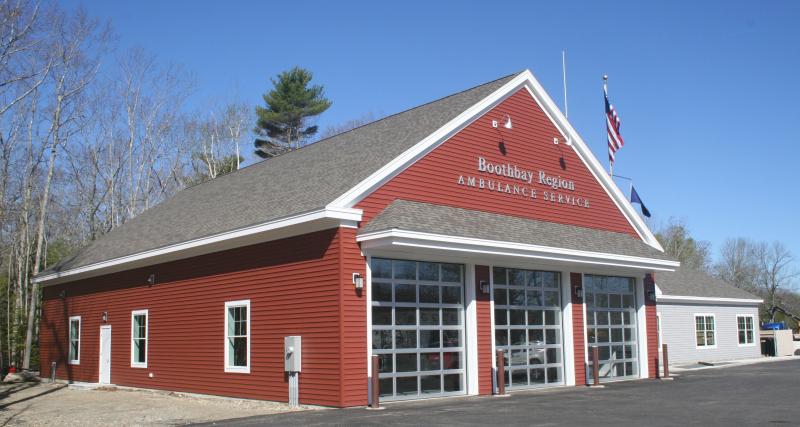
Since stepping into the role of EMS Chief, my focus has been on listening, learning, and understanding the needs of this community while ensuring the continued delivery of reliable emergency medical services. Along the way, I’ve been met with a great deal of support—from our dedicated staff, our Board of Directors, and the community we serve. That support is not only appreciated, it’s essential.
Many people only think about the ambulance service when they need it. But behind every 911 call is a system that operates around the clock, every day of the year. The Boothbay Region Ambulance Service staffs two ambulances—four providers—24 hours a day, 7 days a week, 365 days a year. Whether it’s a medical emergency, a serious accident, or a call for help that turns out to be less critical, our team is ready to respond.
That team is made up of Emergency Medical Technicians, Advanced EMTs, and Paramedics who share a common goal: to provide compassionate, professional care when people need it most. These are the individuals who show up on someone’s worst day and work to make it better.
The Boothbay Region Ambulance Service is governed by a Board of Directors made up of dedicated community members who provide oversight, set policy, and ensure financial accountability. Many of these individuals bring decades of experience in healthcare and public safety, including EMS, firefighting, and law enforcement.
The following provides some town-specific information. In 2025, our service responded to 637 emergency calls in Boothbay Harbor, 372 in Boothbay, and 57 in Southport. In addition to these emergencies, we also provided transfers between hospitals and other healthcare facilities—an often overlooked but vital part of patient care and at times, an important source of revenue. These transports help ensure patients can access the appropriate level of care, even when it’s not available locally. Altogether, our total call volume for 2025 was 1,241.
What most people do not realize is that not every call results in a bill. In fact, nearly 23% of our calls last year were non-billable. These include lift assists, medical alarm activations, canceled calls, wellness checks, and cardiac arrests where, despite every effort, resuscitation was not successful. In each of these cases, our crews responded, assessed the situation, and provided care or assistance—without generating revenue.
Providing modern, reliable emergency medical care requires significant investment in specialized equipment. A single ambulance costs approximately $400,000 to purchase, and each unit must be outfitted with critical life-saving tools.Key equipment includes powered stretchers (approximately $40,000 each), cardiac monitors (approximately $60,000 each), and mechanical CPR devices (around $20,000 each). Additional equipment—such as video laryngoscopes, IV pumps, and both powered and manual stair chairs—adds further costand is standard in today’s EMS environment. Many of these items also require ongoing service agreements to ensure they are ready when needed.
These figures do not include fuel, vehicle maintenance, medications, disposable medical supplies, or broader operational costs such as facilities, utilities, and insurance. Since 2020, the cost of medical supplies has steadily increased nationwide, and we are seeing those same impacts locally, along with other rural EMS services.
This year’s proposed budget includes an overall increase of 7.8%. This is not driven by expansion, but by the cost of maintaining the level of service this community expects and deserves. Like many organizations, we are facing rising costs in staffing, benefits, and insurance, along with a gap between the cost of providing care and reimbursement.
We understand the responsibility that comes with public funding, and we take that seriously. We are actively working to control costs, including reducing overtime through recruitment and hiring.
The service typically staffs four personnel 24 hours a day, 7 days a week, for a minimum total of 35,040 hours worked annually. Some overtime is factored into the annual budget, and managingadditional overtime remains a high priority. Encouragingly, additional overtime peaked in 2024 and has since declined. Comparing July–January periods year over year, additional overtime decreased by 3.5%, representing 998 fewer hours. This trend is moving in the right direction, and we are working diligently to continue that progress.
At its core, this isn’tjust about numbers—it’s about reliability. It’s about knowing that when someone calls 911, help will arrive—quickly, professionally, and ready to provide care. Maintaining that readiness, every hour of every day, is what this budget supports.
Emergency medical services are a critical part of the community’s safety net. The goal of the Boothbay Region Ambulance Service, is to ensure that this community continues to receive the high-quality, timely care it deserves—today and into the future.