Teel presents research on cognitive decline prevention
 Dr. Allan Teel. CANDI JONETH/Boothbay Register
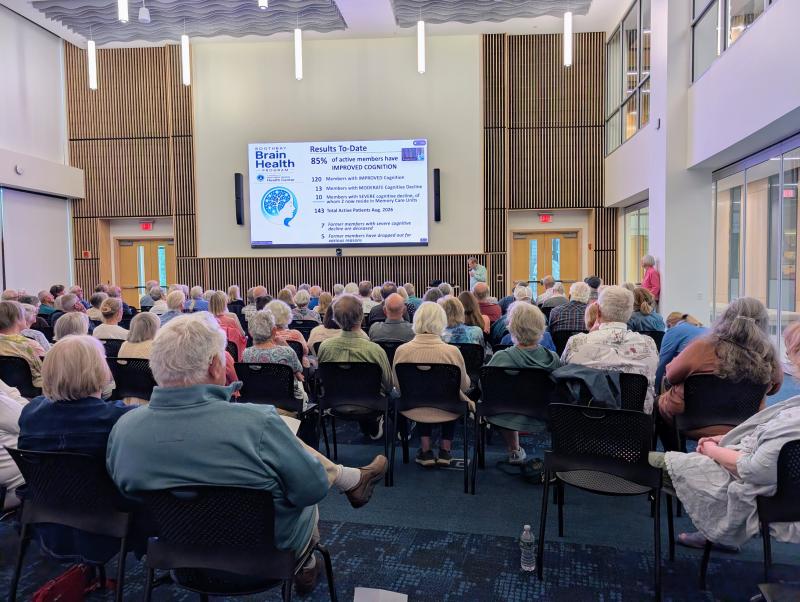 Dr. Allan Teel presents research on cognitive decline prevention and management, Aug. 17 at Bigelow. CANDI JONETH/Boothbay Register
 Program Coordinator Patty Seybold. CANDI JONETH/Boothbay Register
 CANDI JONETH/Boothbay Register
 Boothbay Region Health Center Board President, Dr. Paul Taylor. CANDI JONETH/Boothbay Register
 CANDI JONETH/Boothbay Register
Dr. Allan Teel. CANDI JONETH/Boothbay Register
Dr. Allan Teel presents research on cognitive decline prevention and management, Aug. 17 at Bigelow. CANDI JONETH/Boothbay Register
Program Coordinator Patty Seybold. CANDI JONETH/Boothbay Register
CANDI JONETH/Boothbay Register
Boothbay Region Health Center Board President, Dr. Paul Taylor. CANDI JONETH/Boothbay Register
CANDI JONETH/Boothbay Register
CANDI JONETH/Boothbay Register
Dr. Allan Teel. CANDI JONETH/Boothbay Register
Dr. Allan Teel presents research on cognitive decline prevention and management, Aug. 17 at Bigelow. CANDI JONETH/Boothbay Register
Program Coordinator Patty Seybold. CANDI JONETH/Boothbay Register
CANDI JONETH/Boothbay Register
Boothbay Region Health Center Board President, Dr. Paul Taylor. CANDI JONETH/Boothbay Register
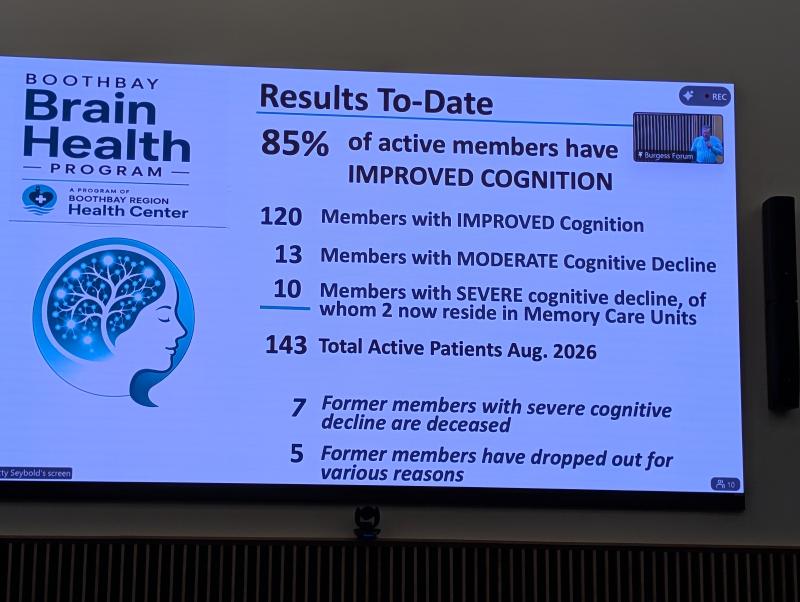
CANDI JONETH/Boothbay RegisterDr. Allan Teel presented 25 years of research on preventing and managing cognitive decline to a crowd of about 120 on Aug. 17 at Bigelow Laboratory, East Boothbay. His team’s holistic approach, inspired by the research of Dr. Dale Bredesen, uses volumetric mapping (vMRI), lifestyle modifications and leading research to offer data-driven care and prevention to his cohort of 143 participants through Boothbay Region Health Center (BRHC). Results to-date stated 85% of active program participants have improved cognition.
The evening was kicked off by Dr. Paul Taylor, BRHC board president. He spoke briefly of the center’s mission and philosophy and use of innovative strategies that underscore the value of proactivity and preventive practices, which he said is exemplified through the brain health program, which aims to combat cognitive decline through early intervention and attention to physical, social and emotional well-being.
Teel explained, memory loss is often the result of dozens of contributing risk factors, such as inflammation, toxins and lifestyle habits, which can be mitigated through early intervention. A central tool in his process is the vMRI, a specialized scan that provides detailed measurements of 45-60 brain structures, as many as 180 brain regions per hemisphere, to pinpoint specific areas of strengths and weaknesses. By analyzing these subsections, Teel can connect a patient's real-world symptoms—like navigation difficulties or speech issues—to physical changes in the brain. He offered seven case studies to the audience, each linking findings from a vMRI to specific behavioral aspects of the patients. Teel emphasized the personalized nature of diagnostic testing, how each case is unique to the patient and that tailored treatments can lead to improvements in quality of life, even for those with advanced symptoms and genetic predisposition. His message is one of hope. Teel’s team reiterated that cognitive decline is not inevitable, that empowerment and collaborative support are available through the program and, ideally, others that will follow its lead.
Most program participants are between the ages of 70 and 89, and several more are over the age of 90. Those in their 40s and 50s who joined for preventative measures stand to receive early detection, mitigating the trajectory before significant cognitive decline occurs.
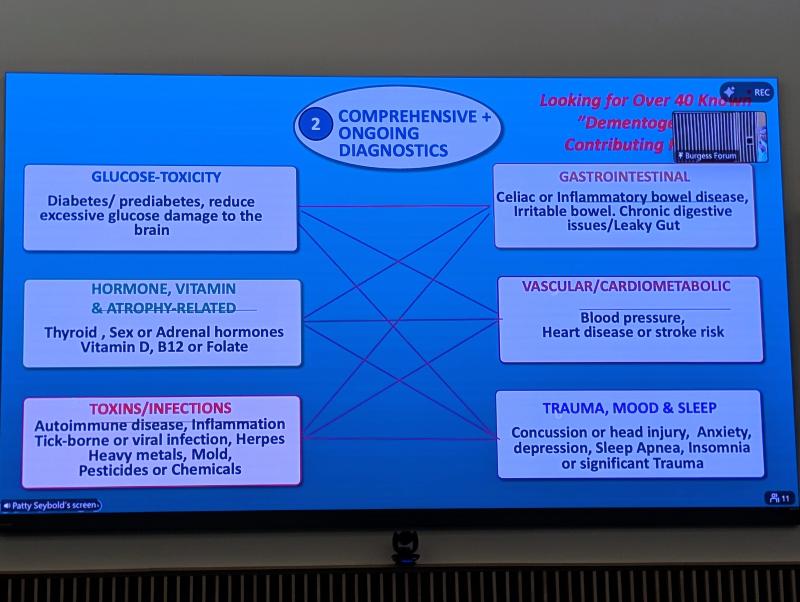
Early detection works by identifying controllable causes and setting about course correction. Because there are over 40 causes of cognitive decline, many of which can be controlled, early testing identifies which of these factors are present in a person’s body so they can be eliminated, said Patty Seybold, program coordinator. “Detecting these risks early allows them to start the protocol preventatively, even if they are not yet suffering from cognitive decline,” she said.
Participants undergo testing to identify specific "dementogens" such as heavy metal toxicity, glucose toxicity, hormone and vitamin imbalances, sleep disorders, infections, etc. and then implement lifestyle changes to eliminate them. Their list of “10 Tips for a Healthy Brain” advocates getting enough sleep (seven to eight hours), exercising for at 30 minutes most days, stopping caloric intake three hours before bed, eating fewer carbohydrates and more healthy fats, avoiding sugars, processed foods, cow-dairy and gluten—instead opting for organic, fresh fruits and vegetables, reducing stress, stimulating your brain through puzzles and continual learning, socializing and listening to music from your teens and early 20s because it engages memory.
These lifestyle modifications help create cognitive reserve, the brain’s ability to maintain functional ability after a person has experienced brain loss through aging or atrophy. “If a person's cognitive reserve in certain vital areas is strong, they can ride that horse for a long period of time despite damage in other regions,” said Teel.
Handouts at the lecture included information on joining the program. People experiencing early stages of cognitive decline, as well as those concerned with hereditary risk, such as dementia or Alzheimer's, were encouraged to join the research program. The handout further states that insurance covers most of the program’s medical costs, with members also contributing $600 annually. The program also welcomes caregivers and partners. Teel meets with members four times per year for testing, diagnosis and personalized treatment. The patient group provides community and lifestyle support. Monthly meetings bring together Teel’s team, patients and care partners in a shared learning environment.